This just crossed my screen and it couldn’t have come at a better time!
Original Source: Wine Aroma Wheel by Wine Folly
This just crossed my screen and it couldn’t have come at a better time!
Original Source: Wine Aroma Wheel by Wine Folly
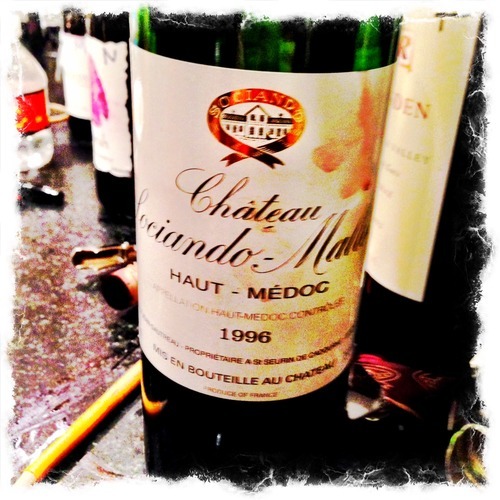
Money may win auctions, but it can’t buy the palate required to differentiate between a 1947 Chateau Petrus and a lesser Bordeaux dosed with California cabernet to mimic the age and roundness of a legendary vintage. Put another way: If an imposter bottle is poured and enjoyed while still conferring all the attendant status on its owner, who’s in a position to complain?
(I really should be labeling this post, Why I’m Obsessed, Part 3 – here’s Part 1 and Part 2 – but it’s a good column that deserves its own posting.)
This is an interesting column. You think it’s about language (and yes, eventually it is), but as you begin reading, you’re hit with a wonderful lesson about Montrachet wines. It immediately resonated with one of the reasons I’m obsessed with this industry. Wine is risky: Or as Chateau Montelena’s Bo Barrett quips in the documentary Somm, buying a bottle of wine is always a wager. Now, in a recent Wine Spectator column (also linked from the top of this page), Matt Kramer provides a fabulous example of this:
Montrachet at its best can indeed be an awe-inspiring experience. But it’s rare. You have to win a trifecta of the right producer, in the right vintage, with the right amount of bottle age (10-plus years) in a cold cellar. If my experience is anything to go by, those are long odds.
So what happens when you’re among the majority who don’t have a breathtaking experience with this $500 bottle of wine? Kramer argues your approach should be in reframing your language (which also changes your expectations). Rather than concentrate on its flavors, he suggests using the word “texture,” which will allow you to refocus how you taste the wine.
In comparison, “texture” is a broader term that, again for me, captures a sense of fruit density, as well as the nature of the tannins in a red wine. As is well-known, tannins are frequently described as being ripe or green; coarse or fine-grained; gritty or silky. Obviously, the nature and quality of tannins will dramatically affect “texture,” as will acidity... Bottom line: I use the term “texture” to encompass the complete tactile experience of a wine.
Just as I enjoyed Kramer writing about risk, I enjoyed this column for two more reasons:
It’s funny, as I left my class last Thursday, I realized that one of the main objectives in this six-week course is to learn the best way to communicate about wine. It’s what I’ve spent most of my career doing – honing in on the best communication and storytelling methods.
I’m beginning to understand a little better why wine is so fascinating to me. I’m also realizing it may not be such a leap from what I do now.

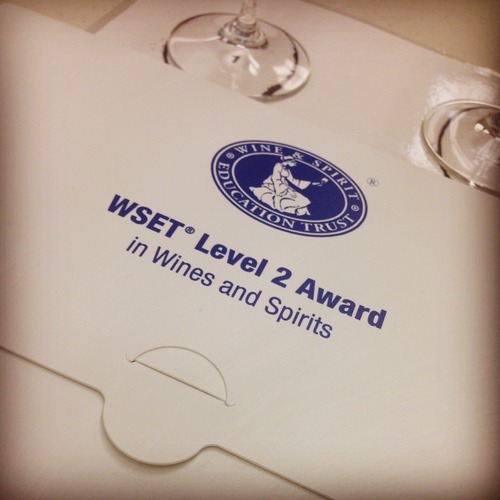
Last night was my first time back in an official classroom as a student since I graduated college in the ‘90s. Earlier this year, I signed up for the WSET class with no expectations. It’s mostly for fun and for some intellectual stimulation, but I’m keeping an open mind, and eager to see if this leads anywhere.
The six-week class I’m taking at the Capital Wine School is all about preparing you for the exam. There’s an official study guide and workbook and I have a feeling there will be quite a bit of memorization in my near future. It’s also very focused on how to taste using the specific WSET method. I already know I need help in this area, and I was reminded of that with the very first wine we tasted (why did I pick up vanilla notes in a wine that never saw any oak? oy!).
I don’t want to use this space to rehash each class, but I think it would be fun to leave behind some tidbits I found noteworthy. That includes answers to random questions asked in class, or little factoids our instructor decides to share. So let’s get started:
It’s crazy how much people care about Prosecco and Sancerre. If you opened a wine distribution company and called it SanSecco you could retire to an island and just have them send you the checks.

Modern Love
I. Want. This. Room. Everything about it – the plain white walls, the gorgeous amount of natural light coming in from a gigantic floor-to ceiling square window, and that huge reclaimed wood dining table. Oh? And those wine bottle chandeliers? Beyond love. The folks over at Popsugar (h/t to @alawine on twitter), suggest a much smaller DIY version. But let’s face it, I’m not a DIY kind of gal, nor does my current 760-square-foot home have a proper place for it. Besides, it barely stands up to the grandeur of this. Maybe one day. Sitting at this table, in this room, with a bottle of red, and a friend or two (or five or six) would absolutely be divine.
(original source of this photo is Maison Estate in South Africa)
Sometimes you just have to give in to the rabbit hole you fall down while surfing the Internet. And if it happens at 10 a.m. on a Tuesday after a holiday weekend and continues after lunch and into the afternoon, you just have to smile and be OK with that.
Today’s journey landed me at the website of WhitneyA – a blogger, sommelier, online retailer, wine shop worker, educator, and I’m sure she wears several other hats that I haven’t discovered yet. She pairs a youthful California style with interesting wines in a very approachable and fun manner. Online it translates into some lovely eye candy.
As I try to figure out where I fit in the wine world (Is this just a hobby? Could it be something more? Am I on the cusp of a career change? Or is this just a passing fad?), she demonstrates the creativity I realize I’m lacking in my own discoveries.
I think that creativity shines best in this two-year-old short video series, she did in conjunction with food blogger Claire Thomas (I’ll have to explore her world another day). Here’s one of the dozen or so videos they created. Take note of her “tasting notes” prior to the written words that scrawl across the screen. It’s a subtle, yet very alluring way of capturing the flavors and properties of the wine.
//player.vimeo.com/video/28024702?color=fedec7
(And if you’re curious on how I went down this particular rabbit hole – here’s the journey: It started with this tweet. That led me to this feature; and more specifically this profile. I can’t tell you the aha moment that told me explore further into her website or why 20 pages of the blog later I’m still clicking. But that eventually led to an online store and ultimately to the video series.)

Since so many great wines are an expression of place, when I woke up last weekend to the news of a 6.0 earthquake in Napa Valley – after the immediate concerns that follow natural disasters – one of my first thoughts was this:
Is this going to change the soil? Will more interesting Napa wines be made in the future?
I’m not a scientist nor have I ever studied geology, but it would make sense to me, especially close to the fault line.
While I haven’t seen this question answered yet, Smithsonian Magazine does start to examine Napa’s earth and how quakes have transformed the region into a spectacular place for growing grapes.
Fault activity, as well as erosion via wind and rain, continued to break apart the many types of rocks around the valley, depositing their riches on the valley floor. The end result is the Napa Valley’s spectacular diversity of soil: over 100 variations, or equal to half of the world’s soil orders. In wine growing, soil diversity is extremely advantageous, allowing numerous grape varieties to grow in a relatively small area. In the southern part of the Napa Valley, for instance, the calcium-rich soil favors pinot noir grapes. In the north, more volcanic soils help cabernet grapes thrive.
Take a read here: Why Earthquakes Make Napa Wine Taste So Good
(photo by balaji shankar venkatachari via flickr.com)
The fruit is coming in for a record harvest. The weather is fantastic so far. The quality is fantastic so far. It’s almost as if this year was too good to be true. Instead of rain or hail, we had an earthquake to screw it up.
– Steve Matthiasson on Sunday’s 6.0 earthquake centered near Napa Valley. He puts the earthquake damage into perspective in this LA Times interview.
Just because you want an Old Fashioned, doesn’t mean you need to be old fashioned….
Bad headline, on an otherwise good column. The list itself is not sexist. This piece is really about how the wine list is given to a table. The crux of this chef’s frustrations mirror mine – there’s only one list that everyone has to share, which doesn’t give patrons enough time to decide before the server tries to take a drink order.
The sexism, of course, stems from its history, which I’m glad the author included:
The one-wine-list convention harkens back to before the 19th-century creation of the modern restaurant concept, and as mentioned has everything to do with patriarchy. At Spanish dinner tables, for example, the head of the table (read: the father) would be given a traditional Spanish carafe of wine called a Porrón, which sported a long, tapered spout that facilitated reach and aim as he poured wine, at his sole discretion, directly into the mouths of his sons.
You’ll note I said, “sons,” because the mother and any daughters were not at the table – they were serving the meal.
Later, as haute cuisine took hold in France and then in America, stuffy maître d’s in long white aprons would present the head of the table with a menu and a wine list, and the lady would receive a food menu with no prices listed (she presumably should not worry her pretty little head about such things).
Now if there’s sexism in the way the actual list is created, then that’s a story I’d really find interesting.
You must be logged in to post a comment.