Discovering Maryland Natural Wine

Earlier this week, Pineapple D.C. – a networking group for women in the food community who want to connect with the “good food” movement – hosted an interesting talk on natural wine with Lisa Hinton, the winemaker for Old Westminster Winery in Maryland.

That’s right. I said Maryland. And I said natural wine.

I must admit, despite knowing that wineries exist in Maryland, it’s not something that I’ve actively explored. Not to mention, I’m a bit skeptical when someone mentions natural wine in a region not heavily experienced with vineyards and wine. Good natural wines rely so heavily on its terroir.

(While there are a million definitions of natural, and much controversy within the industry, we can probably all agree that with “minimal intervention” – no matter what the definition of minimal may be – the wine must rely heavily on the quality of the grapes, which comes from the right kind of land and climate, right?)

Does that really exist in Maryland?

At the end this two-hour discussion and tasting, Old Westminster Winery convinced me the answer is Yes.

Old Westminster Winery is a bit different than other small wineries I’ve been introduced to so far. It wasn’t so much a love of wine that sparked the three twenty-something siblings to start making wine, but a love and loyalty for family. When their parents threatened to sell the farm they grew up in, the trio searched for a solution to hold on to the property in Westminster, Md., (about an hour northwest of Baltimore) and grow it into a viable business.

Lisa graduated college with a chemistry degree, while her siblings focused on business and marketing.  After a bit of research, winemaking seemed like a  logical use of their combined talents.

While they’ve planted and harvested grapes on their own property since 2011, Lisa said about 60 percent of their fruit comes from other Maryland vineyards. In the future, that may change a bit thanks to the purchase of the Burnt Hill property in Clarksburg, Md. The land was sought out for its particular slope and soil composition.

Lisa said they’re planning on farming the land using biodynamic methods, in part because they believe in giving as much to the land before starting to take from it.

The winery has focused on making natural wines since its inception. Lisa said she defines that as low intervention wines that express both the place and time that they came from. She believes both natural and added sulfur are necessary in making wine to ensure it doesn’t turn to vinegar, and acknowledges other winemaking techniques are needed from time to time to combat mildew, mold or other issues that can vary vintage to vintage.

Wineries in Maryland have existed for decades (I even once wrote about one for The Washington Post almost 14 years ago), but it’s really been this century, when the numbers have increased significantly (take a look at the  Maryland Wine Association website, which counts about 70 established wineries between 1945 and 2014. You can see in this historical timeline, how the numbers of wineries have grown).

Perhaps the growth is hinged on the increasing success of Virginia wines? Lisa noted that the mid-Atlantic has similar climate conditions as Bordeaux, which makes growing varieties like Cabernet Franc, Cabernet Sauvignon viable. Old Westminster Winery has also had luck Alberiño (a white Spanish grape) and even bringing Barbera (an Italian variety) into their red blends. The Maryland Wine Association also noted Maryland can be compared to the climates of Portugal, Spain, Southern Italy and Greece (that would make sense why the Alberiño and Barbera do well!).

In Old Westminster’s quest to make natural wines, its break-out stars are the pet nats. Wine writer Jon Bonné recently called their Albariño version an outlier among America’s great pet nats.

During the talk, we tasted one made from Syrah grapes. The cloudy peachy pink juice’s fruit rose above its effervescence backbone, making it a little too easy to drink. The other two wines poured that evening were the 2014 Anthem red blend, with a mix of Cabernet Franc, Cabernet Sauvignon and Syrah and the 2014 Channery Hill, which blends the same three grapes, with some Barbera. Both wines had a nice amount of dark fruit, a bit of anise and some slight minerality if you paid really close attention to what you were sipping. Channery Hill was slightly lighter with a bit more acid (I’m guessing we can thank the Barbera for that).

Old Westminster’s production numbers per variety are low: No more than 100 cases of each wine are made. And most are sold through their wine club or people or visit their tasting room. Experimentation remains a top value for the young winery. For example, this coming vintage, they plan to leave their wines unfiltered. If it doesn’t work the way they like, Lisa said, they’ll go back to using filters next year. Their mission is to learn how to best express the Maryland terroir.

I asked Lisa if there are any winemakers or wineries that inspire their work, but she wouldn’t answer with any specifics. She said while there are many wines she enjoys drinking, she knows attempting to mimic any of those traits would be futile to creating wines distinctive of time and place.

New Year’s Cheers

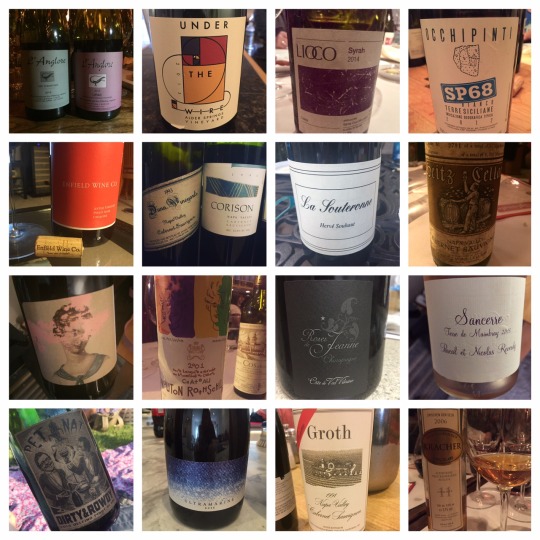
I’m long overdue for a post and have much to write about (including a recap from a week-long visit to Napa and Sonoma), but I wanted to get in here before the year ends to drop off this collage of some of my favorite wines from 2016. As easy as it is to bemoan the state of the world, it should be just as easy to keep thinking about the good moments. And that’s where wine fits in. Behind each bottle is a memory, a curiosity, something beautiful, a friendship, an experience. There’s talented artistry under each cork, along with a mystery and too often than not, a lot of smiles and laughter. These were only but a few of my highlights (and in no particular order). Thanks for joining me on this continuing journey, I promise to be back in 2017 with even more wine musings.  

image

#ImWithWine: Election Night Pairings

image

If Tuesday night promises to be as topsy-turvy and obscenity inducing as the entire 2016 election cycle has been, then you’re going to need something to drink to make it through a long night of news watching, punditry, state-by-state results and twitter streaming.

But while campaign season is known as the race to the White House, you’ll need to think of this night as a marathon –so hold off on the hard booze right now. Thankfully, wine promotes just the right amount of anxiety-reducing and calming effects to let you make it through
whatever may happen. Let’s be honest, we’re all in need of *something* to soothe our souls.

In a world of no-hangovers and no-limits, here’s how I might pair wines with election night. In reality, I’m just hoping to provide a little inspiration:

Start with something light, low alcoholic and slightly celebratory. It’s better to have some optimism at some point, than none at all. Consider a fun Pet-Nat. In my fridge, there’s a 2014 Cruse Sparkling Valdiguie that has just the right amount of fresh fizziness and bright red fruit.  With energy running through its spine, it’s lively and easy to drink.

image

If Pet Nats aren’t your thing – try a crisp dry white (I recently had a Lieu Dit Sauvignon Blanc which would work well). Bottom line: Now’s not the time to be too
serious with your wine. We’ve got a long night ahead of us!

When results start trickling in and your heart starts palpitating, grab your favorite red – it could
be anything that makes you happy – but seeing we’re unsure of where this night may go, I’d probably stick with something not too heavy. A favorite Pinot Noir or Rhone-style wine might do.

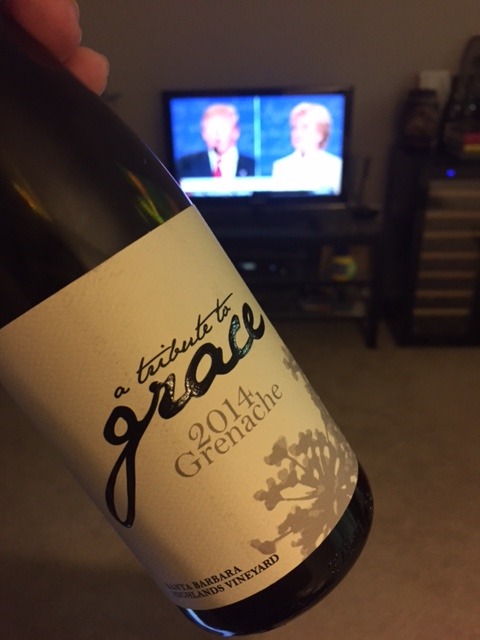
During the debates, I sipped a bottle of A Tribute to Grace Grenache. The combination of red berries and herbs warmed my soul despite the verbal jabs happening on the TV screen. At the very least, just knowingvyou’re drinking something with the word “grace” in the name may
psychologically bring about some calm.

image

If you want, take it a step further and open up a bottle of Hope & Grace Pinot Noir.
These California pinots consist of lush dark fruit and strong finishes. By this time in the evening, you can only hope with a little bit of grace, that your candidate will have a similar finish (see what I did there?).

For the next bottle, it’s time to get a bit more serious – especially if you don’t know when the final results may be called. If the night is getting rocky, the absolute perfect pairing would be Dirtyv& Rowdy’s Fred & Dora’s Vineyard Petite Sirah, but the 2014 is still too young and a very heavy decant is needed. Take a look at part of its description from the Dirty & Rowdy site, and you’ll see why it might be worth uncorking this on Monday and have it waiting:

“If you keep with it for few hours or visit on day two, the gentle
fruit begins to rise above the graphite and rocky sub-surface and you will discover that even gnarly soils have their lullabies.”  

Perhaps the same can be said about the aftermath of this election season?

Or, for something a little more accessible, seek out a bottle with some age on it so that the tertiary flavors and earthiness rise quickly to the palate. You’ll need those to help keep
you grounded, while the older vintage will help hearken back to happier times when election day didn’t quite feel like a doomsday event.

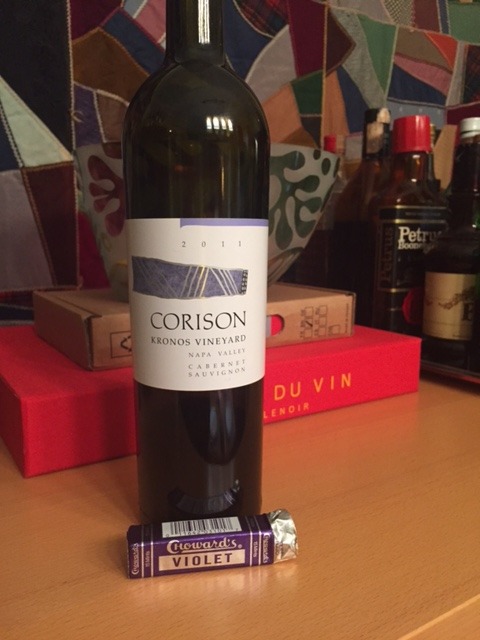
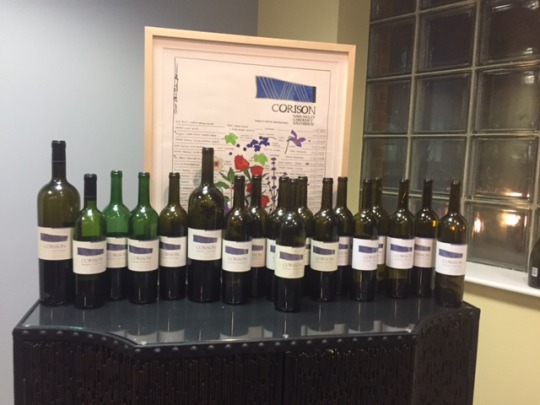
Recently, I tasted some 1990s Napa Cabernets that would work wonderfully: Both the Dunn and Corison are beautifully made wines and prove that power and finesse can live in harmony in a singleventity.

Finally, when the results are in, you have but two choices: Pop some Champagne to celebrate and breathe a sigh of relief, or now’s the time to reach for that hard booze – whatever it will take to  get you through the next four years will do!

Lioco Showcases Its Food-Friendly Wines

image

Twelve vintages ago, Matt Licklider and Kevin O’Connor began making vineyard-driven California wines, seeking lower alcohol and European styles to get away from the bigger-is-better approach that California had become known for. This was seven years before the In Pursuit of Balance team started widely promoting this style and there was plenty of uncertainties of whether local consumers would take to this style. For Matt, then a distributor of European wines and Kevin, the wine director at Wolfgang Puck’s Spago, moving forward in this
direction was a gamble.

That gamble is paying off as Lioco wines can now be found as far away as Japan, and are distributed across 30 states within the U.S. The wines, which include Carignan, Chardonnay, Pinot Noir and Syrah are made of fruit purchased from distinguished vineyards from such places as the Sonoma Coast and Mendocino. With an intense focus on cool climate and picking early enough to retain the fruit’s acidity, these aromatic wines showcase its terroir and are created to pair with food (although for any wine geek, these wines on their own provide quite a bit of intellectual fodder to enjoy on their own).

To show off the wines, Matt together with Andy from MacArthur Beverages hosted a wonderful
four-course dinner at Black Salt in the quiet Palisades neighborhood (Did you hear that California winemakers? Matt hosted a dinner here in D.C.!! It was successful, you should follow his lead 😉 )

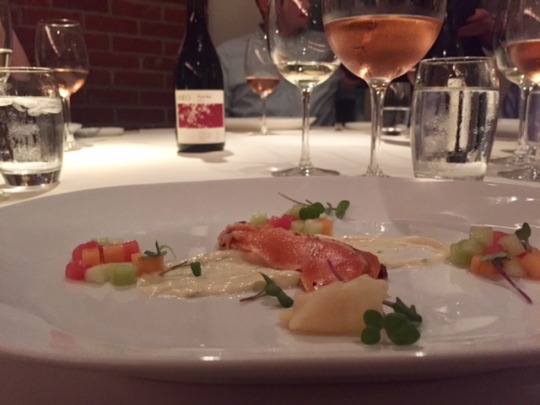
Pairings included the Indica Carignan Rosé (Mendocino, 2015) with salmon tataki with pickled melons and citrus aioli (this is one of my favorite rosés and the pairing created a seamlessly fresh experience of flavors):

image


Estero Chardonnay (Russian River Valley, 2014 ) with Chesapeake chowder (during the dinner, Matt told us he saw the Chardonnay as that bit of lemon you squeeze over your fish):

image


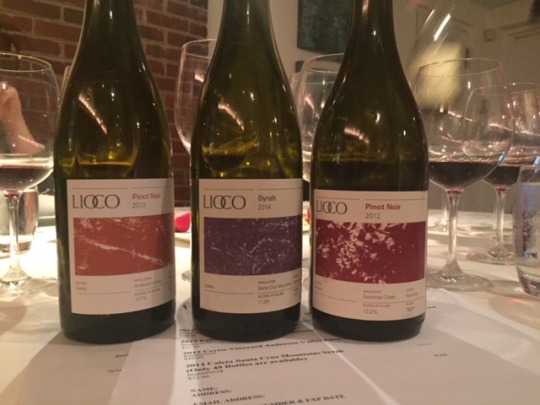
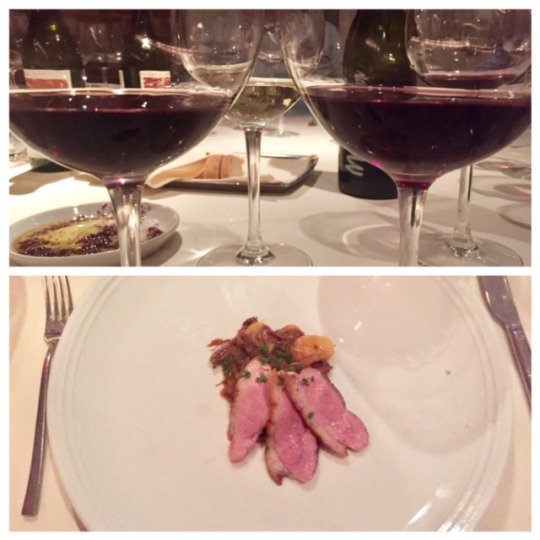
Cerise Pinot Noir (Anderson Valley, 2013) with duck bolognese (our table of six snuck in a bottle of 2012 Lioco Hirsch Pinot Noir to try side-by-side. The Cerise was full of really bright fruit, while the Hirsch showed off its herbal spine ):

image


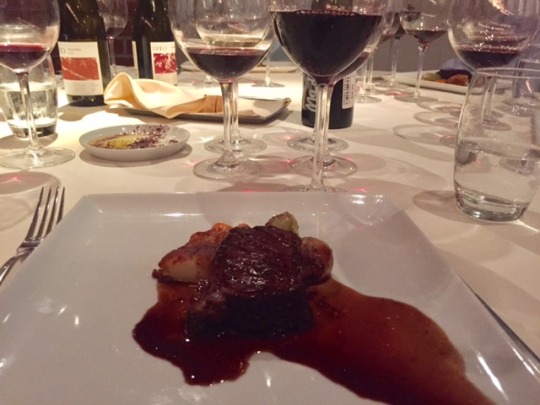
And lastly the Caleta Syrah (Santa Cruz Mountains, 2014) with braised beef short rib (I honestly can’t tell you much about the pairing as the Syrah on its own blew us all away. This is not your typical California Syrah. At 11.9 percent alcohol, the wine can best be described as a yin and a yang: brooding and dense on appearance but with an elegant palate more reminiscent of the Northern Rhone):

image


I’ve been a fan of Lioco wines for a while, so it was a real treat to have Matt here in D.C. A big thank you to him, Andy and Black Salt for the superb evening! I was at a table with five other friends, and as is usually the case, combing good friends while sharing delicious wine and food, in the presence of talented individuals makes for an evening that will be impossible to forget! Cheers!

(All photos by me)

A Photo Interlude: Vines In Trentino, Alto Adige

While catching up on wine news today via Google, I stumbled on this Vice piece on how climate change is impacting the wine industry. It’s not a new story, but it’s always a good reminder at how the elixir that lubricates our meals, or our interactions with friends or becomes a healer in stressful times, is so closely connected to the earth.

But despite the getting-close-to-apocalyptic topic, there’s a stunning image half down the page. Clicking on the Flckr photo credit led me to  Mathias Liebling’s page, where I discovered another photo he posted (It’s worth clicking over to it so you can see it in its original size). 

Instantly, the vibrant rows of vines, with the lone vineyard worker, took me to a  happy place and provided a tiny reminder that there’s so many things bigger in this world than us. A rare moment of zen, if you will. Enjoy!  

(Photo of a vineyard in Trentino, Alto Adige, Italy by Flckr user mathias764)

A Little Bit of Chianti Comes to Washington

image

Last week I had the honor of meeting and having dinner with a man who leads his family’s 120-year-old winery. Among the highlights was this passing comment:

“Italians don’t drink very much wine,” Andrea Cecchi said in his thick yet soft-spoken Italian accent. “Only at dinner,” he paused for a bit, “and lunch.“

There were three of us sitting at the table with him and it made us chuckle. To Americans, that sounds like a lot of drinking, but we understood what he was trying to say. Wine drinking in Italy is very much a part of the meals and embedded in their routines – whereas here in the U.S.,
we’re more prone to drink before dinner, at dinner and then maybe again after dinner.  We’ll find just about any excuse to uncork a bottle.

But it’s probably a good thing that Andrea sees Americans as drinking more wine: It’s his business. Together with his brother, he oversees Cecchi Winery, located in Castillino – one of the four municipalities located entirely within the Chianti region. It started four generations ago in 1893 and since the early 1900s, the winery has focused on bringing their wine to international mass markets.

Some of their finest wines come from the premier Chianti Classico DOCG, which
on Sept. 24 celebrated its 300th anniversary as the world’s first designated wine region. To celebrate, Andrea was here in Washington, D.C., to present a magnum of his family’s Cecchi
Riserva di Famiglia Chianti Classico
to the Italian Embassy.

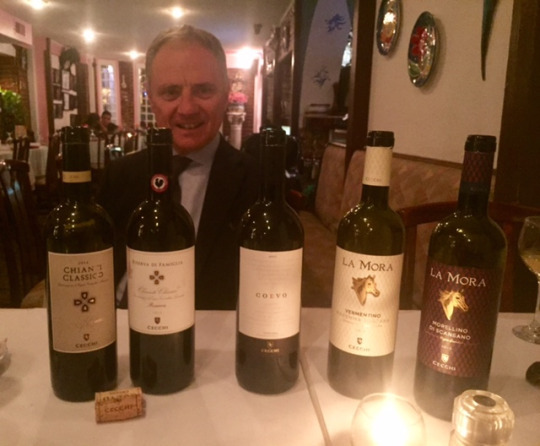
Producing wine from these historic grounds was a visible sense of pride to Andrea, as he pointed to the black rooster – the official designation that the wine is from Chianti – on the label of a few of the bottles he brought for us to try.

image

During dinner we tasted five of his wines: Two from Chianti and two from Maremma, which is southwest of Tuscany (and Florence) and along the Mediterranean coast. Maremma is its own separate wine region, but it’s a common place for Chianti producers to buy more grapes in the years when their Chianti vines don’t yield enough fruit.

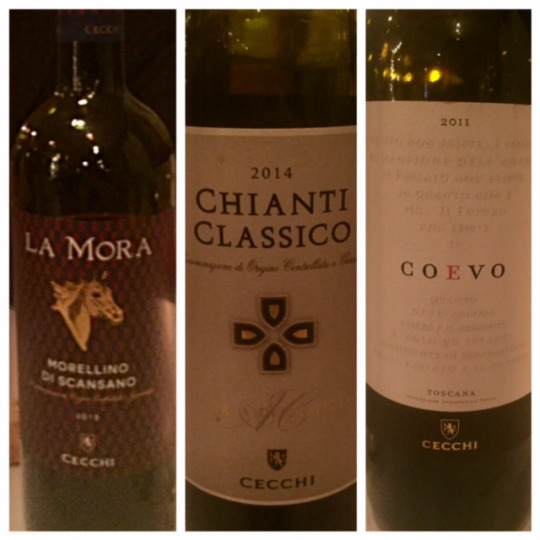
The Cecchi Winery is among the leading producers to recognize Maremma’s value not just as a place for extra grapes and started bottling a line called La Mora, which includes a Vermentino and a Sangiovese. They were bright food-friendly wines with wonderful acidity. The Chianti Classico we tasted had more of the rustic charm I associate with traditional Italian red wines, while the Chianti Riserva improved upon the Classico with a beautiful depth. All four wines I’d certainly seek out again and would want to enjoy with a table full of friends.

The fifth wine, called Coevo, is a blend of both regions and composed of Sangiovese, Cabernet Sauvignon, Petit Verdot and Merlot. It’sdark and brooding with big fruit and big silky tannins that give you a refined elegance. With only 13.5 percent alcohol, it stays true to its old-world traditions yet takes on a new world appeal. And that’s the reason Andrea and his brother began producing this wine. Coevo, which Andrea said translates to “contemporary,” symbolizes their efforts to be a wine of the present among the international market with an eye to the future.

This modern thinking, however, isn’t just about a single bottle of wine. It’s in the fabric of the
company itself. A quick glance at their website shows off their modern facilities, their sustainability efforts and their work in helping the entire Chianti region innovate.

After four generations, naturally Andrea and his brother’s children are destined to carry the company into the future. Right?! No, said Andrea. Only one of them is currently interested in being in the wine business and Andrea said there’s no pressure for the others to join.  He’s satisfied that the fifth generation is secure.

“In Chianti, we have a lot of dust,” he said, motioning a sweeping gesture off his shoulders to emulate how it can settle in one place. To be successful, he explained, they need managers who aren’t part of their family, but can work closely with them to help wipe away that “dust” and keep the business moving in a forward direction.

To Learn About Wine, Focus On Building Your Confidence | Napa Valley Wine Academy

New blog post alert! I originally started writing this for this blog after a couple friends asked me how I know so much about wine. But then the kind folks at the Pouring Points blog at the the Napa Valley Wine Academy liked the idea – so I expanded it and voila!

image

The truth is – I’m still learning. But I discovered through reading, being active on social media, finding like-minded friends and ultimately building my confidence levels, it wasn’t too difficult to do. So here are some of the tricks and resources I’ve used to jump start my journey. If you’re just starting out, I hope they’re helpful to you, too!

( Read it here: To Learn About Wine, Focus On Building Your Confidence | Napa Valley Wine Academy.)

Cheers!


As 2016 Harvest Commences, RdV Vineyards Matures

The Virginia wine experience is most often filled with fun and frolic — as it should be. It’s a chance to flee the city into the rolling green hills that many Washingtonians easily forget exists (I know I nearly did). You can taste, enjoy beautiful views, have a picnic, share a bottle (or two, or three) and often listen to a live music performance. It’s escapism at its finest (especially during an election year).

But nestled about an hour west of D.C., straight out I-66, is one winery that’s operating a little differently. It’s not here to attract the throngs of day-trippers. Instead, it’s courting the serious wine drinker and producing wines to play on the national and international stage.

RdV Vineyards
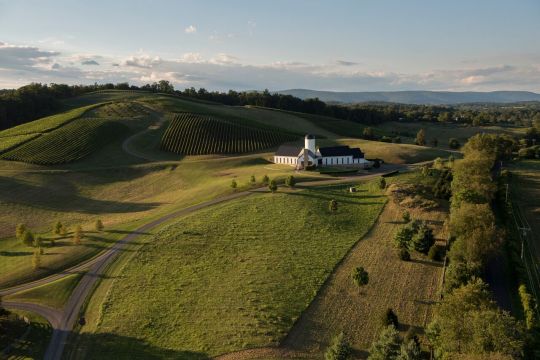
RdV Vineyards in Delaplane, Va.| Photo by Jeff Mauritzen / Courtesy of RdV Vineyards

RdV Vineyards is as much a part of Virginia wine as it’s not. With 16 acres of vines sitting
above the frost line on a hill in Delaplane, Va., overlooking 100-acres of
farmland, the winery takes a mostly hands-off approach to winemaking, letting
the land speak for itself. Their finished bottles have been well integrated
into the Washington region’s dining scene. And just this past year, the
White House served RdV’s 2010 Rendezvous during the Nordic state dinner
.

image
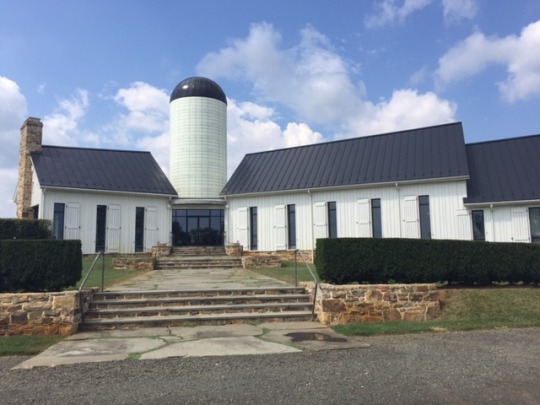
RdV’s hospitality center only looks rustic from the outside. | Photo by itswinebyme.

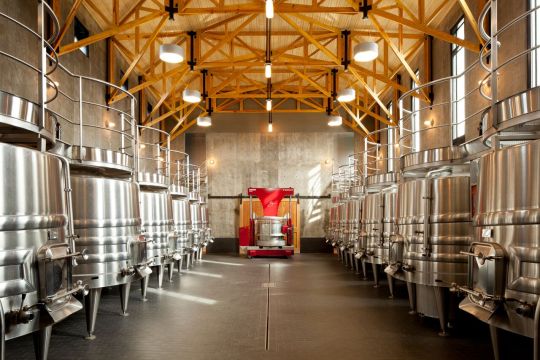
But once you step inside RdV’s white barn-like structure with towering silo, the interior suggests something more likely found in Napa or Europe. Its sleek minimal design elements, including Herman Miller Eames-style wooden chairs and leather couches adorning its tasting room, is almost reminiscent of a contemporary art gallery, leaving visitors with a sense of peace and calm. In the center of the building is a staircase leading down to the wine cellar, the caves, a large fermentation room filled with steel tanks, a glass-enclosed bottling room and a small
laboratory used to determine the blends for each vintage.

RdV Vineyards
Fermenting tanks inside RdV Vineyards. | Photo by Gordon Beall/ Courtesy of RdV Vineyards

When I visited the winery on a warm Wednesday morning in early September, all was quiet. The temperature was a few degrees cooler than when I left Washington, and blue skies intermingled with some clouds and a few droplets of rain. Just a few of the vineyard workers were tending to the vines – all lined in perfect rows covering the green hillside – patiently waiting for
harvest, which RdV begins today (Sept. 15, 2016). They’ll begin picking Merlot, followed by several other Bordeaux varieties, and will end the harvest season with Cabernet.

For several years, RdV has been written up by local, national and international media. The initial excitement about the amount of effort and resources Rutger de Vink was pouring into his winery was something the Virginia wine industry needed to help bring more attention to the emerging region.

After the release of RdV’s first vintage, London-based wine writer Jancis Robinson came to visit and praised the winery: “I sincerely believe [Rutger de Vink’s] considerable efforts stand a good chance of putting the state definitively on the world wine map,” she wrote.

A bottle of the wine reached Eric Boissenot, the famed enologist and winemaker who has worked with many of Bordeaux’s most respected wineries. After tasting it, he reached out to Rutger to volunteer his services for free. So once a year, in exchange for a plane ticket and a place to stay, he joins Rutger, Jarad Slipp, RdV’s estate director,Josh Grainer, RdV’s winemaker, and Jean Philippe Roby, a consulting viticulturist also from Bordeaux, for several days of blending sessions to create the final wines. (Read more about the entire RdV team here.)

RdV Vinyeards
Eric Boissenot during a blending session in 2014, while Jean-Philippe Roby, left, Rutger de Vink, right, and Jarad, seated in the back, look on. | Photo by Logan Mock / Courtesy of RdV Vineyards

Now, about a handful of vintages later, the RdV story remains much the same, but the winery is beginning to show positive signs of maturity.  Rutger and Jarad are excited about the upcoming release of their 2013 vintage. They say there’s a much better understanding of the fruit each block of vines is producing. This will also be the first year they expand their offers to purchase beyond the winery’s “Ambassador” program to their mailing list subscribers.

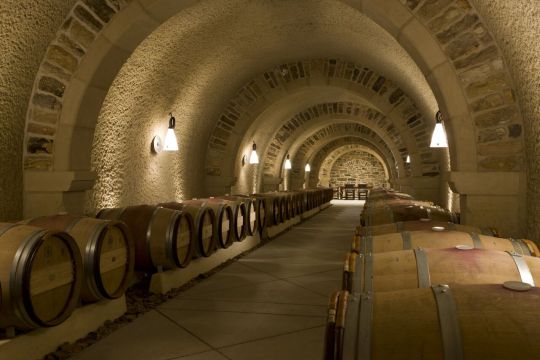
The winery’s caves are lined with filled French oak barrels, and racks of sleeping unlabeled bottles are stacked in cages at least six-feet high. A piece of land behind the vineyards where
Rutger once lived in an Airstream is now the site of a still-under construction contemporary-style home he’s building for his family.

RdV Vineyards
Caves at RdV Vineyards. Photo by Gordon Beall / Courtesy of RdV Vineyards

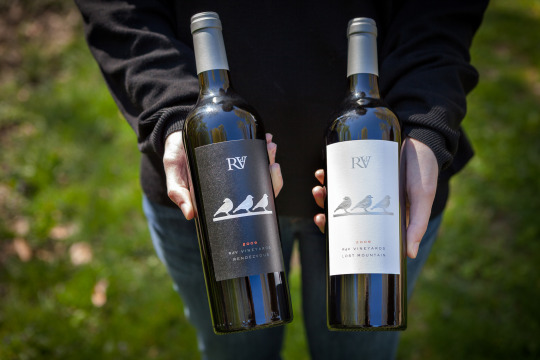
 RdV’s wines include Lost Mountain, a Cabernet-dominated Bordeaux blend, and the Rendezvous, a Bordeaux blend that’s dominated by Merlot. There is no recipe for how the wine is blended each year and what percentage of each grape are bottled. It’s all decided by the artistry of tasting and influenced by the subtleties of the vintage. The Rendezvous is created as a lively and energetic fruit-forward wine that’s meant to be drunk young, while the Lost Mountain is a bit more refined and structured with finesse that hints at its aging potential.

RdV Vineyards
RdV Vineyards wines include Rendezvous, left, and Lost Mountain, right. | Photo by Matthew Girard/Courtesy of RdV Vineyards

RdV creates its wine by fermenting each vineyard block in its own tank. After the blends are decided, they are put together and poured into French oak barrels to rest for two years before being bottled where they are stored an additional year before release.

Deciding when to pick the grapes simply comes down to the taste of the grapes. On my tour of the vineyards, Jarad, who’s also a Master Sommelier, told me there’s no measuring of brix or abiding by a particular formula. Standing about a third of the way up the hill that’s packed with sandy loam layered on top of granite, we sampled Cabernet and Merlot berries that we picked off the vines. He talked me through the state of the grapes by looking at the color of the seeds and accounting for the leathery feel of the skins. While the juices were sweet (the Merlot slightly sweeter with plumper berries than the Cabernet), the berries at
that point were not quite ready.

RdV Vineyards
Cabernet grapes hang on the vines at RdV Vineyards on Sept. 7, 2016. | Photo by itswinebyme

When Jarad and I returned from the tour of the property and winemaking facility, there were
four bottles in paper bags lined up against the wall in the tasting room. Among the wines were the 2012 vintage of RdV’s Lost Mountain and Rendezvous, a 2012 Plumpjack from Napa Valley and a 2012 Chateau Figeac from Bordeaux. We tasted blind, which served as an interesting exercise in understanding the winery’s motto – “Neither Bordeaux or Napa, but uniquely our own.” The quality across all four wines were about even and proof that RdV’s vision for their well-balanced wines to be on par with the world’s best is coming to fruition.

Rutger could have opened a winery and produced the same high quality wine he makes here in Virginia, in California, or France, or in any other established wine regions where growing conditions are easier. But instead, he’s happy being able to bring something different to the table. Toward the end of my visit, Rutger, Jarad, Josh and I were discussing the wines. I casually asked if being an “outlier” in the wine world is where they like to be. Jarad and Rutger
smiled: Outlier is the name they had chosen for a winery publication they’re putting together.

More about RdV Vineyards: The winery produces 2,000 cases a year mostly sold through its Ambasador program, to winery visitors and to D.C-area restaurants. The 2013 Lost Mountain will sell for $125 and the 2013 Rendezvous for $75. Tours are by appointment only Thursday
through Sunday and cost $50 per person.

What Wine Brings To My Life

It’s a quiet Sunday morning and as I settled into the corner of my couch with a big cup of coffee getting ready to read a new book, a flood of thoughts came rushing forward about all the things wine is bringing into my life. I started jotting a few down and the list kept growing, so here they are. While some of the items are obvious and what wine is meant to do, you’ll see it goes much deeper than that:

  • it provides cerebral, intelligent and hedonistic pleasure
  • it takes away stress and quiets some nerves
  • it awakens my senses 
  • it’s bringing wonderful new friends to my world
  • it’s introducing me to some fascinating and inspiring people
  • it’s a stunning reminder of the beauty of nature
  • it’s teaching me how to pay attention to tiny complexities and nuances
  • it’s encouraging me to read (for fun) again
  • it’s encouraging me to write again
  • it’s encouraging me to seek a happier path
  • it’s a constant reminder how much fun it is to be passionate about something
  • it provides moments of pure happiness
  • it’s teaching me about the importance of our environment
  • it’s a reminder that science can be very interesting
  • it’s teaching me new languages, and expanding my own vocabulary
  • it’s expanding my once very picky palate
  • it’s making me curious again
  • it’s helping me increase my self confidence and to trust my instincts
  • it’s perking up my ambitions
  • it’s showing me a future with a number of different paths, with a constant reminder how important it is to enjoy the present.

Cheers! 

(image above by Viktor Hanacek via picjumbo)

Why Clones Matter – And Do they Trump Terroir? | Napa Valley Wine Academy

image


If you look closely at these bottles of wine, you’ll notice the labels don’t look like the ones you’ll find at a retailer. In fact, these bottles aren’t for sale. They were part of a specialized tasting sponsored by Gloria Ferrer featuring five different wine clones. Each of these Pinot Noirs were made from grapes grown in the vineyards planted near each other, but tasted wildly different. It was a perfect study in the importance of the individual vines.

Curious to know more? Or what I’m even talking about? Take a look at my latest piece for the Napa Valley Wine Academy’s Pouring Points blog.

Read it here: Why Clones Matter – And Do they Trump Terroir? | Napa Valley Wine Academy

Cheers!