I recently returned from the 2026 Wine Writer’s Symposium in Napa Valley, sponsored by the Napa Valley Vintners, Meadowood Napa Valley and the Natural Cork Council. As part of the application process, we were prompted to write a 500-word essay on what would be lost if wine were only art or only science. With some minor copy edits, I’m sharing my submission below. At the time I was just hoping to meet the deadline, but now that I’m home and re-reading these words, I’ve realized it really does sum up what I love about wine and why I continue to pursue itas … spoiler alert … art.
—
If wine were only science, the magic would be lost. We wouldn’t have an industry filled with writers, thinkers, creators and enthusiasts — or one that creates a world far bigger than the product itself. Don’t believe me? Where are the orange juice writers? But seriously…
Wine’s artistry shows up in two places: in the winemaking process and once wine is bottled. There’s plenty of art in every decision that shapes how the grapes are grown, harvested, fermented and aged. But for me, it’s about the art wine brings once a bottle lands on a table or poured into a glass. It’s wine’s mystique, its rich ability to tell a story of time and place, its ability to send people down intellectual rabbit holes, spark unexpected conversations and even create intimacy, that proves wine is more art than science.
If wine were only a science, we’d gain precision and consistency, but lose its wonder. The thrill of searching for the vintage variations, the different aromas and flavors, or racing acidity and bite from tannins that spark our curiosity would no longer be part of the experience. The energy that surrounds a bottle of wine, the way it inspires people to create, argue, fall in love or toast to something bigger than themselves would all vanish in a purely technical world.
Thinking about wine as art reminds me of a conversation I had nearly a decade ago while sitting at a picnic table with a winemaker in one of the far Sonoma Coast’s heralded vineyards. We were discussing wine pairings and her take was simple: Pairings should be about the occasion – sipping a bottle at the beach with your soulmate? Grab a rosé. Celebrating? Make sure to have lots of sparklers. Dinner with friends on a cold winter night? A deep sumptuous red will bring warmth to the evening. Her philosophy wasn’t about the wine’s chemistry, it was about moments – reminding me that wine wasn’t something to scientifically analyze, it was something to experience.
Science gives us the tools to make the wine, but art gives wine its soul. It’s what drives a winemaker to chase perfection, knowing they’ll never quite reach it, and what drives enthusiasts to keep exploring new bottles, new regions and seeking out new stories.
Ultimately, if wine were only a science, we’d lose the passion it brings – the joy, the poetry, the endless search for answers from a glass that’s never exactly the same twice. The art of wine isn’t just about how it’s made, but in how it makes us feel.
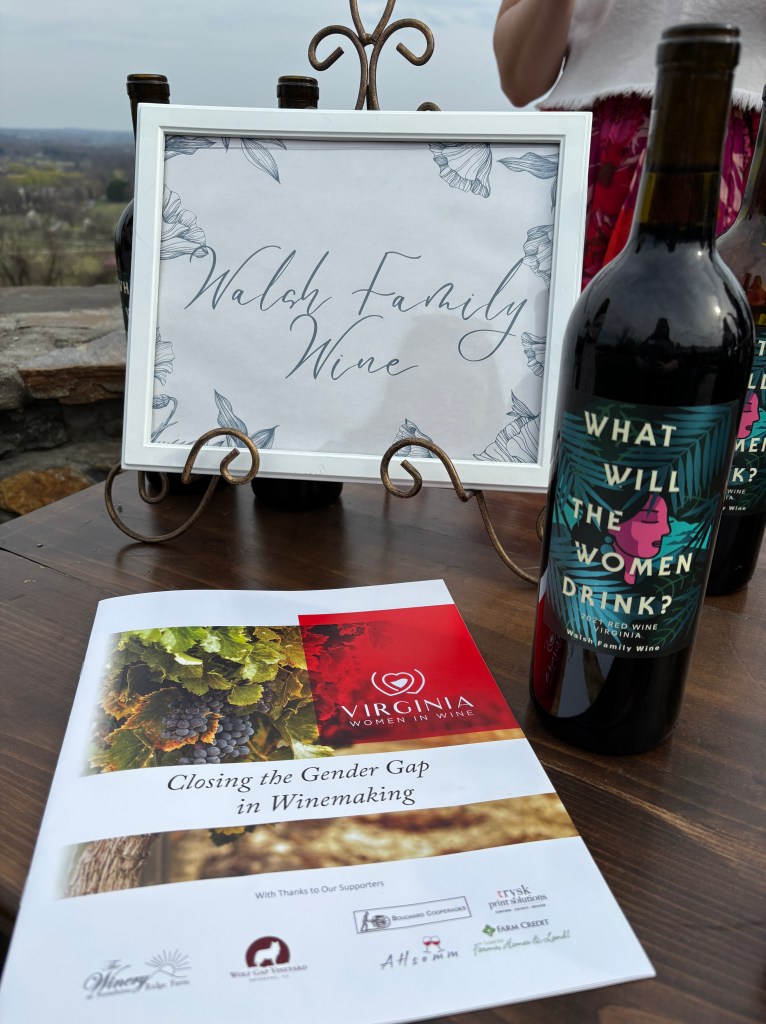
The “Closing the Gender Gap in Winemaking” paper was launched at a March 29 event at Bluemont Vineyard. Among the featured wineries was Northern Virginia’s Walsh Family Wines, whose cheeky wine ” What Will the Women Drink” is a spicy blend of Cabernet, Petit Verdot and Tannat. (Photo by itswinebyme).
In my decade-ish long wine journey, I never worried too much about the number of women producing delicious wines and driving the industry forward, especially as so many of my favorite female winemakers are producing standout bottles. My collection has always included bottles from the legendary Cathy Corison, volcanic Sicilian wines from Arianna Occhipinti, and the graceful Fleurie of Beaujolais’ Anne Sophie Dubois. Even among the new guard of U.S. west-coast winemakers, Martha Stoumen, Megan Bell, Brianne Day and Kelley Fox are among my favorites. As a wine geek located in D.C., my favorite day trip recommendation is Early Mountain, where Maya Hood White has transformed the vineyards and produces some stunning examples. And my summer go-to quencher is currently a bright Albariño from Blenheim Vineyard’s Kirsty Harmon from the Monticello Wine Trail.
So when I was asked to write a white paper about closing the gender gap in winemaking for the Virginia wine industry, I was surprised to learn that only about 17% of winemakers in the U.S. are women. In Virginia, the statistics for female winemakers are nearly the same, although if you dig deeper to understand hiring, the chances for a woman to become a Virginia winemaker are far more likely if she has the resources to start her own winery. In the last five years, according to data tracked by Matthew Fitzsimmons, only two women were hired by wineries they had no relation to.
Barriers Facing Female Winemakers
Finding out the answers why, and identifying solutions to achieve gender parity, is not easy. One woman who confided in me, shared her career trajectory was a mix of impressive support from some of her bosses, yet a number of different kinds of challenges ultimately led to her decision to step away from winemaking.
For example, early in her career, she was often singled out to do gender-biased tasks like cleaning up “after the boys.” As her career progressed, she said men with less experience would surpass her for winemaking roles, and once finally becoming a winemaker, she still faced questions of whether she could do the job. Combine all this with a lack of health benefits (leading to her questioning whether she wanted a family), and a role requiring long hours, with little to no overtime pay, it’s easy to see why she decided to move her career in a different direction.
These are hard decisions. Winemaking is a passion industry and often a form of personal artistry, where the drive to succeed can be far more personal than those entering more traditional corporate career paths.
What’s curious is that women often make up more than 50% of enology degree programs, yet far fewer become winemakers. When I reached out to some administrators at U.C. Davis’s enology program, they pointed to what could be one of the biggest challenges to closing the gender gap: Anecdotal evidence suggests women leave winemaking within 5 to 10 years of graduating at a higher frequency than men.
Challenges for female winemakers often came down to sexist attitudes that women can’t physically do the job (which to put it bluntly by many of the women I interviewed, is “bull sh*t.” ), the lack of benefits and job security, not getting paid the same as their male counterparts (although national salary data — which include the E&J Gallos of the world alongside the smaller wineries — shows salaries between the genders are not too far off), and women having to work harder to constantly “prove themselves,” often with little recognition for it.
Strengths Women Bring to the Cellar
What makes these conditions even more frustrating is when you understand the many strengths women bring to winemaking: They have more innovative ideas (perhaps because of the legacy of having to prove their worth), they have strong collaborative skills (and as one male winemaker noted, “less drama” in the cellar), and they possess innate skills lending to better quality wines (studies show women can be better tasters; and a few winemakers I’ve spoken to over the years point to women being much better nurturers, aiding in the patience that’s needed in both the vineyard and the cellar to make quality wine).
The good news is that success can be found, often by finding the right mentors. Most of the female winemakers I spoke to were able to successfully navigate the industry by having mentors who provided everything from practical winemaking advice, to leadership skills, to how best to handle working relationships in the industry.
In the paper, I briefly highlight a few mentoring and training examples, including that of one woman who started her career washing dishes in the winery, moved to the vineyard and is now training to become a winemaker alongside the winery’s head winemaker who said she was now his “right-hand person,” contributing to the quality of the wine.
Visibility and Lasting Change
In their book “Women Winemakers: Personal Odysseys,” Santa Clara University professors Lucia Albino Gilbert and John Gilbert came to the conclusion that a key solution to bringing more female winemakers in the field is more visibility. Whether that encourages more women to enter the field or those in the industry to be more accepting, I tend to agree. But it’s also the easy answer. The challenges women face in the U.S. (and in Virginia) are complicated and ones that a one-size-fits all solution can’t address. But if we can get the conversation started, and showcase the immense talents that women bring to the industry, perhaps in a few years, the data will say something different.
Read the Full Report
For the paper Virginia Women in Wine commissioned, we let the voices of Virginia’s wine industry shine through and hope it serves as a launching point for hiring managers and other industry leaders to create a more inclusive and diverse industry for women and future winemakers. Download the “Closing the Gap in Winemaking” PDF here.
This post is purely to acknowledge that life got in the way of updating this site. But fortunately, my love and passion for wine never wavered. I continued to write, to learn, and drink merrily with friends. But after a handful of years that included a move to Boston, a pandemic, and then a move back to Washington, D.C., I’m excited to refocus on this space.
I’ve always touted wine in conversations as a wonderful lens to understand the world, and certainly in the years since I last checked-in, that statement only rings louder. But it’s still a luxury good that’s purpose is to bring people together, to make people happy. I hope this space will find a way to balance those aspects.
As I attempt to relaunch this site, here are a few things I’ve been mulling over:
Wine and Politics – When I jumped into the wine world it was pure escapism from the rest of the world. I avoided certain wine bars I would have otherwise made my home because of their outspoken activism (even when I fully-supported their positions). But if wine is a lens to understand the world, I would be doing a disservice to stick with my avoidance behavior. Too many of the world’s troubles impact everything from those in the industry to the grapes on the vine. And while I still prefer to focus on the fun and beauty of wine, there are important stories to be told at this intersection.
Women and Wine – I’ve always said if I ever went after a Masters in Wine, my dissertation would be focused on why serious wine is never marketed to women. But in the past few years, the marketing question is more centered on the generational differences than that between the sexes. The increase of more women sommeliers and industry professionals is also slightly shedding some of those “wine-for-book club” stereotypes. The topic of women and wine has always been a complicated subject to nail down as women have been an integral part of the wine world for centuries. But from an enthusiast perspective, why am I still often one of the few women at a table when invited to a serious wine dinner?
Climate and Wine – We know this isn’t a new conversation, but it’s the single biggest global issue impacting wine. In the past few years however, there’s a shift about thinking beyond what’s happening in the vineyard and what makes its way into the glass. The industry is looking at the consumer impact as well (and of course, countless consumers are demanding changes). Packaging questions and shipping questions, for example. It’s not just whether wildfires are going to impact a vintage, but what can wineries, winemakers do to mitigate a more sustainable future.
So I’m pulling It’s Wine By Me out of the cellar, dusting it off and hoping to explore these topics and more. Pour yourself a glass of something you love, and thank you for joining me here!
Taxes. It’s a dreaded topic, often filled with thoughts of dollar signs flying out the window, procrastination and eye-rolls. It’s certainly not the fun side to writing about wine. But after reporting on the new alcohol-specific tax legislation that was added to the larger tax overhaul bill, this time, it’s a topic with plenty of interesting things to talk about.
Thanks to my editors at SevenFifty Daily, I was able to write a comprehensive report that I hope will be informative and useful to industry professionals, but there were some tidbits I had to leave on the cutting-room floor.
And that’s where this space comes in. For those seeking a bit more behind-the-scenes details about the Craft Beverage Modernization and Tax Reform legislation, here’s some of that additional reporting. (Note: If you haven’t read my piece yet, go read that first … I’ll wait).
After interviews with Michael Kaiser of WineAmerica, Bob Pease of the Brewers Association and Mark Shilling of the American Craft Spirits Association, it was clear the purpose of the federal excise tax cuts was reinvestment back into the industry. Yet as consumers, it’s easy for us to hear “less taxes”, and hope (and maybe pray) that those savings will fall into our pockets. But that’s not quite the case as Kaiser clarifies:
“The whole point of a tax credit like this is that the money is going to be back into their business. In some other articles that have been written about this bill, there’s been a narrative that now wineries, brewers and distillers are going to lower the cost of their product because they’re paying less taxes, but in reality our member companies and the other commodity companies are going to refold it back into their businesses.”
These new tax laws didn’t appear out of the blue. Lobbyists have been working for close to a decade to lower federal excise taxes and it’s one of the few times members of the wine, beer and spirits industries banded together in support of a common goal.
In January 2017, the Craft Beverage Modernization and Tax Reform Act was introduced with strong bipartisan support. The stand-alone bill called for the tax rates and credits to be permanent changes, but when lawmakers decided to fold it into their gigantic tax overhaul at the end of the year, that permanency was reduced to only two years.
Another casualty was the amount of time the Alcohol and Tobacco Tax and Trade Bureau (TTB) had to implement the changes. Instead of a year, they only got about 10 days. The Tax Cuts and Job Act was passed on Dec. 22, 2017 and became law on Jan. 1, 2018, which given the holiday season, only gave the regulatory agency that administers the laws about four full work days (provided none of its staff was on vacation).
This, not surprisingly, has caused some confusion.
Scott Rosenbaum, a spirits specialist at T. Edward Wines and Spirits, described a “disconnect,” when he tried to do his job at the start of the year.
“As an importer, I had [spirits] crossing the border on [Jan. 2] which should have had the new tax rate applied, and we were charged the old tax rate and told that we could file for a refund because they hadn’t put it into play yet even though it went into action,” he told me while I was researching the SevenFifty Daily story.
Kaiser of WineAmerica, who was among the lobbyists fighting for the bill’s passage, wrote in an explainer piece to wineries that he doesn’t expect the TTB to finalize its written rules and regulations until early spring. But he assures businesses that if they are still paying the old rates, the savings will be retroactive back to the beginning of the year.
So, what’s next? The lobbyists all told me they’re committed to fighting for reauthorization and making the new tax rates permanent like it was intended. They’re also working to help smooth out its implementation.
“In the permanent version of this bill, there was some actual language that would have required Congress to appropriate some more money for TTB to implement this,” Kaiser says. “And so separate from this, we’re working to get more money for them through the appropriations process.”
One more thing worth mentioning, or perhaps asking: Why did this bipartisan-supported bill get wrapped into an extremely divisive piece of legislation?
Without getting lost in the intricacies of how Congress does business, one answer might lie in the act’s impact. Mere weeks after tax bill was signed into law, there’s evidence that small drinks businesses are already hiring for newly-created positions — many of which are manufacturing jobs, which the Trump administration has been promising.
Pease, of the Brewers Association, says his industry has always been a source for manufacturing jobs, often in urban environments.
And as Meredith Meyer Grelli, co-owner of Wigle Whiskey, noted when I spoke to her last week: “Being in Pittsburgh, getting back manufacturing jobs has been the rallying cry for decades and it’s sort of interesting that in some ways it’s happening through alcohol.”
I’m starting a new day job shortly that will move me into the consumer technology space, so with the 2018 Consumer Electronic Show making headlines in Las Vegas this week, it had me thinking: What kind of crazy wine gadgets are being touted and might be entering the market?
As many wine experts have expressed (for example, see this interview I did with with Jon Bonné about his new book, “The New Wine Rules”), these fancy tools aren’t necessarily helpful to your wine and are often more show than function.
But that doesn’t make me stop wondering! So, here are a few of the gadgets I found on a google search of wine and CES 2018:
(For those following this topic more closely, did I miss anything?)
Does anyone really need new technology for a product that has been produced and enjoyed for centuries upon centuries? Probably not. But it’s still fun to think about and any time wine can enter a wider conversation in the world, it gives us some fun teachable moments.
Of all the social networks, Instagram is by far my favorite way to learn about wine — and probably more importantly, the people in wine. It can be super fun to ogle at bottle shots (I’m certainly guilty of posting many of those) or follow winemakers during harvest, but it’s the accounts that teach me a little something or show off a creative way to look at wine, that I really appreciate. Here are three of the accounts I’m currently crushing on. Leave me a comment with the accounts that make you happy.
Clearing the cellar meant we opened a lot of wine! (Photo by Berg Atkinson)
When you enjoy wine and start to acquire or collect it, it’s easy to fill up your space pretty quickly. And if you’re like me, you often save a bottle or two to share with specific people, or a specific occasion. But then those opportunities don’t quite come the way you imagined, or a bottle gets pushed to the back and you forget about it or your tastes start to change and all of a sudden your favorite wine is just meh.
Chances are, that’s happening to your friends, too. So now that shipping season is here (the few months a year when the weather won’t ruin the wine on the back of a delivery truck because it’s too hot or too cold), it’s not unthinkable to admit that you may have gotten a bit carried away and now have nowhere to put your wine, unless you like making cardboard box towers in your living room.
Too many boxes full of wine with no place to put it. (Photo by itswinebyme.)
To combat this purely first-world problem, some friends decided to throw a Clear the Cellar Party and invited about a dozen (plus or minus) wino-s to bring a random assortment of wines they wanted to get rid of, but didn’t necessarily just want to pour them down the drain.
We had close to 100 bottles of wine open and probably another 20 that we failed to uncork. The results were nothing short of epic, not so much because the wines were amazing — in fact, many turned out to be just so-so (and there was at least a case of undrinkable wine) yet the diversity of wines and curiosity it provoked made the tasting that much more fun.
Not to mention, there was an absence of stress that often comes with wanting to impress others with the bottles you brought. So, what’s usually a gathering of fun, super laid-back people, was even more relaxed. That translated to more laughs, more fun and an evening to remember.
Want to throw a similar party for your friends? Here are some tips based on what contributed to our success:
* Give guests several weeks notice so they can really dive into their cellars and pull the bottles they want to bring (or maybe locate bottles they are curious about trying — we really had no definition of what “clearing the cellar” should mean).
* Find the right kind of space to throw the party. This is not an event to combine with a restaurant or seated meal. Somebody’s home or backyard will do. My friends reserved the community room in their condo building, pushed several long folding tables together, and it was perfect.
So. many. bottles. (Photo by itswinebyme.)
* When the wines arrive, don’t try to organize the bottles too much. Loosely group them in order from light whites to deep, dark, brooding purple. Don’t push the tables against the wall. Having space to walk on either side of the table meant there was never any crowding.
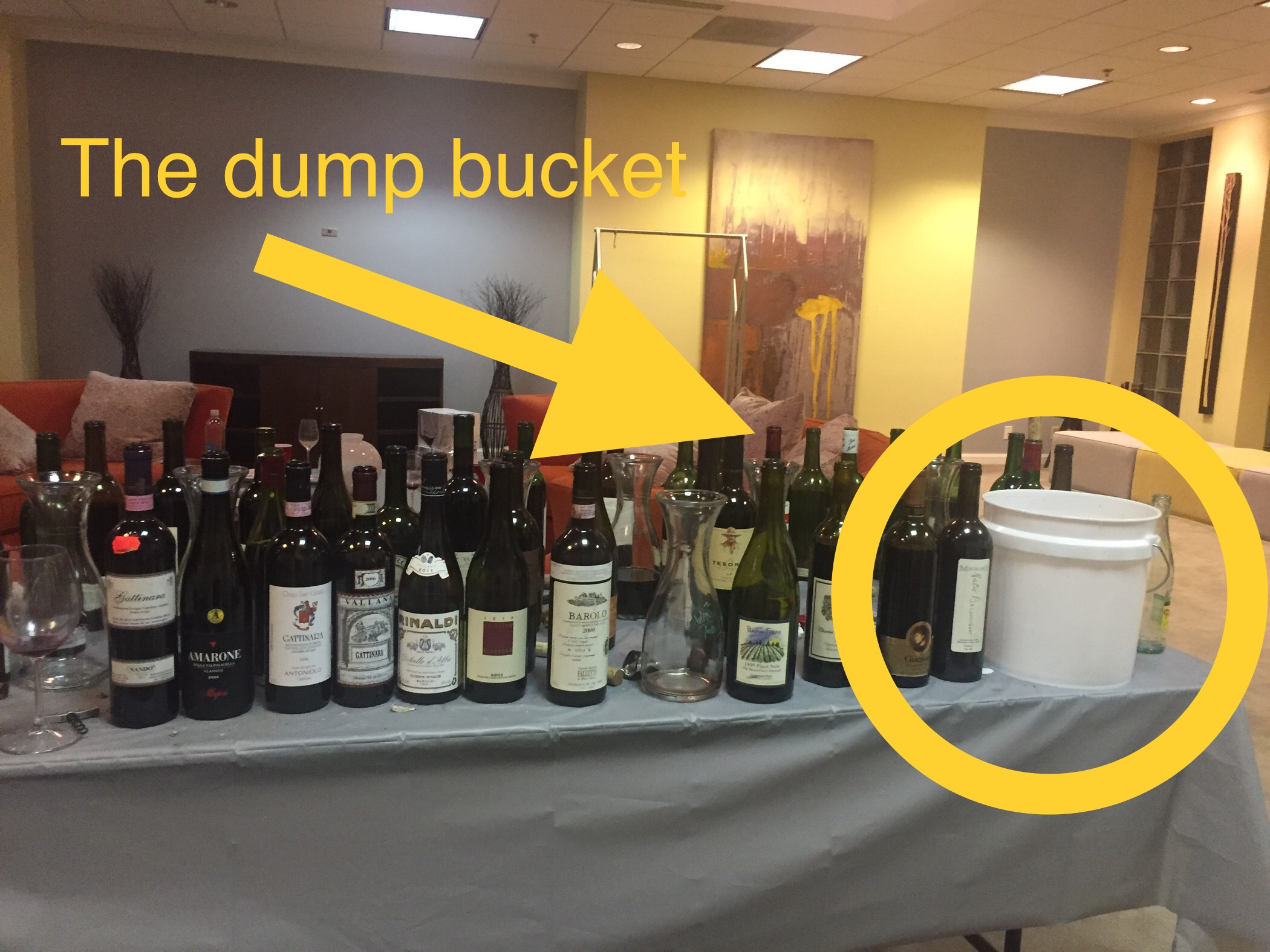
* Plastic utility buckets make wonderful spit and dump buckets. Our host was diligent about dumping the buckets when they were about halfway full, too. That insured no splashing and no accidental spilling. (Oh, and come to grips, you’re going to dump a lot of wine, and that’s perfectly okay! In fact, it’s the responsible thing to do.)
* Food. You need food to ensure your friends don’t over indulge. We had two big plates of cheese and charcuterie to snack on right away. Then, later on in the evening, some other goodies were served: pulled pork, a chicken dish, brisket and a bunch of sides and salads. We did everything pot-luck style. There was room to sit and eat, but it wasn’t a seated dinner.
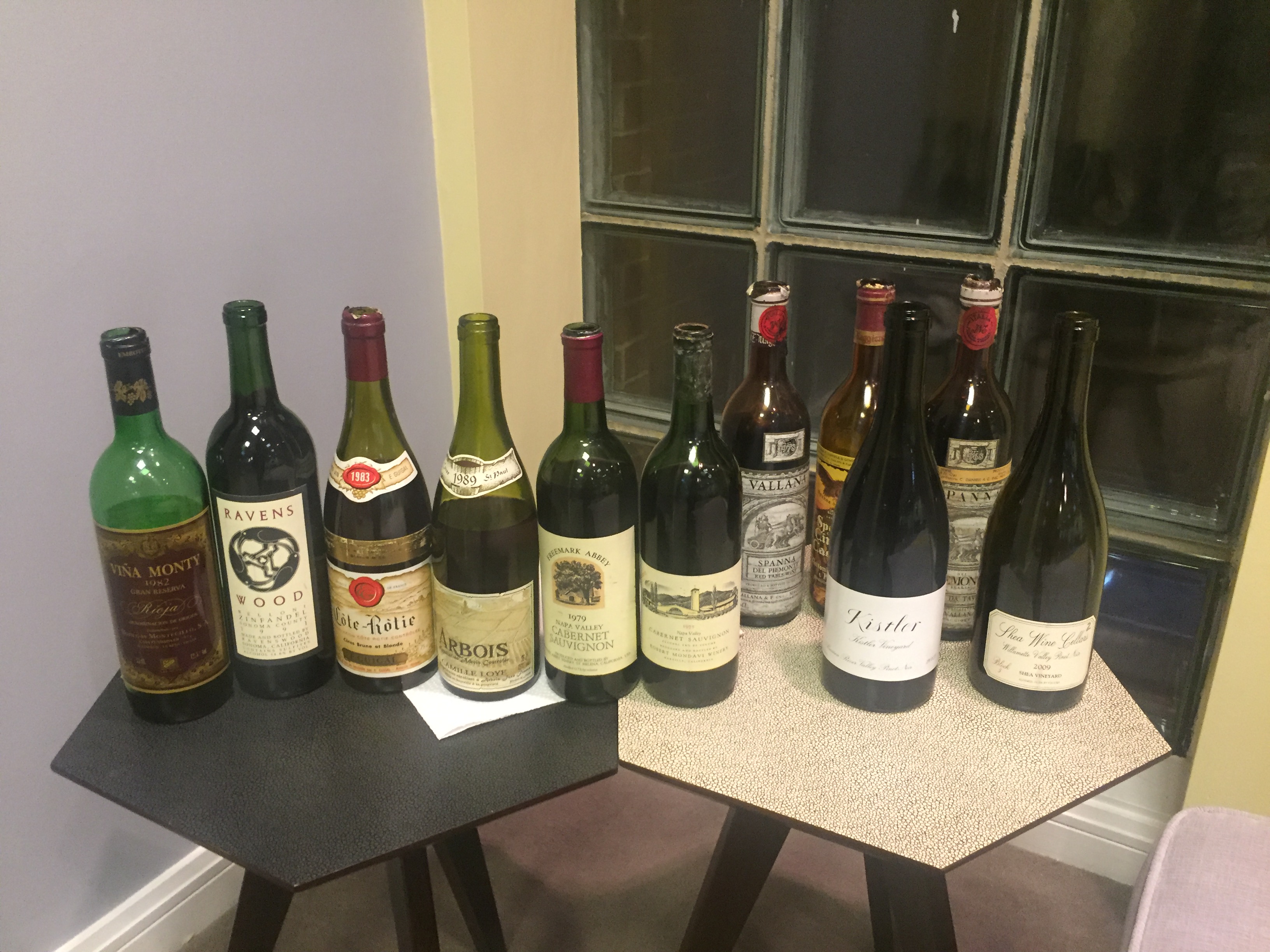
* Find a corner of shame. It’s inevitable, there will be some duds. And it will be sad. So once a couple people have tasted the offending the wine and agreed, we banished the wine to a far corner of the room. Yes, it’s heartbreaking to see these bottles here — especially the ones with significant age. But it allowed us to pay our respects, and helped others decide what not to taste.
The beginning of what became the “corner of shame.” Many more bottles joined this group before the night was over. (Photo by itswinebyme.)
* Be really fabulous hosts. I can’t thank our hosts enough for all the hard work they put into planning and keeping things running smoothly throughout the night.
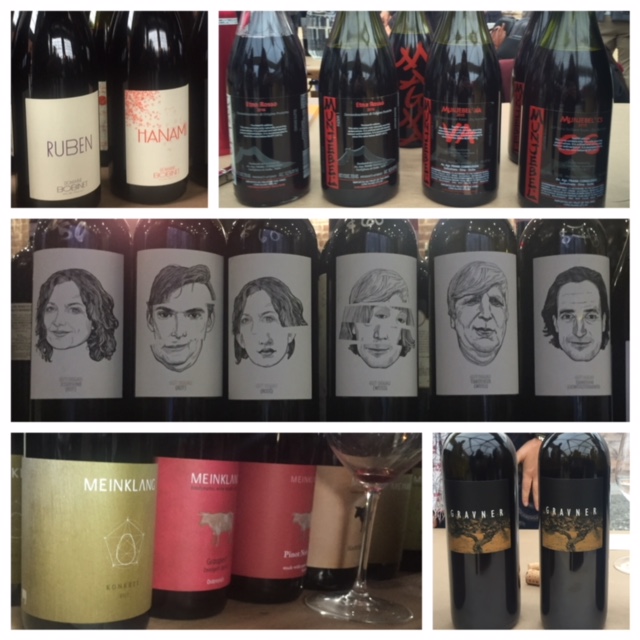
Some of the delicious producers who shared their wines at the Raw Wine Fair.
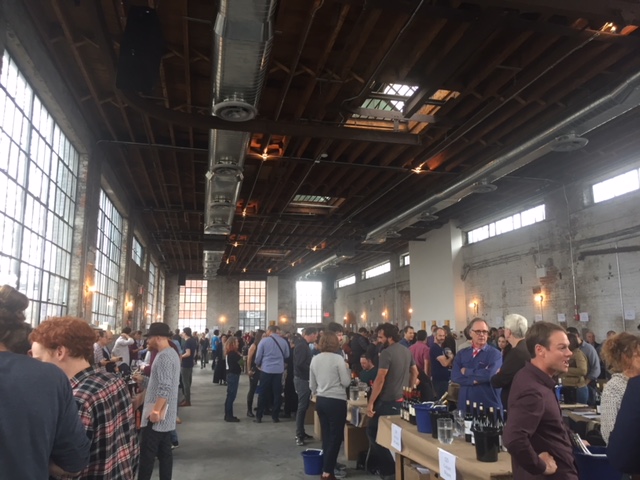
What happens when you put 145 wine producers from all over the world inside a Brooklyn warehouse who all share common winemaking (and growing) values? You get 145 different points of view, often with wild flavors and textures to match. I wouldn’t have expected anything less from the Raw Wine Fair. And neither would the hundreds of wine professionals, industry insiders and enthusiasts who eagerly made their way from table to table, tasting a handful of wines from each producer, using the well-placed spit buckets and overwhelming the winemakers who were proudly pouring and answering questions.
The calm before the storm as people begin to arrive for the second day of Raw Wine.
When I interviewed Raw’s founder Isabelle Legeron about a week before the fair, she told me, “Growers have felt very confident to showcase their wines with us because they knew it wouldn’t be an event where people would be getting rowdy and drunk. They’d be appreciating the wine.”
She was exactly right. Those attending Raw weren’t hogging the stations, or elbowing each other to get in. At busier spots, people patiently waited their turn. Often times, if you approached a crowded table and just motioned your glass nearby, someone would let you in.
These kinds of events are full of discovery and it is not uncommon to discuss with other strangers which producers they find interesting. Toward the end of my time on the first day, I wound up chatting with someone from Boston who took me on a mini-tour of his favorite producers — all of whom I had missed during my own rounds.
Here are a few of my discoveries (and observations) from the two-day natural wine fête:
* As others have said about natural wine — there’s a lot of really beautiful wines. There’s also plenty of not-so-great natural wines in the world. But then again with taste as the ultimate subjective experience, take those words with a shaker full of salt.
* This was a good reminder to throw what I think I know about wine out the window. For example, there were some beautiful wines from Chile — usually a region I shy away from (just personal taste preferences), whereas I was disappointed by what I tasted from Northern Rhone (usually one of my favorite regions).
* It’s possible to grow grapes, and make age-worthy wine in Texas. Unfortunately if you want any of the wine, the only choice you have is to visit the winemaker’s tasting room.
* Fun celebrity sighting: Aziz Ansari. Not completely a surprise as he’s already noted for enjoying natural wine, but as a “Master of None” fan, it was a bit of a thrill to see him up close.
* The power of spitting during an event like this can’t be stressed enough. It’s the only way to actually enjoy all of the wines and be able to leave standing straight and in one piece. Taking breaks to get a bite to eat helps not just with keeping you from getting drunk, but also with palate fatigue.
* I wish I remembered my Spanish, or knew French, Italian, German or any other language. For those producers who didn’t speak English well, it would have been wonderful to converse with them in their language. You could see in their eyes and from the genuine smiles on their faces the love they had for their craft, and it would have been wonderful to indulge in more conversation with them.
So now the fun begins — trying to find these wines in the wild via retailers or restaurant wine lists. Until then, I can at least remind myself of how much excitement and happiness surrounded me in this Instagram I accidentally photobombed while leaving the Gut Oggau tasting table.
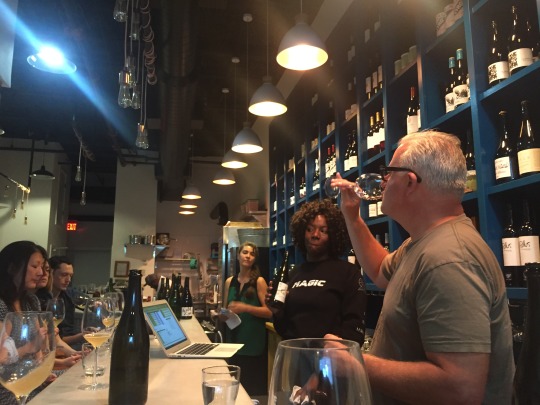
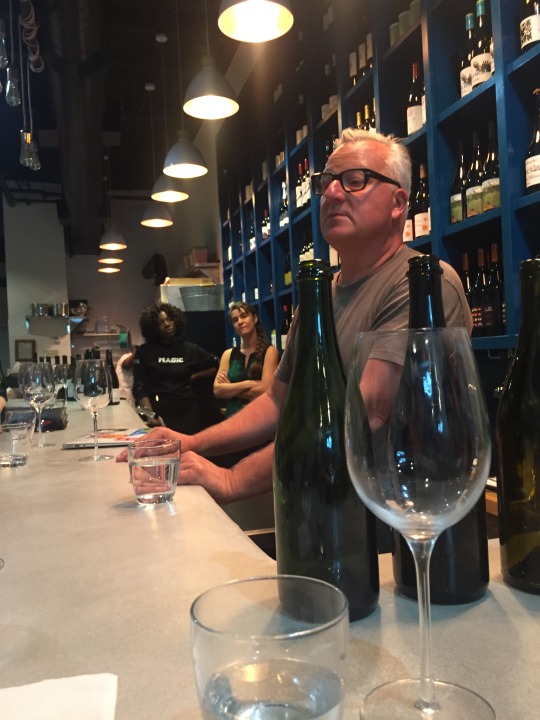
Stacey Khoury-Diaz and Janine Copeland of Dio Wine Bar hosted Abe Schoener of the Scholium Project for a wine tasting and discussion of natural wines.
It’s a Monday night at one of the city’s newest wine bars and more than 20 locals have gathered around a bar with a renegade California winemaker to discuss spoilage and microbes in natural wines. If you think we’re in Brooklyn or Berkeley or even an international city like Copenhagen, Paris or London, you’d be wrong.
We’re here in Washington, D.C., the city not less than a decade ago where those selling wine were more intent on engaging clients like lobbyists or politicians who would seek out the most expensive Napa Cabernets or Bordeauxs as a means to impress.
But in the past few years, as D.C.’s food and dining scene grew (and as the lobbyists’ rules and bank accounts tightened), it makes sense that more diverse wine options would soon follow. A few key sommeliers started changing up their lists and introducing new regions and orange wine to the mix. Then in the past year, the momentum multiplied.
So on a Monday night, Dio Wine Bar – which is also D.C.’s only wine bar focused solely on natural wines – became home for Abe Schoener’s D.C. debut. His wines have popped up in the city here and there, and he’s visited D.C. before (he’s a former professor from St. John’s College in Maryland), but this was his first sales trip to actively promote his Scholium Project wines.
Rather than just tasting the three wines he brought, this was a nerdy discussion in the context of eight additional wines. (The line-up included wines by Spain’s Celler Jordi Ilorens, Beaujolais’ Julian Sunier, Loire’s Clisson from Jérémie Huchet & Jérémie Mourat and Champagne’s Charles DuFour.)
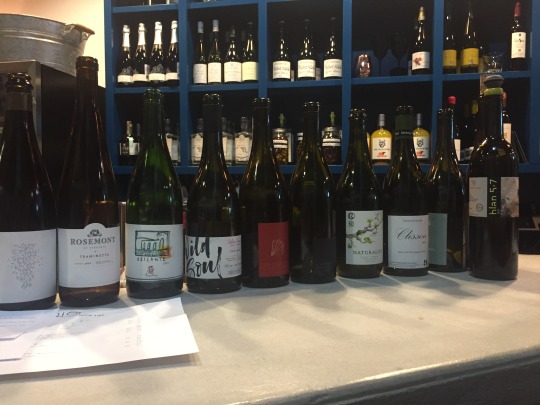
Eight natural wines from around the world were poured along side three Scholium Project wines.
This was a smart move. I’ve seen other wineries – like RdV Vineyards in Virginia – provide tastings against similar wines from other regions. Not only does it give the tasters something to compare, but it’s a good teaching method and lends to a more memorable experience.
Several years ago the only people who may have attended something like this in D.C. were industry. Instead the sold-out event was comprised of enthusiasts, including those just learning about natural wines, and a few super-geeky types, like me.
While it’s certainly a sign of D.C.’s wine transformation, some of the participants noted it’s still difficult to find many of these wines throughout the city. Stacey Khoury-Diaz, Dio’s owner, suggested if consumers start asking for more of these wines, local shops and restaurants will begin to respond.
Abe Schoener listens to some questions at the start of the chat.
Capitalizing on the growing geekdom that’s here, this tasting was all about spoilage (and not necessarily in the negative sense of the word). Abe wanted to discuss the natural yeasty microbes which fight each other to eat the sugars and turn grape juice into wine during the fermenting process. He says that when the right microbes win, delicious wine is the result.
So when he was asked several times for his definition of natural wine, the closest he came to answering it was to suggest that the discourse in natural wine should not be focused on the means of production (everything from how to farm the vineyard, to more industrialized ways of winemaking), but rather on the chemistry of winemaking. For example, he’s placed his grapes under high pressure and used electromagnetic forces to create cross-flow filtrations in his winemaking process.
The more common answer from natural winemakers is usually about their yearn to translate the terroir (sense of place) into the bottle, their trials in avoiding filtering wine (not necessarily through scientific methods) and an argument over whether or not to use added sulfur.
But “scholium,” means “commentary,” and that’s what Abe was seeking to do when he first created the Scholium Project in 2006 after learning about winemaking during an internship at Stag’s Leap Wine Cellars and later from famed Napa winemaker John Konsgaard.
He says his wines can even been seen as his own commentary on some of the wines he enjoys, such as Cru Beaujolais and Edmond Vatan Sancerre. His wines are not supposed to be what you expect from California, yet they showcase some of the beautiful fruit coming from key vineyards and microclimates.
The three Scholium Project wines we tried included:
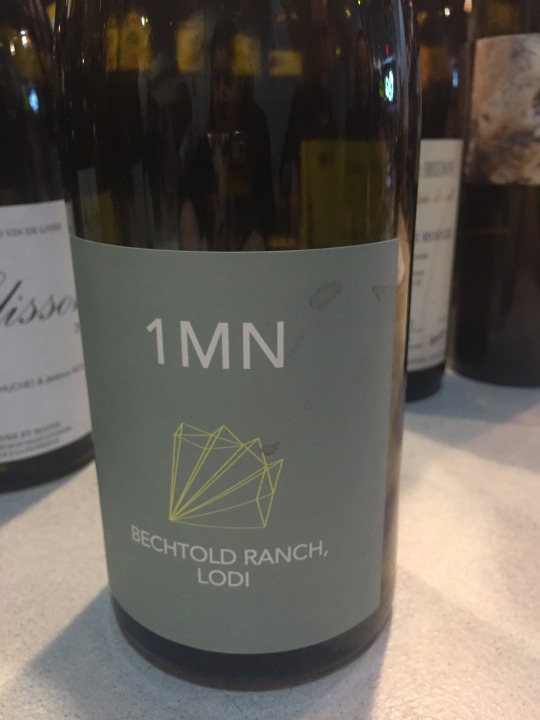
2015 Scholium Project 1MN
The 1MN Bechtold Ranch, a red wine made from 140-year-old Cinsault vines in Lodi, Calif. This was a fresh and vibrant wine exhibiting beautiful and tamed fruit. A light-bodied wine that indeed reminds you of something from Beaujolais.
2014 Scholium Project La Severita Di Bruto
And two Sauvignon Blancs – La Severita Di Bruto and the Prince In His Caves – which both come from Farina Vineyards on the east side of the Sonoma Mountain. The vineyard sees very little sun – only around noon – so the resulting wines are more in line with what you might expect from cooler climates.
The first had a very distinct smell of rotting produce – much like the spoilage Abe brought us here to discuss, but it eventually blew off and the palate revealed amazing acidity underneath a crisp minerality. If you’ve ever enjoyed a Vatan, you’ll understand and adore this wine.
The second wine, which spent more time on its skins during winemaking was a lusher wine with green vegetal flavors like asparagus and artichokes.
2016 Scholium Project The Prince In His Caves
All three maintained significant structure and were well balanced – values Abe strives for in everything he makes and are not necessarily a hallmark of many natural wines.
While some like to define natural winemaking as a throw-back to past methods, Abe actually sees this kind of winemaking as post-modern and a way of looking to the future. The traditional methods still used sulfur or as industrialization came along, took advantage of what was offered. But today’s natural winemaking, he says, points away from the traditional and away from what’s expected.
It’s those expectations that Abe’s wines have successfully avoided. And thats what makes his wines absolutely fascinating to taste, and even more enjoyable to drink.
There’s never a bad time of year to jet across the country to visit California wine country, but one of my favorites is right before the holidays. Most harvest activities are over. The holiday craziness has yet to commence. It’s super quiet and if you’re lucky, the winter rains bring bright green cover crops in the vineyards just as the leaves – in their vibrant yellows, oranges and reds – start to fall to the ground (yes, there are seasons here!).
Without a particular mission (except any and all effort to escape my D.C. life), I set up shop at the bottom edge of Napa Valley – allowing easy access to downtown Napa, the length of Napa Valley and the roads leading to Sonoma (city, county and coast). By the time I turned in the rental car at the end of the week, the odometer had 626 extra miles on it.
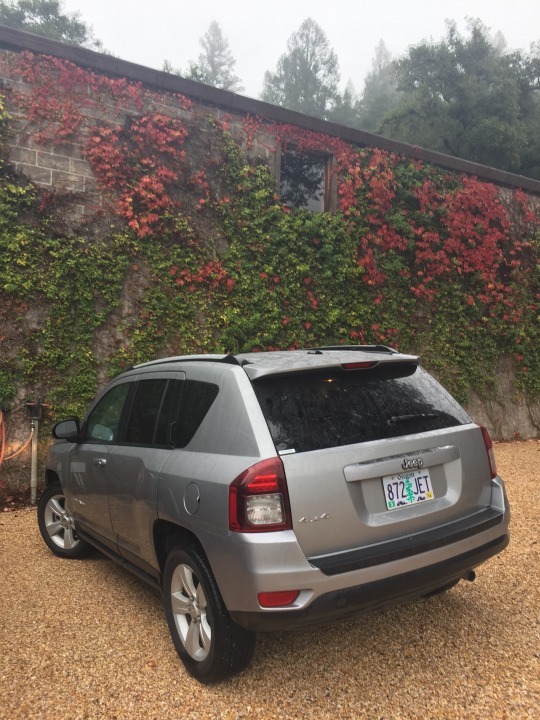
My trusty rental car was perfect for traversing highways and dirt roads. Here it is parked at Chateau Boswell
Here are just a few highlights:
My first stop after checking into the hotel, was a brief visit to Cadet Wine Bar where local winemakerRory Williams of Calder Wineswas pouring flights. (Read more about Rory and his wines here). The small label focuses on local Napa varieties that have been there for decades but tend to get lost among the dense plantings of Cabernet, Merlot and more popular grapes. I tasted his Dry Reisling, Chenin Blanc and Charbono. All three were a nice a diversion from what’s typically expected in Napa. The Charbono was especially interesting. A bit brooding with dirty anise and dark fruit chased with black olives.
Complete with a “celebrity” sighting of one of the stars of the documentary Somm, Cadet was the perfect start to this trip.
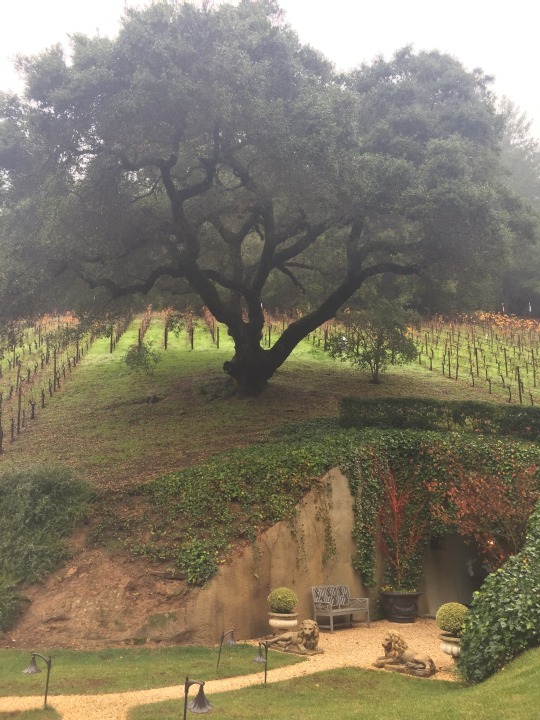
In Napa Valley, I had only one formal visit set up – and that was to see Chateau Boswell, just off the Silverado Trail in St. Helena. While this boutique winery has been making wine since 1979, in the past couple decades it’s seen the addition of a beautiful cave and facility to make and store its bottles. It also recently added a new winemaker – Phillipe Melka (Food & Wine has a nice profile of him here). The winery was stunning. Behind big iron gates and beautifully landscaped grounds, the cave was cut into the bottom of a hillside that featured its Cabernet Sauvignon and Cabernet Franc plantings.
When Chateau Boswell’s cave was built under the vineyards, the owners ordered the builders not to disrupt the huge tree on their property.
I sampled their Russian River Valley Chardonnay and 2014 Estate Cabernet out of bottle, and tasted a few 2015 Pinot Noirs out of the barrels. With a new winemaker now calling the shots, Chateau Boswell’s 2014 Estate Cabernet has pivoted a bit. Unlike previous years, the latest vintage blends in much more of the Cabernet Franc grown on the property (about 40 percent), giving it an elegant backbone. These wines work to strike a balance between having something that’s pleasurable now, yet can keep a structure to let it properly age.
Inside Chateau Boswell’s cave.
My next set of visits, spanning a couple of days, were with winemakers I’ve come to adore during the past several years.
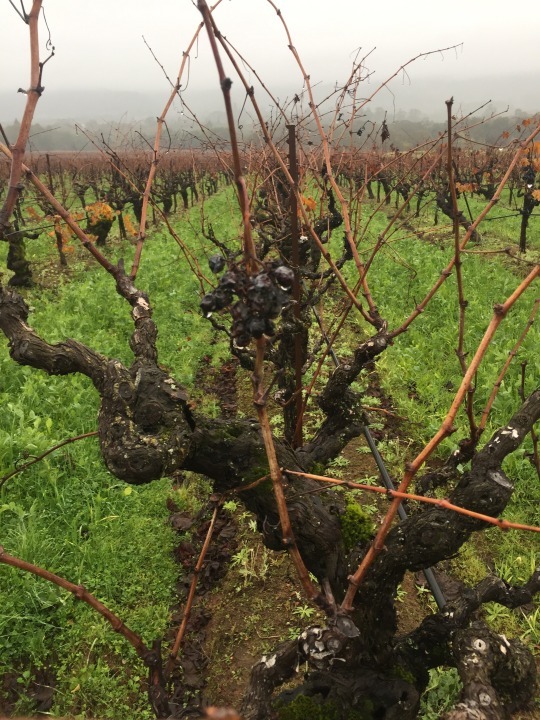
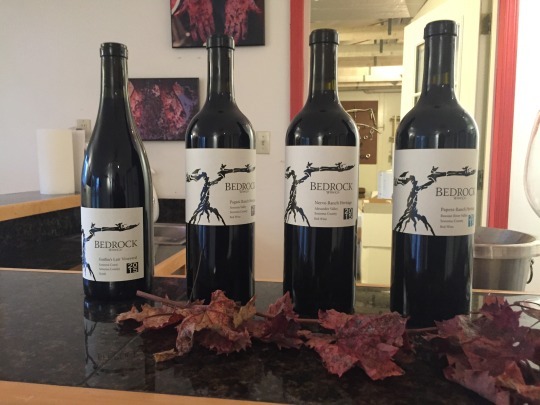
In Glen Ellen, a tiny town in Sonoma County, I visited Chris Cottrell of Bedrock Wine Co.He first took me into the famous 140-year-old Bedrock Vineyard. The old gnarly vines were absolutely stunning, and with the cover crops blooming on this fizzy gray day, the experience just standing there left me nearly speechless.
Bedrock Vineyard’s gnarly vines – some still with a bit of dried-up fruit on its vines – are especially stunning on this misty December day.
I’ve been buying wine from Bedrock for a few years now and always appreciated their approach to seeking out old vineyards to make their wine. But what I didn’t realize is that they’re not just seeking good fruit. It’s a mission to help change the farming culture so that these vineyards don’t disappear or get replanted with some other crop (recently going so far as to buy a vineyard). Using science as the basis for sustainable farming techniques, the Bedrock team is eager to help these old vineyards become prosperous again. Along the way, Bedrock creates 30 or 40 different wines. We tasted through a half a dozen – each one expressing beautiful California fruit with a balance of all those earthy morsels that transport you back to the vineyard.
Inside Bedrock’s original tasting room next to Bedrock Vineyard. The team also recently purchased a historic building to build a new tasting room.
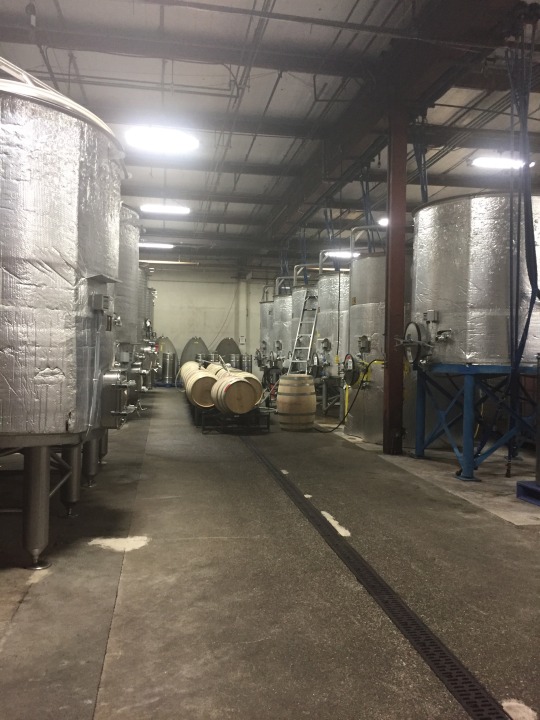
While being outside in the vineyards is wonderful, it’s just as invigorating to meet with winemakers in their other natural habitat: inside the winery. That’s why visiting with John Lockwood at Enfield Wine Co. is always a treat. (to learn more, read this profile or listen to this podcast). He makes his wine at Punchdown Cellars in Santa Rosa, a custom crush facility which leases out space and equipment to winemakers. This is my second visit to Punchdown and it’s always fun to see the racks of barrels, the fermenting tanks and to taste wine surrounded by people getting their hands dirty and doing the work.
Fermenting tanks at Punchdown Cellars, including some concrete eggs way at the end of the aisle.
John set up his wines for me in a quietish corner and we went through most of his line-up. Whether it’s his Tempranillo, Pinot Noir, Syrah or Cabernet, his ability to translate each vineyard into elegant wines, made it difficult to not guzzle through each bottle right then and there.
Tasting through Enfield’s wines at Punchdown Cellars.
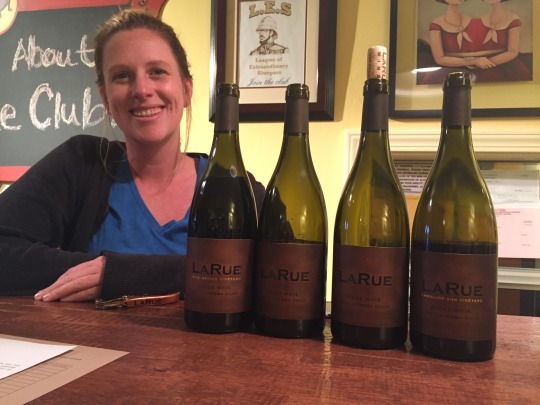
From Santa Rosa, I drove to Sebastapol – which also meant guzzling through Enfield was not a viable option. But the restraint was worth it so I could visit with Katy Wilson. And while she was named a winemaker to watch in 2013, four years later, I’d argue, she’s still important to pay attention to. I’ve met her a few times at tastings here on the east coast, where she often pours her own label with the help of her dad. We met inside Claypool Cellars’s tasting room – a renovated train car inside a business and shopping center.
She makes wine for several labels including Banshee and Claypool, but it’s her own label, that I’ve always found swoon-worthy. Named for her grandmother, LaRue’s Pinot Noirs are some of the most delicate I’ve had from the Sonoma Coast. Katie creates wines that can still retain their power, yet showcase layers of refined complexity.
Katy Wilson of LaRue wines mostly focus on Sonoma Coast Pinot Noir.
Its having these personalized tasting opportunities which make visiting wine country in December so special. The winemakers are generally relaxed and have the time to answer questions and discuss their passion. It doesn’t matter that the vines aren’t lush with leaves and bunches of grapes, or the sun isn’t shining, or if I’m standing in a tasting room with shoes still muddied from trampling through wet vineyards. That one-on-one attention creates the ultimate oasis.
Now that it’s nearly October, it’s time to book my next December trip! Cheers!






 It's Wine By Me!