Fun (and Truth) with Wine Labels

I appreciate when a winemaker can be serious without being pretentious. And it’s even better when the bottle lives up to the promise on the label. While just an infant wine, the high acid, bursts of red fruit and evolution in the glass, made this

Sean Thackrey Pleiades XXIV Old Vines California Red Blend such a pleasure to drink last night:

The object of Pleiades Old Vines is to be delicious, delight the jaded, irritate the Wine Police, and generally go well with anything red wine goes well with. This twenty-fourth edition, bottled in April of 2015, includes Sangiovese, Viognier, Pinot Noir, Zinfandel, and Mourvedre, to name but a few. Fragrant and voluptuous when first released, it will become far more subtle and complex with age, as of course we will: but such restraint may just be too much to ask…

Meditating On Wine

image

There’s no question that wine (or any bit of alcohol) is a wonderful (although not always healthy) way to de-stress. But after spending 30 days with the Headspace app and learning the basics of how and why to meditate – as well as a new understanding on meditation’s effects on the brain – it’s a no-brainer (pun intended) to understand the similarities between a serious wine drinker sipping their favorite juice and a meditator taking a break from a busy day.

(And, no! I am not writing this as a justification to use wine instead of meditation – just showing the parallels – and *maybe* suggesting that in cooperation, the two practices could lead to *some* extra mental well-being.)*

A mindful practice means focusing on the present. To do that, you have to engage many of your senses – feeling, hearing, smelling – on what’s happening in That. Very. Moment. By doing so, your senses awaken, and in the case of what this app teaches – it lets you have a little more “headspace” so you can have a clearer, calmer and hopefully happier mind.

What I’ve realized is that drinking wine can do the exact same thing – even before the alcohol gets into the bloodstream and provides that temporary chemical escape:

  • Swirling – noticing the color and the weight of the wine.
  • Sniffing – inhaling the nuances of aromas that emanate from the glass.
  • Tasting – identifying the flavors and feeling for the acid and tannins that jump around your tongue.  

When you’re doing those things, you’re completely focused on something that’s only purpose is for pure enjoyment. There’s nothing else to think or fret about. It creates a peaceful mind, and with homage to Billy Joel, let’s you forget about life for a while. Ommmm.

*Disclaimer – I have absolutely no medical, health or wellness training. I’m just a girl, trying to put all the pieces together and find some happiness.

A Mini Vertical of Red Car Rosé

Last year, the majority of the rosé I ingested came from Red Car. The Sonoma Coast winery best known for their Pinot Noir makes an elegant and crisp quaffer that goes down incredibly easy on a hot summer day (or at an IPOB tasting). I finished every last bottle I had, so in time for a recent BBQ I scoured the Internet in search of some more. I purchased a few 2014s from a New York store and was very happy. A few days after the event, a friend found some 2013s at a local D.C. wine shop. And this past Saturday, we put them together for a side-by-side comparison.

Conclusions were pretty simple: 2013 was refreshing and light and included some yeasty notes (a flaw? part of the aging?) but had lost some of it’s fruit (which isn’t necessarily a bad thing). 2014 was also refreshing, and had some good tart notes with a bit more body.

So my amateur assessment is there’s no reason to keep these bottles around past their seasons. That’s a good thing – because at least in my house – those bottles won’t stay very long. But if one happens to get lost in the fridge and reappears the following year – enjoy the surprise!

Editing to add: a nice little response from Red Car! Thanks for taking a look and weighing in! 


Ancient Winemaking Tools

Do ancient winemaking tools help make better wine?

Photo via Wikimedia.

Georgia’s Giant Clay Pots Hold An 8,000-Year-Old Secret To Great Wine

From NPR:

Irakli Cholobargia, marketing director of the state-run National Wine Agency, says qvevri wine is still a tiny portion — less than 1 percent — of the total Georgian output. Yet the number of qvevri winemakers is growing: Today at least 30 artisanal winemakers use the ancient vessels exclusively, and larger wineries are adding qvevri series to their lineups.

“To stand out from the crowd, it’s good to have the qvevri wine. It’s a different thing,” Cholobargia says. But, he adds, increasingly, qvevri are not enough to differentiate a winery. “You have to have new grape varieties in your range, a new one even for the Georgians.”

Is Objectivity in Wine Writing Possible?

I feel sometimes like a proselytizer as well as a journalist because I do love wine and I try to get more people invested in it.

image
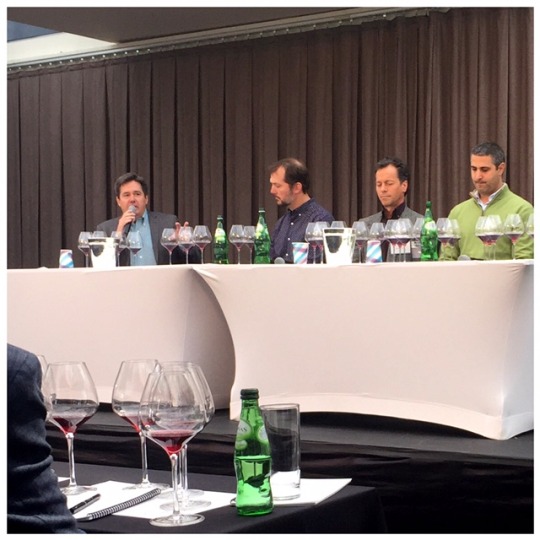
Ray Isle, Executive Wine Editor of  Food & Wine magazine. Seen here moderating an IPOB panel on Feb. 23, 2015. | Photo by itswinebyme

I often wonder how to rectify my ability to be an objective journalist and my absolute love for wine as I explore wine writing, think about the direction of this tumblr (dare I start to call this a blog?), and wonder if my wine geekdom and career will ever intersect.

It’s encouraging to know that an editor at a top publication also deals with this issue. Isle made this comment during the first few minutes into this week’s episode of Levi Dalton’s I’ll Drink To That podcast. If you’re interested in a behind the scenes look at what it’s like to be a wine editor, take a listen.

The Anti-Parker Establishment Moves To Europe!

I may have caused a little bit of a ruckus posting the recent New York Times Wrath of Grapes piece on a popular message board forum filled with wine geeks. There’s always been some tension between those who love wines that Robert Parker rates highly and the new “movement” of winemakers trying to emulate more European styles – choosing to bring wines back down to lower alcohol levels and less sugar by picking their grapes at a less ripe state. Many argue that means less flavor, too. As I type, there are 124 replies and more than 5,500 views.

But while mostly-American wine lovers continue to debate these clashing styles, it’s really interesting to see that this discussion has not only hit Europe, but the premiere region in France that makes the kinds of wines Robert Parker enjoys.

Take a look at this Food Republic story:  Why Is Bordeaux Suddenly Stealing From The Loire Valley Playbook?

Where the nut grafs say:

One of the world’s most esteemed wine regions, Bordeaux is best known for its rich, oaky reds, typically left to age in your cellar for years, sometimes decades. Fresh, young, easy-drinking stuff? Not so much. But producers in the region are making a concerted effort to change that. And fast.

It’s a stunning shift: If you had told U.S. wine drinkers in the 1990s that Bordeaux would one day need marketing campaigns to emphasize its younger, less oaky wines, they may have guffawed into their Riedel glassware. But this push is, in part, a reaction to the success of wine regions like the Loire Valley, whose wines were virtually not imported into the U.S. until the late ’80s — and which is now the region most known for on-trend natural wine.

The story goes on to say:

But it’s also symptomatic of the “Parkerization” that took hold of the wine market in the 1980s, driving up prices as influential critic Robert Parker’s points system created sudden demand for fuller-bodied, mature wines with tannic structure, precisely the kinds of wines that Bordeaux is known for.

So while we can debate the merits of Parker’s palate – or the over-marketization of wines by the IPOB set – it’s interesting to note that the most revered wine region in the world is taking notice.

Springtime Wines


A few iPhone pics from last weekend’s Spring #lambfest, cook-out and wine bash (be sure to scroll to the right – and yes, the picture above is beef, not lamb). Highlights included:

A cooler of bubbles with the super quaffable Ultramarine rosé, a 2005 Gaston Chiquet Special Club Brut Champagne Blend, and the Jacques Selosse Initial Grand Cru Brut Blanc de Blancs. (The Jacques Selosse was the first pour in my glass as I walked out onto the deck and it stopped me in my tracks).

Food included lamb shoulder (not pictured) and New York strip steaks, a smoked mushroom polenta and for dessert an English pea cake with fresh pea shoots to garnish. There was also an amazing baked dish consisting of morels, fiddleheads and asparagus: the combination of crisp veggies surrounded by lusciousness felt like a mix of springtime and a warm blanket for your soul (and no, I’m not exaggerating).

There were significantly more wines than what’s amassed in these photos. I brought my favorite Red Car rosé, which while perfect for this hot summer-like day, was incredibly pedestrian compared to the 1988 Chateau Latour that graced our meal.  Later in the evening, I sampled both a Hervé

Souhaut Le Cessieux (pleasantly photobombing this 2004 Cornerstone Howell Mountain Cabernet) and the cab. My palate much prefers the Souhaut, but was too compromised by this point in the evening to allow me to fully appreciate one of my favorite producers.

Good times, good food, but more importantly good people – this is what life is all about!