One more post about Virginia wine, and then maybe I’ll diversify this blog again. But after a Spring release party, it’s worth jotting down a couple of paragraphs about Early Mountain wines.
A few weeks ago, I mentioned the winery in my roundup of Virginia wines to know – mostly because visiting their winery is a wonderful chance to not only try their wines, but taste about a dozen others from Virginia wineries. But since it’s been at least two summers since I visited Early Mountain or tasted their wines, I wasn’t able to say too much about their specific offerings.
Now I can. The winery hosted a tasting at Iron Gate restaurant, in Washington, D.C. The restaurant has a beautiful outdoor patio and is a perfect location for a Spring or Summer evening. Unless it rains. Which it did. But the damp and gloomy weather was hardly noticeable when you combined a large white tent with Early Mountain’s fresh whites and rosé. The wines all had a beautiful acidity running through them with very little or no oak. Perfect garden party vino.
The event was also a great opportunity to meet Ben Jordan, Early Mountain’s winemaker and Maya Hood White, their vineyard manager. Both are relatively new to Early Mountain (in the past few years) and their youthful spirit comes through in the wines.
While I try not to formally review wine, I did make some notes in my Delectable account (feel free to follow me there), so here are those thoughts with some slight edits for accuracy, spelling, style and grammar (note: all wines, including the Chardonnay are from the 2015 vintage):
Early Mountain Rosé: The pretty salmon-colored wine gets most of its color from Syrah, but the wine is mostly Merlot, with a bit of Cab Franc as well. For a wine that was so light on its feet, there was a nice bit of depth and structure.
Early Mountain Pinot Gris: I braced myself for something on the sweeter side, but instead got a really nice crisp, dry wine. I enjoyed the acidity and noted it will be great on a hot, summer day.
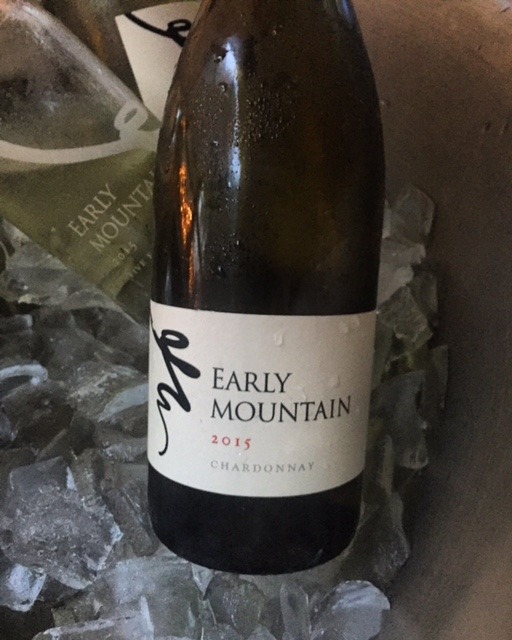
Early Mountain Chardonnay: There’s only a touch of natural oak on this wine. Combined with a well-rounded finish, it’s an easy-drinking white that can please many palates. A great table wine, if you will.
Early Mountain Five Forks White Blend: The most structured and aromatic wine of the bunch, this white combines Viognier, Pinot Gris, Petit Menseng, Sauvignon Blanc and Muscat. Lots of aromatics wafting from the glass, with a pinch of sweetness. But the palate is completely dry and the Petit Menseng lends a nice spice to the finish.
Photo courtesy of the U.S. Department of Agriculture.
Here’s a little more on Virginia wine. (In case you missed my thoughts from the Virgnia Wine Summit I posted yesterday, it’s right here).
One of the amazing outcomes of the Wine Writers Symposium I attended in February was getting to know fellow talented editors and writers. Among them was Jonathan Cristaldi, the editor in chief of the Napa Valley Wine Academy. He wanted more content for the Academy’s Pouring Points blog and asked me to write a few posts, including this one about Virginia wine in honor of Thomas Jefferson’s birthday.
Happy Birthday to Thomas Jefferson, who is not only our nation’s third president, but a fellow wine-o who spent 30 years trying to bottle a Virginia-made wine. Cheers!
At last week’s Virginia Wine Summit, a well-rounded mix of sessions and people proved to be a wonderful introduction into this 40-year-old industry, that’s really only gained momentum in the past decade. It wasn’t just about the winemaker or the vineyards, the front of the house part of the industry was there, too. As I learned – great wine can only be good if there are wine drinkers willing to take a chance on a burgeoning region.
Highlights of the day-long conference at the Salamander Resort and Spa – an easy hour’s drive from my Arlington, Va., home – included:
A blind tasting comparing Virginia whites against their world counterparts.
A keynote by wine writer Jon Bonné focused on Virginia’s place in the national wine stage.
A tasting of six uncommon grapes produced in the Commonwealth, led by a panel of smart sommeliers.
And the attendance of both the governor of Virginia and the state’s secretary of agriculture, who showed genuine support and commitment to the industry (a surprise to this cynical journalist!).
The blind white wine tasting paired Virginia against other regions’ Vermentino, Sauvignon Blanc, Chardonnay, Viogner and Petit Manseng.
Packing the morning panel with two somms, two wine writers and moderated by a respected wine educator, was a smart way to discuss the blind pairings. When you take away their daily tasks and titles, they all share the same quest to effectively communicate. It makes listening to how they describe what they’re tasting engaging.
Here’s the thing about Virginia wine: I’ve done a tasting like this before with a group of friends, and pulling out the Virginia wine isn’t too difficult. My relatively-novice palate was able to do it again this time. It’s not that wines from around the world are better or more interesting than what Virginia can produce. Virginia produces wines unlike many traditional regions. But as Bonné rightly talked about later that day in his keynote, a lot of cellar work is still happening. So the Virginia wines can come across richer, or with riper fruit or with more oak influence. The counterparts – when tasted side-by-side – come across a bit more refined.
As proof, look what happened with the Chardonnay comparison: Wine A screamed “I am that Chardonnay from the 1980s,” as Andy Myers, a master somm and wine director for José Andrés’ Thnk-Food Group, put it. In my notebook there’s also the notation: #alltheoak attributed to Bonné. Wine B had an elegance and was flush with acidity. When the wines were revealed the room was shocked to see Wine A belonged to Virginia’s Fox Meadow, while Wine B was California’s Chateau Montelena. I’m sure organizers paired these wines to trick us and have a little fun, and it spoke volumes.
Since many of the winemakers were sitting in the audience, after each of the Virginia wines were revealed, they stood and up and answered a few questions by the panel. For a wine geek, it was fascinating!
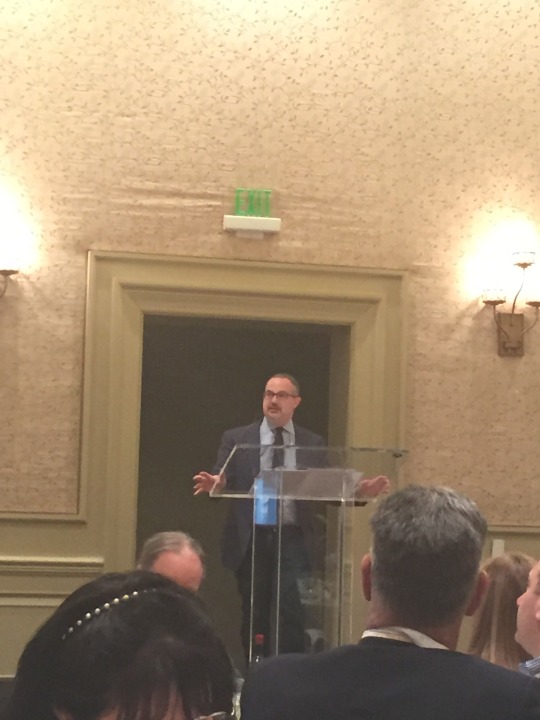
Jon Bonné addresses Virginia Wine Summit participants.
Understanding how Virginia compares with the rest of the nation was an important part of Bonné’s keynote.
Bonné wouldn’t be doing his job if he wasn’t a bit critical of Virginia and seeking out what Virginia can do to excel, but he did so in a good way. He praised Virginia for not trying to be California or Bordeaux and assured the industry that the world is taking notice. But he then took lessons from California’s changing landscape to prescribe a path for Virginia through a lens of how Oregon and Washington state have grown its industries in pursuing commercial vs. cultural success. His prescriptions included being humble and not being afraid to create a “Tuesday night wine.”
True to his writings on the “new” California, he also stressed that more vineyard management and less cellar work is needed.Virginia, he said, should learn to better understand its terroir rather than rely on the winemaking process to cover up mistakes that might have resulted from challenging weather, pests and disease.
The breakout sessions I attended on wine pairings and uncommon grapes were a chance to taste more Virginia wines, but also hear from talented sommeliers and how they see the industry. Without a strong signature grape (although Viognier has been adopted as the “state grape”), the somms discussed the challenges of bringing new wines to their patrons and whether they could include these wines on their lists.
Bonné ended his keynote with a similar thought:
“What I hope is that 10 years from now to walk into a restaurant in New York or L.A. or wherever, in this glorious new American wine era, and see a Virginia wine on the list, and it’ll feel like the most normal thing ever.”
Not bad for a Tuesday evening: After work today, I dropped by a happy hour sponsored by Cloudy Bay, a New Zealand winery that’s focusing on producing wines from the Marlborough and Central Otago regions.
The event was short, so this post will be, too.
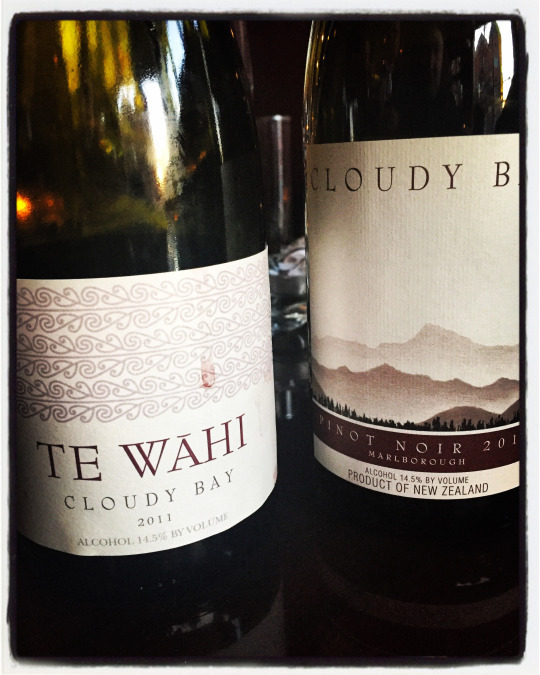
We tried two Pinots: A 2011 from Marlborough; and the Te Wahi (also from 2011), which blends two vineyards from the southern most part of Central Otago.
The Marlborough wine is a crowd pleaser. Lots of juicy red fruit with silky soft almost-non existent tannins. The Te Wahi was slightly darker, a bit more elegant with herbal notes and more expressive of its terroir (after all, its name translates to “of the place”).
I have very little experience with New Zealand wines, but if these are indicative of what can be produced from this land, I’ll be eager to seek out more.
It’s been more than a month since I’ve returned from the 2016 Wine Writers Symposium and I’ve been a little quiet: It’s amazing what less than a week immersed in your passion can do. It’s incredibly invigorating, yet its impact has left me deeply introspective. There was a lot to take in, and while I wouldn’t call it overwhelming, the symposium was a constant heightening of the intellect and all the senses. It was a special trip.
I won’t lie: Reentry into my Washington, D.C.-world was tough.
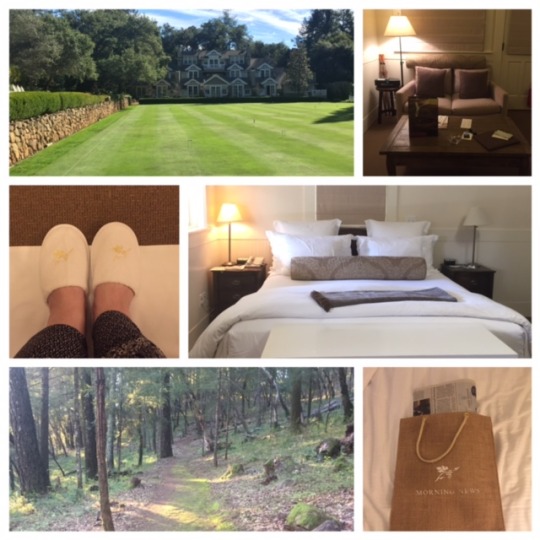
Who can resist the luxury of staying at Meadowood Resort in St. Helena, Calif:
Meadowood’s grounds, its details and comfort of the rooms made for quite a treat.
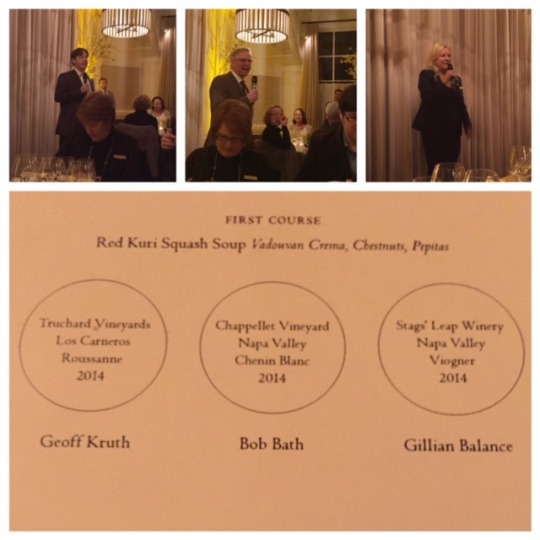
The stunning wines we tasted – especially those served by the master sommeliers:
Forgive the blurriness of the photos – left to right: Geoff Kruth, Bob Bath and Gillian Balance. These were just three of the 12 master somms that paired wines with four courses on the last night of the symposium.
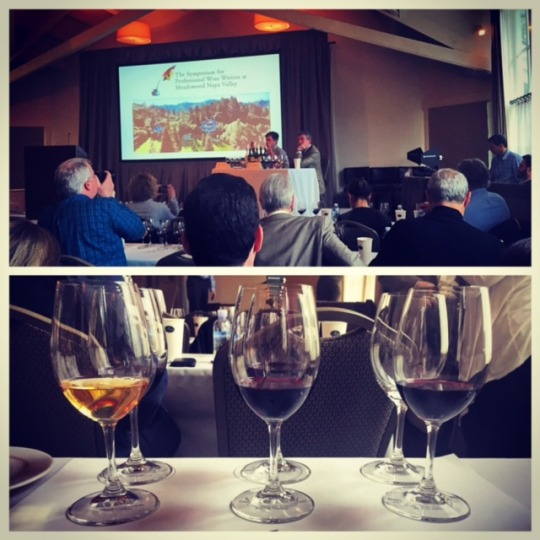
The interesting dialog and discussion that emerged from every single session:
Ray Isle and Jay McInerney led a session on how to tell a story from a single glass of wine.
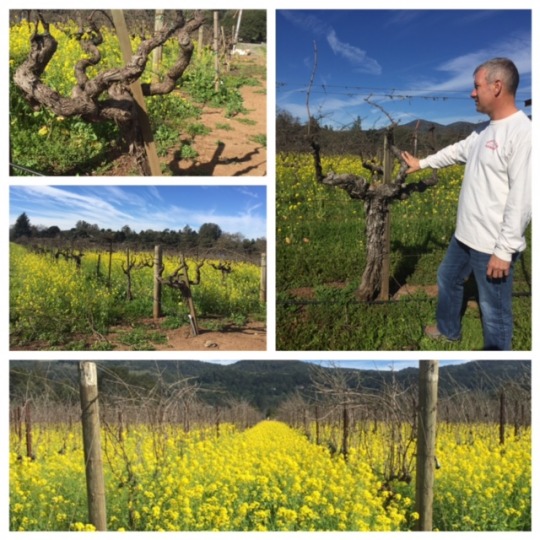
The chance to trounce through the tall mustard cover-crops and touch 50-year-old vines on a stunning day:
A tour of Haynes Vineyard in Coombsville from Ancien Wines owner and winemaker Ken Bernards.
But more importantly, being surrounded by people who share your love and interest in all-things wine.
Before I boarded the plane, I was reassured by past attendees and its organizers that everyone receiving a fellowship deserved to be there. And once I reached the symposium, that was reiterated. But each day, I woke up wondering: “Are they sure?” Fortunately, as soon as the morning sessions were underway those thoughts were replaced with a sense of “It doesn’t matter, this is fascinating! Look where I am!” And eventually it became, “Yes, I do!”
The Hosemaster of Wine – a satirical wine blogger whose first-night keynote was a healthy icebreaker on the seriousness and absurdity of what we were about to embark on – summed it up best in his recount of the symposium:
“Like the Monterey Bay Aquarium, the symposium was filled with odders. It felt like a place filled with people who felt out of place.”
As writers and editors, we’re trained to be observers. But in this situation, we all share a deep love for the subject matter, too. It’s what I’ve struggle the most in my own writing – how to juxtapose that passion with the objectivity needed to maintain the right writing voice.
I had many takeaways – some fun, aha or d’oh! moments – like it’s actually possible to taste 200 wines without getting drunk (and without any spitting mishaps!).
There were also some more serious and insightful lessons, too: What sticks with me the most, is a life lesson we all know, but rarely see in action: That it’s possible to take gigantic risks, succeed and be happy. I met more people (both at the symposium and in the Napa community) who took the leap of faith to follow their passion. Unlike, Washington, D.C. – where competition is at a heightened state all of the time – the people I met across the industry instinctually want to learn more from each other, and are happy to help, too.
There were some technical lessons, as a session about the often-used but-rarely defined term “minerality” proved that consistency in language is extremely important – whether you agree with the concept or not.
There were opportunities to think creatively, as in how to use a single glass of wine to spark story ideas.
And there were some practical ideas, such as when Mike Veseth, aka The Wine Economist, rightly pitched to all of us to consider using wine as an example to tell a bigger story – whether that be a business piece or something else. (You can read his takeaways from the symposium, here.)
The most humbling lesson of all: there’s no reason for me to be insecure. Being surrounded by such talented people who share similar passions was the validation I needed to keep pushing, keep exploring, keep learning and to keep writing.
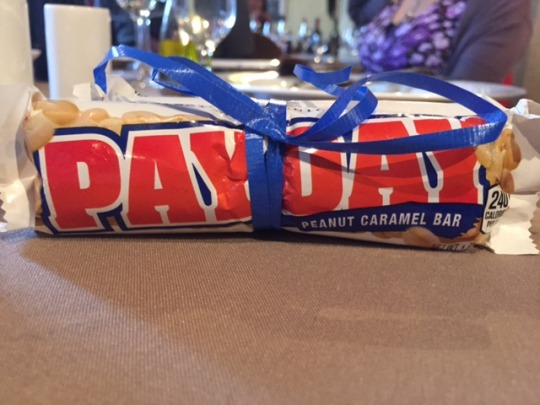
And if that wears off, I can take a bite out of my “most likely succeed” award the organizers bestowed on me during the final lunch:
Here’s my “payday” for being named “most likely to succeed”.
I had very high hopes to not only crush our Corison tasting, but come back to itswinebyme.com with brilliant notes about many of the vintages – or at least some unifying themes that could tie certain years together.
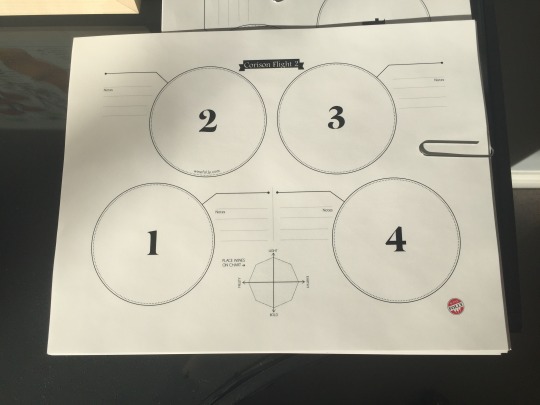
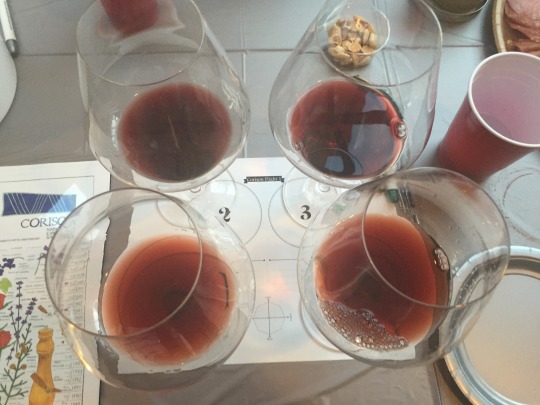
We were set up for success: Each tasting place mat included designated lines for detailed note taking. And I was more than prepared to write down legible thoughts. But there were five place mats – with four wines per mat.
Reading back nearly a week later, the notes are only understandable enough to give a glimpse at what I was thinking, and maybe jog a sensory memory of two. But not enough to tell a riveting story.
Fortunately, after 20 tastes of 19 different Cathy Corison-made wines, there were some key takeaways. Even more fortunate, I was surrounded by 10 knowledgeable and experienced friends.
In Part 1 of this 21-vintage salute to Corison Napa Valley Cabernet, I noted there wasn’t a clear winner among the wines we sipped during our formal tasting. Yet when I sent an e-mail to the group asking for any “lessons learned,” many were in agreement with what impressed us the most.
(Note: we used 18 vintages and one bottle of the final vintage Cathy spent at Chappellet for the tasting. There were three more recent vintages that were later popped during dinner. And yes that equals 22, but the Chappellet was thrown in as a ringer.)
The first takeaway was acknowledgment of our limitations, such as in this response:
“My insights are that I cannot taste 20 iterations of the same wine and expect to come out with a clear favorite. I measure the value of wine in interest, and similarly interesting wines all have similar value. Also, my palate is a blunt instrument and easily overwhelmed by sameness. The small differences become ever harder to discern.”
Pheww! This warmed my novice heart and I realized the value of this tasting was not about distinguishing differences in each individual year. Instead, it was a master class in understanding a particular winemaking style, and a tribute to how well-made wines evolve over time.
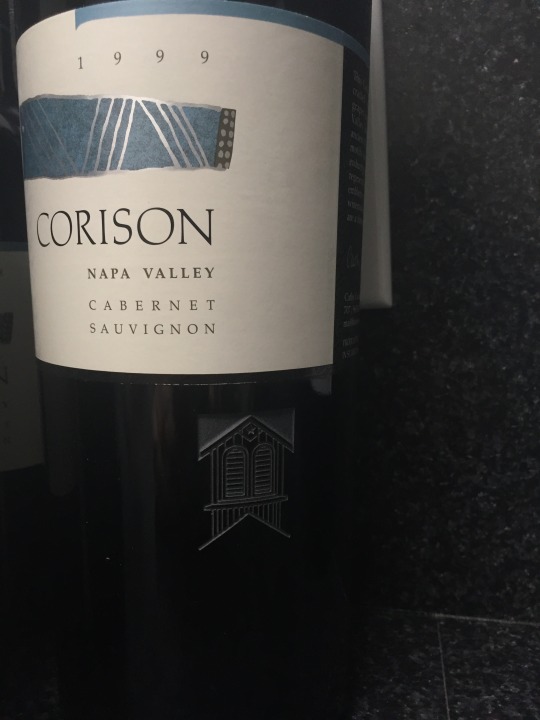
Our biggest OMG moment came in the form of a 1999 magnum. This may not be specific to a Corison wine – in fact, it’s probably not – but it was truly the most jaw-dropping part of the night.
The top half of the magnum was poured into one decanter, while the bottom half of the bottle went into a second. The two decanters were poured in the first and fourth glasses during our third flight (we were blinded with each flight – so while we could guess the general time frame because the flights were in order of oldest to youngest, we didn’t know what years we were tasting in each glass).
Upon tasting, the wines presented themselves completely differently. The first glass was lighter with layered flavors and tannins. “Minty spice,” is what I jotted down. The fourth glass, however was much rounder and full-bodied. It tasted of dark inky fruit and had a green finish. Of our three hosts, the one who wasn’t involved in the blinding or serving of the wines shocked her husband when she was able to detect a similar component and asked if the two wines were the same vintage. But the rest of us were dumbfounded when the two glasses were revealed as being poured from the same bottle.
My place mat notes depict a double arrow pointing at both glasses with the words “HOLY SHIT” written across the arrow. One taster e-mailed all the questions that started running through my head:
“The magnum was crazy. Who knew the top and bottom half could taste like two completely different wines? Does this happen in 750s too? If it does, I wonder if that has something to do with how people talk about a wine opening up over an evening (which I don’t tend to notice much of myself) – maybe sometimes the variation is already there in the bottle?”
So now we have an entirely new topic to investigate for another day!
Other takeaways, more specific to Corison wines, included:
In the third flight there was a “consistent metallic, tar, bloody, iodine note … It made me wonder whether there was something in the viticulture or winemaking during those years that brought that out.”
Except for the 1987 Chappellet, which had a “grittier texture to the tannins,” there was a “stylistic consistency. There was definitely a connecting thread through all the wines regardless of vintage variation. It was very easy to get a sense of what a Corison wine’s character is.”
There were no detectable traces of a bad vintage. Each wine in and of itself could have stood beautifully on its own.
A few tasters who were well-versed in Napa Cabernet offered a broader perspective:
“Corison clearly belongs on the short list of Napa producers whose wines not only age well, but actually get more interesting. Both secondary and tertiary development. I’m excited to try the more recent vintages in 10 to 20 years. This list is very small.”
In response to that comment, another wrote:
“As someone that really doesn’t ever recall having Corison before, oddly enough, that’s the impression I came away with, too: I’d put Corison in the same category as Dunn. Made to age, older-world style of winemaking.”
For me, what continues to make this night so special is understanding the simple and gradual evolution of wine as it ages. It’s not that the younger wines can’t be enjoyed now. But all of a sudden, that 2006 bottle I fell in love with months ago no longer held a torch to some of the older vintages.
As one friend e-mailed:
“The tasting really solidified for me what it means for a young wine to be closed/locked down/not showing much. The really young ones (‘09, ’11, ’13) were still delicious and still obviously Corison, but after tasting the older wines, I could really tell that they weren’t revealing their full potential.”
After months of planning and securing as many vintages that we could, a group of us gathered Saturday night for a vertical tasting: We wanted to taste side-by-side the 25-plus vintages of Cathy Corison’s Napa Valley Cabernet.
We succeeded in securing 21 of those bottles (including one that involved travel through Brussels and Austria!). Eighteen of the wines were blindly served in five flights over approximately two and a half hours. Three of the more recent vintages were then served later that evening with dinner.
For the first time in the year and a half that I’ve known this group of friends, there was pure silence as the first flight was poured and we were ready to begin.
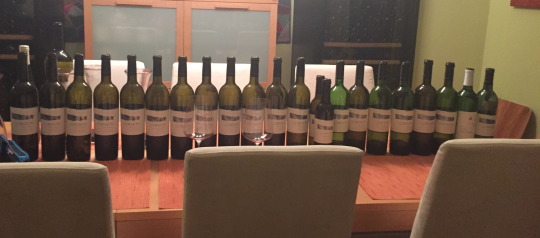
Pre-tasting lineup of bottles. Our host also printed out tasting notes and reviews from the Corison website for us to later compare.
If Corison Cabernet has not yet crossed your palate, get yourself a bottle. The first time I tasted it, I was half-way into a wine-laden dinner and it stopped me cold. It’s not what you expect out of a Napa Cabernet (it’s so much better than that!) and the winery is significant to today’s winemaking conversations (for example, this recent post from James Suckling about Napa’s 2013 vintage aligns more closely with how Cathy has been making her wines throughout her 40-year career, than just the results of a single vintage).
She is the first woman winemaker/proprietor in Napa and has been creating wines under her own label since 1987. Now, after releasing more than 25 vintages, she’s known by many as a “living legend.” She’s also highly-respected among her winemaking-legend peers ( See this recent interview with Ridge’s Paul Draper).
One important reason why: She has yet to stray from her restrained, elegant style that’s focused on making beautiful layered and complex wines that speak to the terroir, even while the rest of Napa began producing overly-ripe, high-alcohol, in-your-face Cabernets. I fell in love with her Cabernets because it’s the only Napa Cab I have yet to taste that doesn’t include a bite of raw green pepper (I’m convinced I have a sensitivity to pyrazines, and Corison wines are known for not having the chemical compound). On a visit to her winery last October, she was quick to quip: “I pick before the pyrazines!”
Had I done some better research prior to my visit, I would have found this San Francisco Chronicle profile from more than 10 years ago where she addresses this specific topic. But more notable, this piece could have been written yesterday. It’s a sign that her philosophy is steadfastly strong. Here are just two paragraphs from that 2005 story worth noting:
“I make wine for myself,” says Corison simply, and the statement comes not as an arrogant claim as much as an explanation of why her wine is so styled. It’s refined and calls for introspection, with the sort of character that once was mainstream California Cabernet in the 1970s and early 1980s, and which today is like wearing spats with formal attire: of another era.
It is a wine style that focuses first on lower alcohol levels. In a tasting of her wines, dating back a decade, the average alcohol level was about 13 percent; today’s wines are a tad riper, hitting 13.5 percent. Moreover, they deliver a faint hint of the dried herbs and “dusty” component for which her ranch south of St. Helena once was prized.
More recently, Eric Asimov of The New York Times wrote a column after tasting the first 25 vintages of Corison wines in a special tasting session with Cathy. Just as in the Chronicle piece, he pays particular attention to her approach:
“Wine is way more interesting at the intersection of power and elegance,” she said. For that reason, she is among the earlier harvesters on the valley floor, picking grapes while they still retain lively acidity and before they begin to shrivel and turn overly sweet.
“I feel almost a moral obligation to make wines that let the dirt speak,” she said. “One of the things I love about wine is that it speaks of time and place, and marches forward speaking of time and place. These wines are still talking about what was happening.”
Like her wines, her winemaking approach has been notably consistent: simply grape juice, just enough yeast to ensure that the fermentation begins within a few days of harvest, and a little sulfur dioxide after the naturally occurring malolactic fermentation, in which stern malic acid transforms into softer lactic acid. That’s it. No added acid, tannins, enzymes or other corrective steps, and no overbearing oak flavors. In an era when Napa cabernets have shot up past 15 percent alcohol toward 16 percent, Corison cabernets have never touched 14 percent.
The first flight of our Corison tasting included the 1988, 1990 and 1993 vintages. The fourth wine is a 1987 Chappellet. We were unable to obtain a bottle of her first Corison bottle from ‘87, but we managed to find a bottle of the last vintage where she was the winemaker at Chappellet.
There’s no denying any of the observations made in the San Francisco Chronicle and New York Times pieces during our 21-vintage salute. It was a study in dusty herbs and beautiful young fruit emanating out of the older vintages – a sign that in the coming years, these wines will still have a lot to say. When the initial silence (or maybe it was just pure awe) subsided and we began comparing our thoughts out loud, comments included everything from “blueberry pie” and “chocolate-covered raspberries,” to notes of leather saddle, white and black pepper, and gorgeous florals. The complexity and layers of tastes radiating out of each vintage meant almost every glass was emptied well before there was opportunity to take advantage of the white-plastic dump buckets that were supposed to help keep us relatively sober.
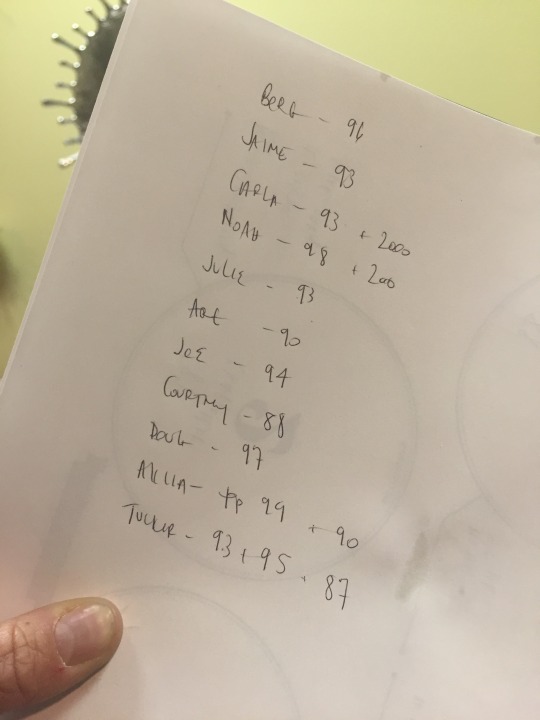
Our final results were inconsistent except that most of our favorites were spread out across the 1990s.
While there was a lot of love for the 1993 vintage, there wasn’t a clear favorite at the end of our formal tasting.
Yet our conclusions further confirmed the reason we went to such great lengths to plan this event: Corison Cabernets are all special bottles, meant to be swirled and savored. It was fascinating to taste the evolution of a particular wine and just begin to understand a hint of how each year’s harvest impacts the components of the wine (I’ll address a few of our lessons in a future post).
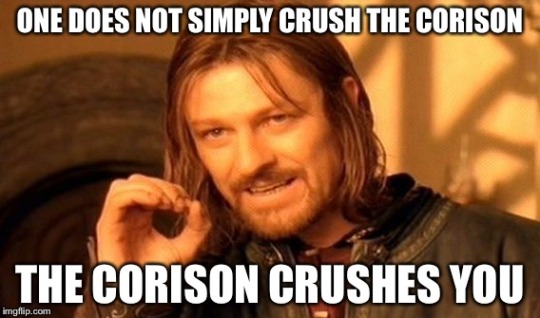
As much as our goal was to “Crush the Corison,” as was repeated in all our planning e-mails’ subject lines – our generous host noted (with the accompanying gif) what truly happened that night: It’s the Corison that crushed all of us. Cheers to Cathy for creating such special wines!
I’m paying tribute to the incomparable Alan Rickman by searching for Bottle Shock clips on YouTube. It’s my favorite wine movie and was one of my favorite flicks even before I understood or acknowledge my passion for wine.
The video I really wanted to share unfortunately can’t be embedded, so click here to listen to Rickman beautifully quote Galileo Galilei’s “wine is sunlight held together by water,” while he continues to narrate the wonders of wine under beautiful shots of Napa Valley vines.
But then I listened to the most recent episode of GuildSomm’s podcast. Bay Grape’s Stevie Stacionis (who I met very briefly while visiting her store), Delectable’s Julia Weinberg (who I had a fun phone conversation with earlier this year) and Massican’s Dan Petroski (who I’ve never met, but he’s a friend of some friends – I think) had a 50-minute conversation with Master Sommelier Geoff Kruth.
Not only did they mention nearly EVERYTHING I wanted to write about – they include a few more and are fun to listen to!
Twenty-fifteen was an important year in my wine growth, so I’ll come back later to recap that. In the meantime, cheers to a fabulous 2016 filled with exciting news, fun new trends to follow and ever-flowing bottles of happiness!
When I started this tumblr 18 months ago, it was an experiment. A place for personal writing, and a home to share interesting wine stories or pass along some thoughts that were longer than 140 characters. It was also a place I could geek out on wine and not bore my non-wine-interested followers on other social media platforms.
I didn’t know where this would take me, nor do I know now my exact destination. But writing here flooded me with confidence and sparked the creative juice that had been buried deep inside me after spending so many years focused on daily and investigative hard news. It reminded me how much I enjoyed getting lost in my own words (rather than helping someone else shine). It introduced me to new friends and new experiences. It gave me an outlet to learn. And also, a place to brag. Most importantly, it’s forced me to look deeper into my passion.
I’ve written before how understanding wine is a journey for me. There’s not one aha moment or a single bottle of wine, but it’s essentially a series of small experiences that keep building upon each other.
So, I’m beyond thrilled and over the moon to share that another step in that journey is about to take place.
Last week I was notified that I was accepted to attend The Symposium for Professional Wine Writers at Meadowood Napa Valley. This year’s event is slightly different than the previous 11 years. The only way to attend is to be awarded a fellowship or be an “editor’s choice” from an existing wine or travel publication. So I submitted an application for a fellowship. That included professional writing samples (although I also included a few items from this site, since my professional writing on wine is still very new), letters of recommendations and a cover letter that I took particular care in writing to convince the judges I’d be a perfect participant (I’m not sure how much wine they were drinking when they read everything, but it worked!).
This means that for four days in February, I’ll get to interact with, learn from and discuss everything wine with titans of the wine writing world, as well as meet more folks in the wine industry. It will also be an opportunity to meet other participants – who like me – share this passion. (They haven’t published a list of the participants yet, but the speaker list is beyond impressive!) Panels will take place at both Meadowood – a gorgeous resort in St. Helena – and the Culinary Institute of America. As a fellow, all expenses (except travel to Napa and a few of the meals) are paid. I’m beyond honored and humbled by this opportunity.
It’s funny, about a year ago I followed tweets from the 2015 symposium, and fidgeted in my seat at work because I really wanted to be a part of it – and now that’s happening. It’s a fabulous reminder that anything you want is in reach if you keep focusing on what makes you happy.
Stay tuned in February, I’ll be sure to come back with a complete report!






 It's Wine By Me!