New blog post alert! I originally started writing this for this blog after a couple friends asked me how I know so much about wine. But then the kind folks at the Pouring Points blog at the the Napa Valley Wine Academy liked the idea – so I expanded it and voila!
The truth is – I’m still learning. But I discovered through reading, being active on social media, finding like-minded friends and ultimately building my confidence levels, it wasn’t too difficult to do. So here are some of the tricks and resources I’ve used to jump start my journey. If you’re just starting out, I hope they’re helpful to you, too!
The Virginia wine experience is most often filled with fun and frolic — as it should be. It’s a chance to flee the city into the rolling green hills that many Washingtonians easily forget exists (I know I nearly did). You can taste, enjoy beautiful views, have a picnic, share a bottle (or two, or three) and often listen to a live music performance. It’s escapism at its finest (especially during an election year).
But nestled about an hour west of D.C., straight out I-66, is one winery that’s operating a little differently. It’s not here to attract the throngs of day-trippers. Instead, it’s courting the serious wine drinker and producing wines to play on the national and international stage.
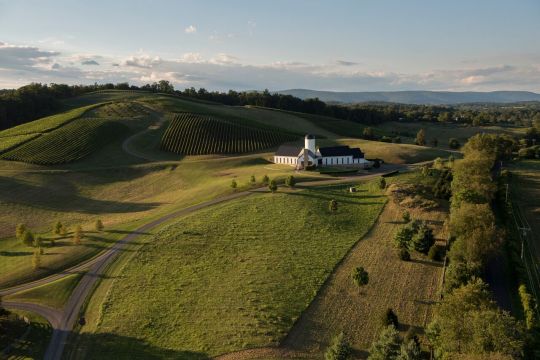
RdV Vineyards in Delaplane, Va.| Photo by Jeff Mauritzen / Courtesy of RdV Vineyards
RdV Vineyards is as much a part of Virginia wine as it’s not. With 16 acres of vines sitting
above the frost line on a hill in Delaplane, Va., overlooking 100-acres of
farmland, the winery takes a mostly hands-off approach to winemaking, letting
the land speak for itself. Their finished bottles have been well integrated
into the Washington region’s dining scene. And just this past year, the
White House served RdV’s 2010 Rendezvous during the Nordic state dinner.
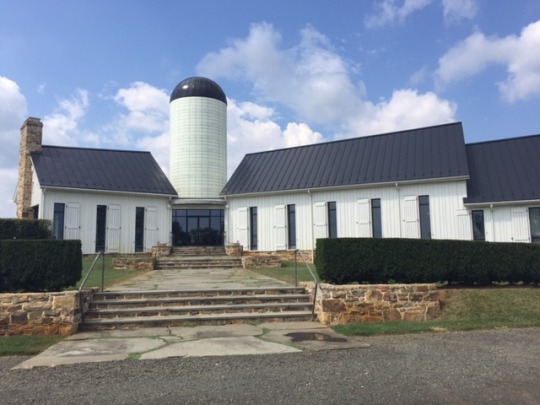
RdV’s hospitality center only looks rustic from the outside. | Photo by itswinebyme.
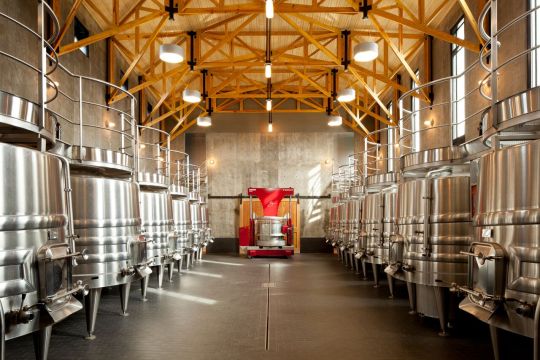
But once you step inside RdV’s white barn-like structure with towering silo, the interior suggests something more likely found in Napa or Europe. Its sleek minimal design elements, including Herman Miller Eames-style wooden chairs and leather couches adorning its tasting room, is almost reminiscent of a contemporary art gallery, leaving visitors with a sense of peace and calm. In the center of the building is a staircase leading down to the wine cellar, the caves, a large fermentation room filled with steel tanks, a glass-enclosed bottling room and a small
laboratory used to determine the blends for each vintage.
Fermenting tanks inside RdV Vineyards. | Photo by Gordon Beall/ Courtesy of RdV Vineyards
When I visited the winery on a warm Wednesday morning in early September, all was quiet. The temperature was a few degrees cooler than when I left Washington, and blue skies intermingled with some clouds and a few droplets of rain. Just a few of the vineyard workers were tending to the vines – all lined in perfect rows covering the green hillside – patiently waiting for
harvest, which RdV begins today (Sept. 15, 2016). They’ll begin picking Merlot, followed by several other Bordeaux varieties, and will end the harvest season with Cabernet.
For several years, RdV has been written up by local, national and international media. The initial excitement about the amount of effort and resources Rutger de Vink was pouring into his winery was something the Virginia wine industry needed to help bring more attention to the emerging region.
After the release of RdV’s first vintage, London-based wine writer Jancis Robinson came to visit and praised the winery: “I sincerely believe [Rutger de Vink’s] considerable efforts stand a good chance of putting the state definitively on the world wine map,” she wrote.
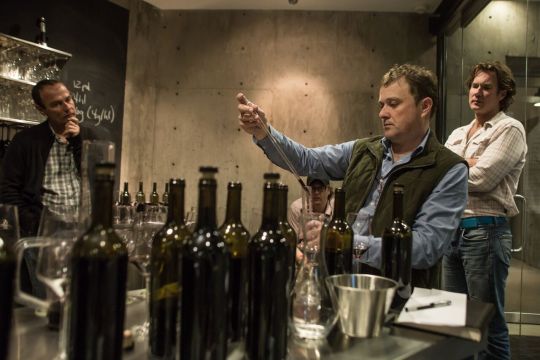
A bottle of the wine reached Eric Boissenot, the famed enologist and winemaker who has worked with many of Bordeaux’s most respected wineries. After tasting it, he reached out to Rutger to volunteer his services for free. So once a year, in exchange for a plane ticket and a place to stay, he joins Rutger, Jarad Slipp, RdV’s estate director,Josh Grainer, RdV’s winemaker, and Jean Philippe Roby, a consulting viticulturist also from Bordeaux, for several days of blending sessions to create the final wines. (Read more about the entire RdV team here.)
Eric Boissenot during a blending session in 2014, while Jean-Philippe Roby, left, Rutger de Vink, right, and Jarad, seated in the back, look on. | Photo by Logan Mock / Courtesy of RdV Vineyards
Now, about a handful of vintages later, the RdV story remains much the same, but the winery is beginning to show positive signs of maturity. Rutger and Jarad are excited about the upcoming release of their 2013 vintage. They say there’s a much better understanding of the fruit each block of vines is producing. This will also be the first year they expand their offers to purchase beyond the winery’s “Ambassador” program to their mailing list subscribers.
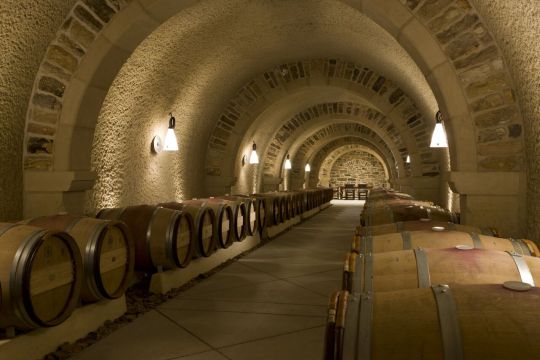
The winery’s caves are lined with filled French oak barrels, and racks of sleeping unlabeled bottles are stacked in cages at least six-feet high. A piece of land behind the vineyards where
Rutger once lived in an Airstream is now the site of a still-under construction contemporary-style home he’s building for his family.
Caves at RdV Vineyards. Photo by Gordon Beall / Courtesy of RdV Vineyards
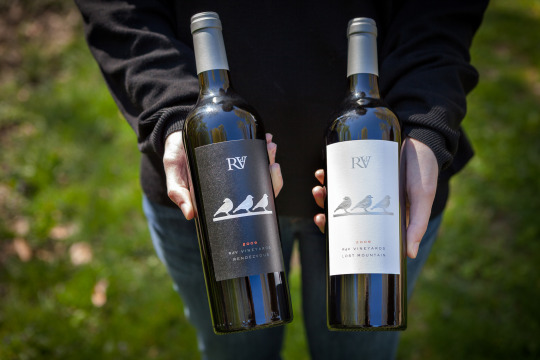
RdV’s wines include Lost Mountain, a Cabernet-dominated Bordeaux blend, and the Rendezvous, a Bordeaux blend that’s dominated by Merlot. There is no recipe for how the wine is blended each year and what percentage of each grape are bottled. It’s all decided by the artistry of tasting and influenced by the subtleties of the vintage. The Rendezvous is created as a lively and energetic fruit-forward wine that’s meant to be drunk young, while the Lost Mountain is a bit more refined and structured with finesse that hints at its aging potential.
RdV Vineyards wines include Rendezvous, left, and Lost Mountain, right. | Photo by Matthew Girard/Courtesy of RdV Vineyards
RdV creates its wine by fermenting each vineyard block in its own tank. After the blends are decided, they are put together and poured into French oak barrels to rest for two years before being bottled where they are stored an additional year before release.
Deciding when to pick the grapes simply comes down to the taste of the grapes. On my tour of the vineyards, Jarad, who’s also a Master Sommelier, told me there’s no measuring of brix or abiding by a particular formula. Standing about a third of the way up the hill that’s packed with sandy loam layered on top of granite, we sampled Cabernet and Merlot berries that we picked off the vines. He talked me through the state of the grapes by looking at the color of the seeds and accounting for the leathery feel of the skins. While the juices were sweet (the Merlot slightly sweeter with plumper berries than the Cabernet), the berries at
that point were not quite ready.
Cabernet grapes hang on the vines at RdV Vineyards on Sept. 7, 2016. | Photo by itswinebyme
When Jarad and I returned from the tour of the property and winemaking facility, there were
four bottles in paper bags lined up against the wall in the tasting room. Among the wines were the 2012 vintage of RdV’s Lost Mountain and Rendezvous, a 2012 Plumpjack from Napa Valley and a 2012 Chateau Figeac from Bordeaux. We tasted blind, which served as an interesting exercise in understanding the winery’s motto – “Neither Bordeaux or Napa, but uniquely our own.” The quality across all four wines were about even and proof that RdV’s vision for their well-balanced wines to be on par with the world’s best is coming to fruition.
Rutger could have opened a winery and produced the same high quality wine he makes here in Virginia, in California, or France, or in any other established wine regions where growing conditions are easier. But instead, he’s happy being able to bring something different to the table. Toward the end of my visit, Rutger, Jarad, Josh and I were discussing the wines. I casually asked if being an “outlier” in the wine world is where they like to be. Jarad and Rutger
smiled: Outlier is the name they had chosen for a winery publication they’re putting together.
More about RdV Vineyards: The winery produces 2,000 cases a year mostly sold through its Ambasador program, to winery visitors and to D.C-area restaurants. The 2013 Lost Mountain will sell for $125 and the 2013 Rendezvous for $75. Tours are by appointment only Thursday
through Sunday and cost $50 per person.
It’s a quiet Sunday morning and as I settled into the corner of my couch with a big cup of coffee getting ready to read a new book, a flood of thoughts came rushing forward about all the things wine is bringing into my life. I started jotting a few down and the list kept growing, so here they are. While some of the items are obvious and what wine is meant to do, you’ll see it goes much deeper than that:
it provides cerebral, intelligent and hedonistic pleasure
it takes away stress and quiets some nerves
it awakens my senses
it’s bringing wonderful new friends to my world
it’s introducing me to some fascinating and inspiring people
it’s a stunning reminder of the beauty of nature
it’s teaching me how to pay attention to tiny complexities and nuances
it’s encouraging me to read (for fun) again
it’s encouraging me to write again
it’s encouraging me to seek a happier path
it’s a constant reminder how much fun it is to be passionate about something
it provides moments of pure happiness
it’s teaching me about the importance of our environment
it’s a reminder that science can be very interesting
it’s teaching me new languages, and expanding my own vocabulary
it’s expanding my once very picky palate
it’s making me curious again
it’s helping me increase my self confidence and to trust my instincts
it’s perking up my ambitions
it’s showing me a future with a number of different paths, with a constant reminder how important it is to enjoy the present.
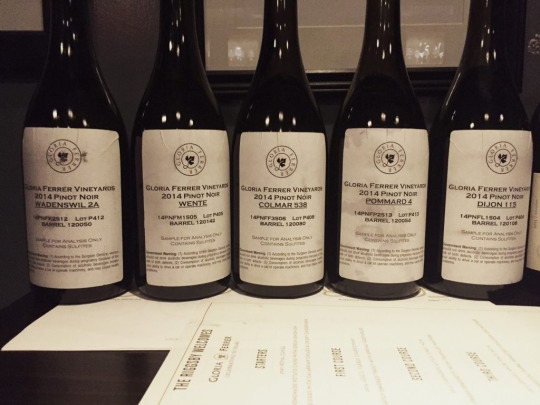
If you look closely at these bottles of wine, you’ll notice the labels don’t look like the ones you’ll find at a retailer. In fact, these bottles aren’t for sale. They were part of a specialized tasting sponsored by Gloria Ferrer featuring five different wine clones. Each of these Pinot Noirs were made from grapes grown in the vineyards planted near each other, but tasted wildly different. It was a perfect study in the importance of the individual vines.
Curious to know more? Or what I’m even talking about? Take a look at my latest piece for the Napa Valley Wine Academy’s Pouring Points blog.
My colleagues know me so well. When a wine-related book lands on our giveaway book shelf, it eventually finds its way to my desk. Some books I already have copies of, some I’ve been hearing about for months prior to publication and then there are the surprises, like this one.
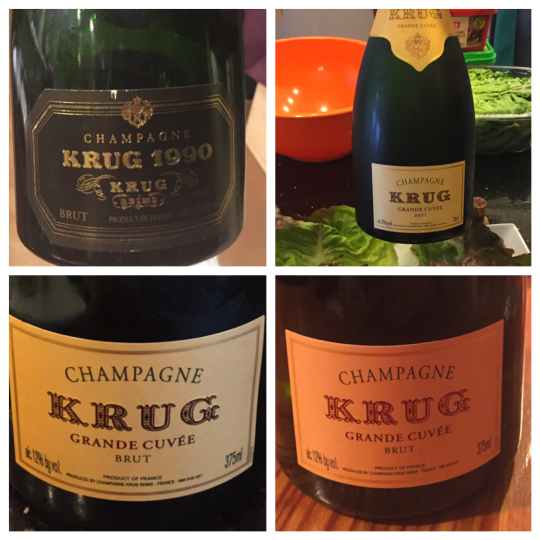
I don’t follow the Champagne world too closely, or buy too much of it, but I have several friends who do. Among their favorites: Krug. There have been at least four gatherings in the last six months where we’ve popped Krug’s corks.
Champagne Uncorked is a fascinating read, interweaving the ancestry of the 170-year-old Krug business with the multi-century history of the region and evolution of the the drink itself from a not-so-bubbly still wine to the glass of foamy vin mousseux we pour today.
From the days of King Louis XIV and Napoleon Bonaparte, to the Nazi occupation of the region during World War II, to Champagne’s popularity among music moguls like Jay Z, Alan Tardi’s account also blends in Champagne’s cultural significance and details of Krug’s success meeting the needs of the changing times and its consumers.
Krug’s modern-day evolution from a tightly-run family business to one that maintains those strict values even though it’s succumbed to modern-day corporate titans, is also the story of a company who once protected its recipe and buried its records to one of increasing transparency.
Today, those who drink Krug’s Grand Cuvee can enter a code in the company’s website and find out exactly what went into that bottle. From this example on the Krug website, a single bottle is only partly described as “a blend of 142 wines from 11 different years, the oldest from 1990 and the youngest from 2006.”
(I almost wonder if Tardi’s unprecedented access to write this book may be part of Krug CEO Margareth Henríquez’s transformative plans – discussed at the end of the book – to ensure the House of Krug stays relevant and prosperous in the modern age.)
Lacing together the different time periods and themes of this book isn’t easy for a writer, but Tardi found a nice balance for most of the book. He excels particularly well in the narrative of how Krug is produced today – and that’s where I found the most joy.
Standing in the vineyards inspecting the parcels, or during the fury of Harvest or standing among the cascading barrels in the cellar, he transports the reader to not just Champagne, but creates a wonderful journey in the details and precision necessary to create the Grand Cuvee. It’s nearly impossible not to be in awe of the House’s ability to consistently make a beautiful and unique glass of Champagne.
If you have a bottle of Champagne (even if it’s not Krug), pop it open as you read this book. You’ll gain a much deeper appreciation for each bubble that rises to the surface and be amazed at the depth of not just it’s structure, but its story.
These days, for better or worse, a lot of my social wine drinking involves multiple bottles of wine. Everyone gets a taste (or two or three) and moves on to try something different. Sometimes wines are revisited. It’s exciting to compare notes on what you’re tasting in between other kinds of chatter and gossip.
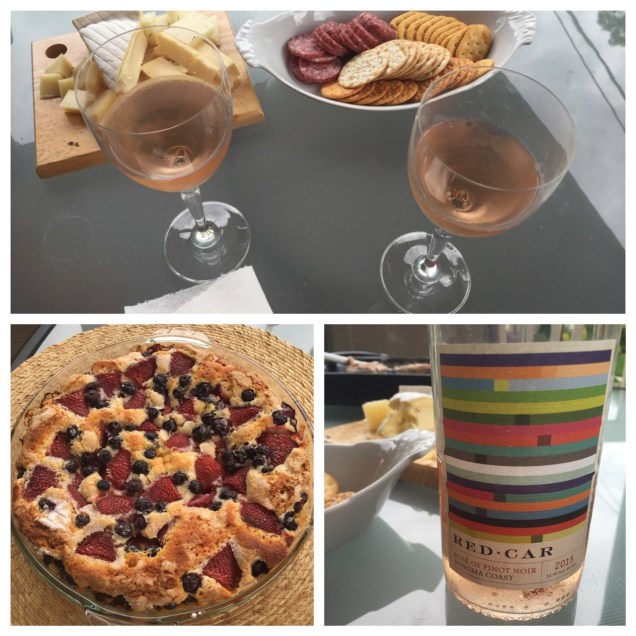
But on Memorial Day, I did something I haven’t in a very long time – and it was absolutely wonderful! I shared a single bottle of Red Car rosé with a dear friend over some cheese and an amazing strawberry cake she baked.
We caught up with each others lives, enjoyed the warm air and had a few hours to relax, breathe and just be in the moment. At times, I could even still geek out and talk about the wine. It was the perfect way to spend Memorial Day! Looking forward to more occasions where just a single bottle will do. Cheers!
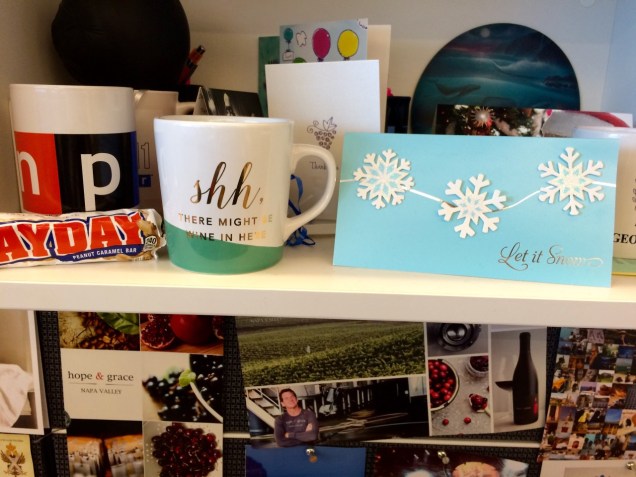
“shh, THERE MIGHT BE WINE IN HERE” – a little snapshot of Alicia Cypress’ cubicle. She’s the Investigations team’s digital editor by day and blogs about wine by night @itswinebyme.
My wonderful day-job colleague who maintains the @mugsofnpr tumblr featured my most recent addition to my desk decor – although it’s frequently used for much-needed caffeine breaks, too! But if you’re curious about any of the other items in this picture, here’s a quick tour:
* Behind my now infamous mug, can you see the card with the grapes? It’s a hand-written thank-you note from a former intern, who understood my passion for wine.
* Below the shelf, I’ve decorated using postcards as art. That includes a few from Hope & Grace (an aha moment in my wine journey).
I’m trying not to let wine completely take over my desk, but when something makes you happy, having little reminders while crashing on deadlines can be incredibly helpful!
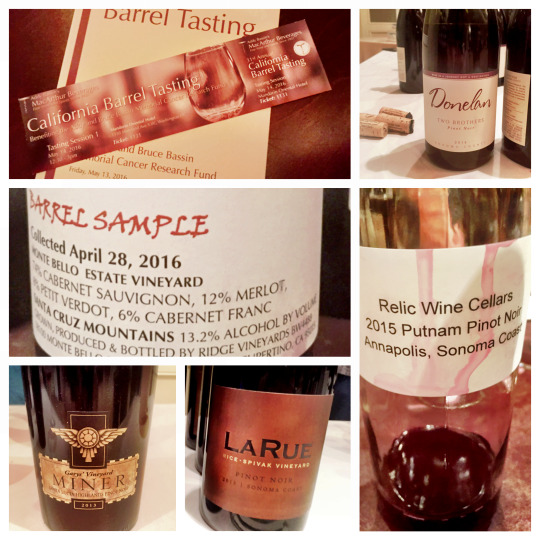
For 31 years … Wait a minute. Think about that. 31 YEARS. That’s not even a decade after the Judgment of Paris made California wine significant … MacArthur Beverages has been hosting a barrel tasting of California wines here in Washington, D.C. It’s an opportunity to try (and purchase) the most recent vintages before they’re ready to be sold – and as the name “Barrel Tasting” suggests, even before the wines are bottled.
A fun surprise (for me, at least) was to see so many Pinot Noirs (and some Syrahs and other varieties) from throughout Northern California (and dipping down into Santa Rita Hills). My understanding was this event in the past focused mostly on Napa Cabernets (but maybe I was wrong? or maybe this is a sign of changing tastes?).
But what I really enjoyed about the event was the energy in the room. Unlike other big tastings, many of the wines here have never been poured for consumers before. That made the tasting all about discovery – discovering new tastes and sensations in the new vintages, and for the winemakers, discovering how consumers are reacting for the very first time.
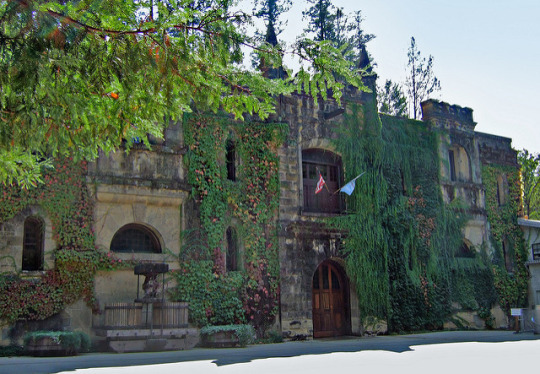
Napa Valley’s Chateau Montelena – along with Stag’s Leap Wine Cellars – beat out their French competition during the Judgment of Paris 40 years ago this month. / Photo by Flckr user Living In Monrovia
With this month marking the 40th anniversary of the Judgment of Paris – the infamous blind tasting that put California (and the U.S.) on the international wine map – there will no doubt be many great stories commemorating this historic event. So instead of rewriting what everyone else is writing, here’s a compilation of pieces you should read. Since the actual anniversary isn’t until May 24, I’ll do my best to update this post as stories are published.
Bloomberg’s Elin McCoy does a few things in her piece:Why One Seismic Event in the Wine World Still Matters 40 Years Later. She starts out by reporting on a new movie in the making, and then as the headline suggests, answers her question “Why is the world still obsessed with this tasting?” She ends with a do-it-yourself guide to creating your own tasting to celebrate.
Leave it to the Judgment’s hometown newspaper to find a fascinating character to write about: Joanne Depuy. As she tells Napa Valley Register’s Tim Carl: “I introduced both of the winning wines to Steven Spurrier, and I even transported the wines over to Paris for the tasting for him.” (Uhoh – that means one of my favorite scenes in the Bottle Shock movie may also be fiction!) Read more about her story in:The woman behind the Judgment of Paris.
Wine Enthusiast is marking the anniversary by telling you which wineries to go visit and telling you what’s new, but the more interesting bits are at the bottom under fun facts! Did you know that the winning Stag’s Leap Cabernet included one percent Pinot Noir? Read more in The Judgment of Paris Turns 40.
Esther Mobley of the San Francisco Chronicle takes the cynical position that someone sitting in the center of a news subject always does in Why the Judgment of Paris really matters (and why it doesn’t). But she provides an interesting perspective that makes this a good read and some balance to all the other pieces celebrating the anniversary.
So many anniversary stories on the actual day (I’m typing this on the 24th!), but I’ll end this list by highlighting one that’s a little close to home. I encouraged NPR colleague Maria Godoy, who runs the NPR food blog, to introduce listeners and readers to the Judgement of Paris. She did a fabulous job – including an interview with George Taber – in The Blind Taste Test That Decanted The Wine World.
If you spot a good #judgmentofparis piece that’s not included here, tweet me: @itswinebyme. (Last updated May 24, 2016)
One more post about Virginia wine, and then maybe I’ll diversify this blog again. But after a Spring release party, it’s worth jotting down a couple of paragraphs about Early Mountain wines.
A few weeks ago, I mentioned the winery in my roundup of Virginia wines to know – mostly because visiting their winery is a wonderful chance to not only try their wines, but taste about a dozen others from Virginia wineries. But since it’s been at least two summers since I visited Early Mountain or tasted their wines, I wasn’t able to say too much about their specific offerings.
Now I can. The winery hosted a tasting at Iron Gate restaurant, in Washington, D.C. The restaurant has a beautiful outdoor patio and is a perfect location for a Spring or Summer evening. Unless it rains. Which it did. But the damp and gloomy weather was hardly noticeable when you combined a large white tent with Early Mountain’s fresh whites and rosé. The wines all had a beautiful acidity running through them with very little or no oak. Perfect garden party vino.
The event was also a great opportunity to meet Ben Jordan, Early Mountain’s winemaker and Maya Hood White, their vineyard manager. Both are relatively new to Early Mountain (in the past few years) and their youthful spirit comes through in the wines.
While I try not to formally review wine, I did make some notes in my Delectable account (feel free to follow me there), so here are those thoughts with some slight edits for accuracy, spelling, style and grammar (note: all wines, including the Chardonnay are from the 2015 vintage):
Early Mountain Rosé: The pretty salmon-colored wine gets most of its color from Syrah, but the wine is mostly Merlot, with a bit of Cab Franc as well. For a wine that was so light on its feet, there was a nice bit of depth and structure.
Early Mountain Pinot Gris: I braced myself for something on the sweeter side, but instead got a really nice crisp, dry wine. I enjoyed the acidity and noted it will be great on a hot, summer day.
Early Mountain Chardonnay: There’s only a touch of natural oak on this wine. Combined with a well-rounded finish, it’s an easy-drinking white that can please many palates. A great table wine, if you will.
Early Mountain Five Forks White Blend: The most structured and aromatic wine of the bunch, this white combines Viognier, Pinot Gris, Petit Menseng, Sauvignon Blanc and Muscat. Lots of aromatics wafting from the glass, with a pinch of sweetness. But the palate is completely dry and the Petit Menseng lends a nice spice to the finish.
You must be logged in to post a comment.