An Evening Of Decadent Firsts

Sometimes you just have to brag a little. And this past week, I had an evening worth bragging about. Some friends gathered after a holiday party for a feast at one of D.C.’s top restaurants. It’s taken me far too long to try this place and as Julia Roberts might tell a Rodeo Drive boutique salesgirl: Big Mistake. Big. Huge.

Here are four first-time experiences thanks to this special night out with friends:

Mintwood
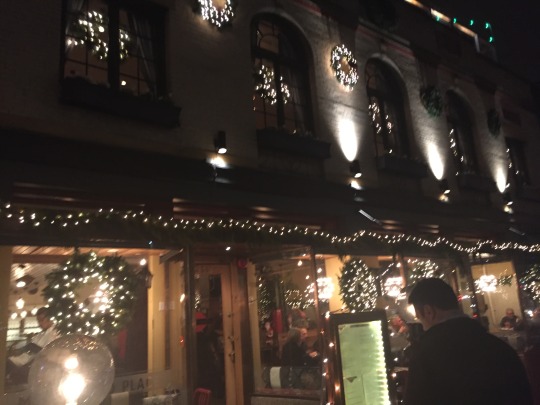
Mintwood dressed in holiday lights.

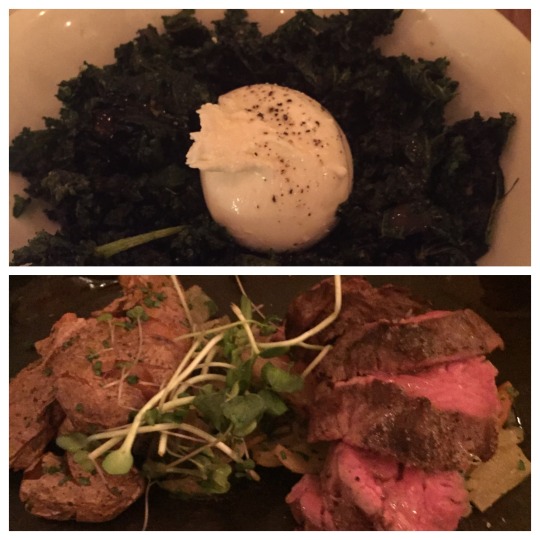
1. Mintwood Place is everything you want it to be. A cozy but lively bistro with staff that smile and treat you like you’ve been coming in for years. And then the food arrives. And it’s perfect. While the main ingredient on each dish is elevated beyond what you would ever expect, it’s the small touches of flavor – from a dab of dressing on a creamy burrata nestled on crispy kale or a side dish of smashed fingerling potatoes that only appear ordinary – which steal your attention.

Mintwood
Mintwood dressed in holiday lights.

And while this should be enough for a wonderful evening, it was really just the backdrop for a table laced with legendary wines.

DRC wine
Not quite table wine: DRC and a next-door neighbor.

2. The stars were four bottles of Domaine Romanee Conti Echezeaux from 1989, 1993, 1994 and 2002 (to be exact, the ‘89 was a Grandes). A 1997 Louis Jadot Grands Echezeaux joined in as well. These were my first experiences with DRC, and while the mythical, magical, Angel-singing moment I’ve heard so much about may have been slightly exaggerated, a quiet calmness enveloped me as I sipped each one savoring the wines finesse and complexities. (For real tasting notes, look here.)

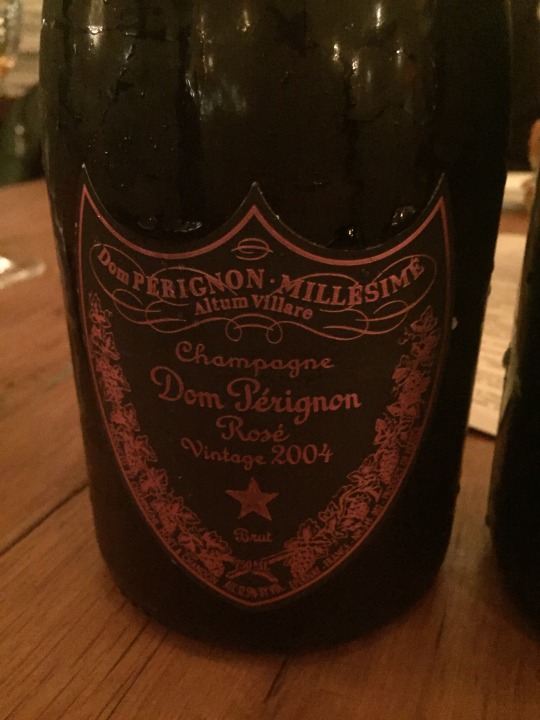
3. A 2004 Dom Perignon Rosé was poured soon after we were seated. There were other bottles of bubbles, all of which I hadn’t experienced before, but the Dom Rosé was different. With more body, fruit and refined explosiveness than other sparklers I’ve tried, it’s very tiny bubbles were hardly visible in my non-fluted wine glass.

Dom Perignon Rose
A beautiful bottle of bubbles.

4. The final splurge-worthy decadence I’ll write about here (but certainly not the last of the evening) was poured toward the end of the night, just prior to the popping of the dessert wines (which I politely passed on in favor of sipping another glass of the Dom). Given what was already served, I’m afraid this particular wine didn’t receive the attention it deserved. The waiter poured my glass out of the decanter and I took a few sips, but then let it sit. The dark brooding Syrah seemed like it had a lot to say, but it wasn’t talking yet. Or maybe my palate was too severely compromised. I put the glass down and walked away, only to come back to it a little while later in a quiet moment, while the others were swirling around the dining room and enjoying the effects of the evening. This time a glorious sense of earth emerged from “Stock,” a 2012 Sine Qua Non from California’s Central Coast. It’s the type of wine that deserves an evening unto itself.

image
I’m not sure what led to the pocketing of the SQN bottle, but I’m glad it was opened for us to enjoy and proof you can have fun with serious wines.

A New Kind of Wine Crush!

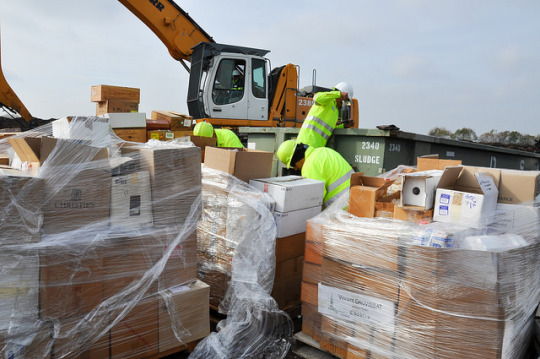
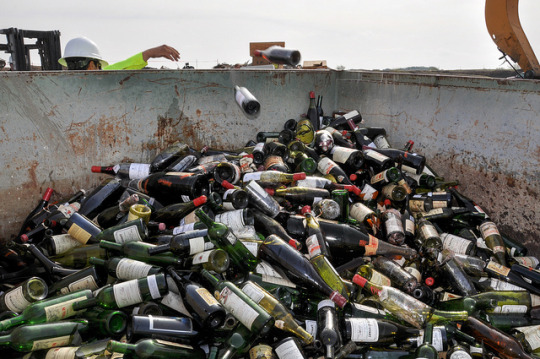
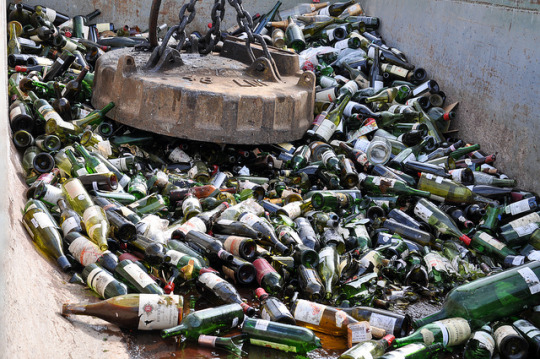
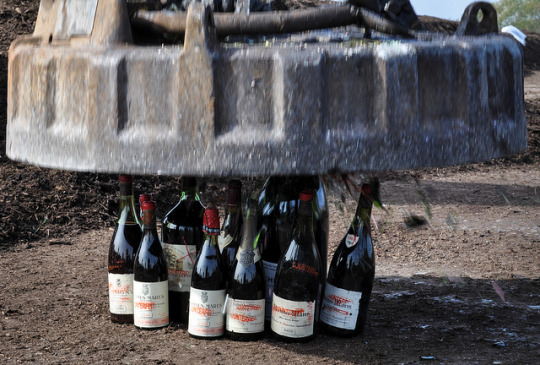
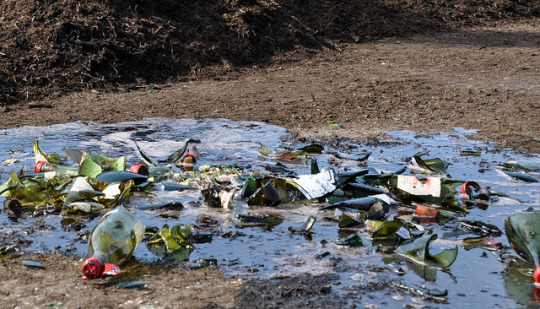
Here’s some wine porn you don’t see everyday! It’s even government sanctioned! That’s because the U.S. Marshal’s Office has released images from the day they demolished more than 500 bottles of wine from Rudy Kurniawan’s private collection. If you don’t know Rudy, he’s been all over the wine news for the past several years and was recently convicted in federal court for counterfeiting high-end wine (we’re talking bottles worth thousands of dollars/bottle). Fortunately, the bottles destroyed were deemed to be counterfeit or unsellablle by experts. So the government did what they had to: brought boxes, cases and pallets of bottles to a landfill in Creedmoor, Texas. They then let construction equipment do its best. Here are a few of the photos courtesy of the U.S. Marshals. You can view the full album here. (Also, thanks to Dr.Vino, where I first saw the news via twitter.)

image
image
image
image
image

(All photos courtesy of the Office of Public Affairs for the U.S. Marshals. See the entire album here. )

Here’s the official statement from the U.S. Marshals:

More than 500 bottles of wine found to be counterfeit or unsellable are destroyed at a landfill in Creedmoor, Texas, Dec. 10, 2015. The wine was from the private collection of Rudy Kurniawan, the man convicted of fraud in federal court in 2013 for producing and selling millions of dollars of counterfeit wine. The U.S. Marshals were responsible for destroying the counterfeit and unsellable wine and selling the authentic wine. At the destruction, the wine bottles are crushed by a crane, and the glass is collected for recycling on site. The liquid contents of the bottles are collected and composted. The cardboard and wood from the boxes and pallets are also recycled or composted.

The (Totally Fun, Not-At-All Stuffy) New Rules of Wine – Bon Appétit

My Addendum To These “New Rules Of Wine”

Either my wine-media consumption behavior has become too trendy or the author of this serious-yet-still-whimsical listical from Bon Appétit has been spying on my wine life! (I’m hoping it’s the latter).

I struggle with wanting to become a cheerleader for what Belle Cushing curated and putting on a cynical hat so I can make some dashingly intelligent comments that show I’m too-cool for mainstream wine media. Oh, who am I kidding? I’m not very cool.

But I can’t just post this story without comment, so here are some extra thoughts on a few of the “rules” contained in this piece. (For a better UX, open the story in a separate window, and read it side-by-side next to this post). I hope it’s helpful!

1. Choose your wine

Can’t dispute this choice at all! And super excited to see Bay Grape mentioned (and here I thought this was my own little discovery back in October). But there’s NEWS hidden here… Delectable, the social media darling of the wine world, is introducing a new app?! Maybe this explains why the app – which had started producing some really fun original content to help recommend new wines – stopped adding new editorial features. Eager to see what’s next for the company.

2. Drop These Names

While it’s a bit controversial at times, I wouldn’t be afraid to add IPOB (In Pursuit of Balance) to that list. The lighter-style Pinots and Chardonnays from California are always a treat.

3. Why Natural Wine Is Important

To get a better sense of who Pascaline Lepeltier is and why I’m happy she was quoted, read Pascaline’s piece that was just published in The World of Fine Wine. But I’d also highly suggest getting your hands on Alice Feiring’s book, Naked Wine, to really understand the Natural Wine movement.

4. Ask for the Loire Valley.

Funny how the author quotes Pascaline (who is known for her love and knowledge of Chenin Blanc), but makes no mention of the grape in this section. That’s OK. I enjoy Chinons, too. But Chenin Blanc is a Loire staple and is worth a taste or three (even if it’s non-Loire bottles like some newer wines made here in the U.S. )

5. Take a Trip to Georgia

For more about the country’s ancient clay barrels used to make their wine, take a look at NPR’s story from June. Or better yet, go sit at the bar at Compass Rose in Washington, D.C.,and taste some of them!

7. Head of the Glass

 I take my sipping vessels seriously, so it was fun to see how glasses have evolved. There’s debate on whether the glass makes a difference (I’m in the camp that it does), but at the very least, it usually adds to the enjoyment. Even if your vessel is a little esoteric.

10. Memorize the New Importers. 

I’m still learning the importers, but already I’m a big fan of Jenny & Francois (they import one of my favorite Rhone wines), as well as Louis/Dressner, who both import natural wines. While not necessarily new, I’d make sure to add Weygandt when seeking out French wines, too.

12. Producer Trumps Vintage

Producer sometimes trumps terroir, too. There I said it. Don’t believe me? Take a look at this twitter exchange about David White’s recent column about introducing Burgundy to his friends. I discovered something similar while tasting my way through some Cru Beaujolais.

13. Less is More

See IPOB recommendation from #2.

15. Collect Wine Like You Mean It.

Just want to stress the fourth principle: buy multiple bottles so you can taste it along the way. What fun is aging wine if you can’t learn and understand how the wine evolves over the years?

17. Read All About It.

So many good blogs and books to suggest. These scratch a good surface, but if you’re just getting into the wine scene, Wine Folly’s new book is another great reference guide.

18. Go Long on Beaujolais.

I certainly can’t argue with this – especially after I spent a Saturday attempting to demystify the crus.

19. Status Worth Seeking

Wine bar owner and sommelier Aldo Sohm is exactly right. Even more so if you don’t live in California or New York. Some of my favorite wines: Dirty & Rowdy, Enfield, Jolie Laide and Sandlands all have very reasonable price points (some a little higher than the $30 he mentions, but still very much worth the money for the quality). But because they make such a limited quantity, allocations are extremely tight.

Read the full story here:
The (Totally Fun, Not-At-All Stuffy) New Rules of Wine – Bon Appétit

‘There’s Always a Ton More To Know’

I know that no matter how much I know, there’s always a ton more to know and the second I know it, it’s  probably going to change. And so there’s always something  to keep you engaged and excited about that, and when you realize that, that is the most powerful part of all of it. … Wine is ever changing, it’s expanding, it’s growing, it’s getting bigger, deeper, it’s just a very dynamic industry and to me that’s the piece that keeps it exciting and keeps it so interesting.

That’s Andrew McNamara, director of Fine Wine for Premier Beverage in Florida and the Chairman of the Court of Master Sommeliers, Americas, as told to Levi Dalton in “I’ll Drink To That! Episode 317.”

I can’t stress enough how much wine is an intellectual pursuit for me, more than anything else. One of my wine mantras from day one has always been: The more you learn about wine, the less you actually know.

I know I’m not alone in that thinking as many of my wine friends say the same thing.

But it’s still comforting to hear that a leader of one of the premier wine education institutions is also passionate about wine for that very reason.

My Attempt To Demystify Cru Beaujolais

image

It’s November,  the time of the year when the commercial wine industry turns to Beaujolais Nouveau – the just-released candied-cherry-smacking wine from a region in France that has long been seen as the ugly duckling to Burgundy.

But in recent decades, winemakers in the 10 Cru-designated villages have been fighting to show off what their Gamay and terroir can do.  High-profile big-city somms and the “cool kids” of the wine scene, have been flocking to the Crus for a while now:  Morgon and Fleurie are the first villages I was exposed to among my wine-drinking friends. It’s history in the natural wine movement (read Alice Feiring’s Naked Wine) and its growing stature are signs this isn’t just a trend. And then last month, Decanter reported this:

The 10 crus of Beaujolais have instructed a series of working groups to identity and list individual climats by June next year, as they seek to emulate Burgundy by linking vineyards more closely to terroir.

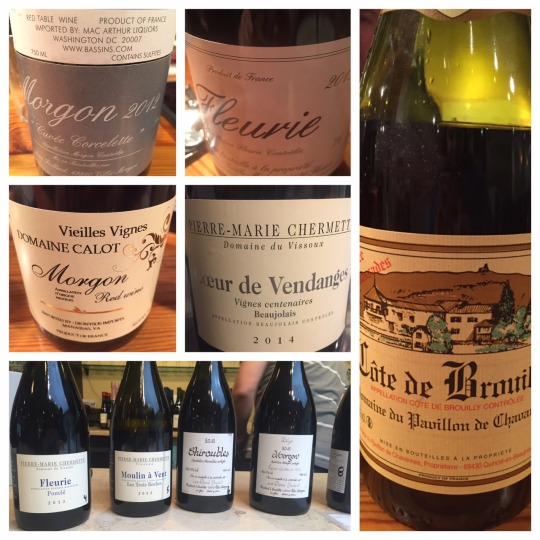
So in my quest to understand the wine world, and to keep up with my more knowledgeable friends, I set out to learn more about the 10 Crus and put together an extremely informal, very unscientific tasting. I asked my friends at Weygandt Wines to suggest three Crus I could taste side-by-side. My hope was that I would get an understanding for these wines and maybe even be able to pull out some trademarks that I could remember for future purchases (i.e. Fleuries are more floral, Brouilly are lighter). There’s already some buzz around the 2014 vintage, which are just starting to come in, so Tim and Warren recommended these:

  • Clos de la Roilette (Coudert) Fleurie  (2014)
  • Daniel Bouland Cote de Brouilly (2014)
  • Pierre-Marie Chermette Coeur de Vendanges (2014
    – while not one of the Crus, this wine comes from 100-year-old vines and
    was highly recommended as a good alternative.)

Also, some friends were kind to join me in this learning experiment, so a few more were popped and poured:

  • Domaine du Pavillon de Chavannes de Chavannes Côte de
    Brouilly (2014)
  • Jean Foillard Morgon Cuvée Corcelette (2012)
  • Domaine Calot Vielles Vignes Morgon (2014)
  • Yvon Métras Fleurie (2013)

And I should add that just prior to my informal tasting, Weygandt’s had also set up a tasting of mostly 2013s, so I stopped by for some pre-experiment sips:

  • Pierre-Marie Chermette Brouilly, Fleurie and
    Moulin à Vent (2013)
  • Daniel Bouland Chiroubles and Morgon (2013)
  • Chateau Grange Cochard Morgon (2012 and 2013)
  • Domaine de Prion La Madone Fleurie  andMoulin à Vent (2011)

Phew – all that spanned a single afternoon.

My Saturday conclusions:

I must admit that I don’t know more than I did before we started. Sure, I enjoyed some over others. For example, the nose on the Chateaeu Grange Cochard Morgon 2013 had gorgeous herbal aromas that the 2012 lacked (yet the palate on the 2012 was more rounded). And certain wines tasted like they were trying to emulate Burgundy. But producer styles seemed to win out over terroir. When comparing crus within a single producer, that’s when I was able to slightly pick out differences. Of the three initial wines – it was the non-Cru designated Pierre-Marie Chermette Coeur de Vendanges that I enjoyed most. I went home later that night slightly unsatisfied with no overarching themes for individual Crus.

Fortunately, my frustration dissipated when I read “What’s the Big Deal About Cru Beaujolais,”  on wine-searcher, which includes these “caveats” to understanding this wine:

Two issues: first is that the crus are not entirely sure of their identity or about their relationship with Burgundy. Second, they are made by several different techniques, including carbonic maceration (the traditional way), thermovinification (a quick fix, where the
grapes and must are heated to near boiling prior to fermentation) or
traditional Burgundian winemaking methods – this can cause confusion as each gives a very different wine style.


And I had another takeaway:

I wasn’t as in love with these wines as I wanted to be. Nothing blew me away. They were all bottles that generally do fit my palate and were enjoyable. But it’s a wine I would pull for an occasion: a pairing with a roast chicken dinner or a table of friends who just want something light. I must say, Cru Beaujolais really does lend itself to Autumn. It’s a beautiful transition wine from the hot summer days to impending doom – oops, I mean cooler weather.

But then something interesting happened. We had a lot of leftover wine and I brought home the three original bottles that I brought –and snagged the rest of the Métras Fleurie. About two days later – after some time in my refrigerator and then warmed back up to about 10 degrees below room temperature, some of the dirtier/earthier flavors started to emerge. The wines tasted fuller, and more rounded. Day three only enhanced that.

So my final assessment:

Cru Beaujolais, which is meant to age (quite the opposite of Beaujolais Nouveau, which most of the wine-drinking public associates with the region), really does benefit from either time in the bottle or a healthy decant or lingering in a refrigerator for a few days after opening. Any future real comparative tastings would probably benefit from one of those methods. As for which Cru I prefer or can properly describe, I still don’t know. And I’m ok with that. Making my way through 10 different terroirs and more than a handful of recommended producers will take a bit of time and is certainly not a bad way to continue on my wine journey.

Cheers!

How To Quench Your Thirst From Someone Else’s Hunger

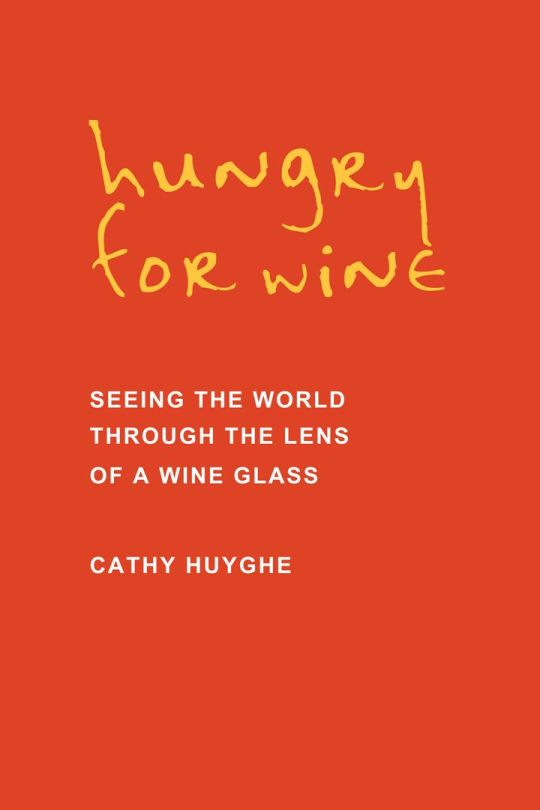
When I first learned about Cathy Huyghe’s new book, I immediately perked up: Finally, someone is putting into words what I’ve been trying to define via this site, or my Twitter and Instagram feeds: How can you properly communicate that intense yearning to follow everything wine (and are there others like me?)? She succeeds at that by sharing the stories of the people behind 12 bottles of wine. It’s their own desires deep inside their souls driving their pursuit. And it’s why “hungry” in the book’s title is such a wise word choice.

“It’s about being hungry for life and being hungry for the pleasure of it and to actually jump off the edge and go ahead enjoy it, and go ahead and give yourself permission to enjoy it,” Huyghe told me after she sent me an early copy of Hungry for Wine: Seeing the World Through the Lens of a Wine Glass.

image


So I jumped on the opportunity to review it at work. The editors at The Salt loved the idea!

Until now (except for a slight mention and a 2003 profile of a Maryland winery back when I barely knew the difference between Chardonnay and Cabernet),  I haven’t written about wine professionally. Finding the right wine voice outside of this site, while maintaining my objectivity as a journalist was challenging. It also meant I had to keep in mind what an NPR audience would connect with the most. As a result, the edited version of the post focused on some of Huyghe’s chapters that were pertinent to political and social issues as part of the news.

However, as an obsessed oenophile, I personally connected more to the emotional side of her writing – and much of the soul I had originally wanted to include in the story was either lost or left on the cutting room floor.

But thanks to the power and wonder of the digital age and multiple platforms, I can share more of my hour-long conversation with Huyghe right here!

Maybe by doing so, it will stir up your own hunger for wine!

On the meaning of being hungry for wine: 

“The ‘hungry’ of the title definitely means a lot of different things. It means being hungry from a passionate perspective. It means hungry literally, physically hungry, putting food on the table hungry. And it also means being hungry for the connection that wine is able to bring to all of us. When you open a bottle and you pour it in your glass and in the glass of the person sitting across from you or maybe the next person over, you’re connected. It’s an immediate connection and an immediate link between all of you.There’s a lot of room for that kind of sharing and that kind of linking together.”

On why she wrote the book:

“I want [the book] to be a launch pad, too, of conversations over the wine, but also about what it takes to bring the bottle to your table. And if those 12 chapters can be used as a launch pad to engage people and make wine closer to them and make it more relevant and something they can see relates to their everyday lives, than all the better, because that’s how I see wine and I really wanted this book to add to the conversation about wine in that way.”

“What I hope happens is that people will see wine as
something fun, something interesting, something worth celebrating, and that they’re also part of a very, very interrelated web and context and really thick beautiful luscious context … And so I hope that people
will find a couple entry points for themselves where they can say ‘Huh, I get that about this wine and that is how I’m going to think about it,
enjoy it or appreciate.’ “

On why she always asks ‘Who harvests your grapes?’: 

“That question of the labor force, it’s a door opener everywhere you go in the sense of ‘Let’s get this conversation started, and let’s see what’s happening here because obviously somebody has to harvest the grapes, so who is it for you?’ And it was in so many places that I asked it and visited, it is what opened the door to conversation. It opened the communication and it helped people understand that the wine writing that I want to do and that I do isn’t sort of the kind that’s focused on a tasting note … So that one question turned out to be an incredibly effective way to get to the deep end.”

(Note: You can also read the chapter that focuses on this question here.)

On being a wine writer: 

“The kind of writer that I am asks about the questions around
the glass a lot more than what’s in the glass. Rather than my focus being on sort of the pour or the color or the texture or the aromas – I love that, there’s a lot of value to it –  but for me, the broader conversations opens more pathways to getting to know the other people I’m with, or getting to know the bigger context for the existence of this wine. I guess that’s one way to think about it. I’m interested in how the wine got to be there maybe more than looking too closely at what it is when it is there.”

On the preciousness of wine:

“I think for a long time there’s been a sort of perception or an understanding of wine as something really precious and a lot of connotations to the wine. And even though that isn’t my interpretation of wine –  not that I don’t find wine precious, I do – but I think that there was just this idea that we had to really value wine to the extent that we had to elevate it and it represented this sort of higher lifestyle. What I would love to see, or what I try to see, is that wine is – it’s a way – it’s a vehicle for us not to commemorate those ideas of the Françoises* in our lives, but to celebrate them, to toast them, to honor them by actually opening the bottle.”


*Françoise is a woman mentioned in the first chapter of the book that can be best be described as a long-lost love who once brought  some memorable bottles to the main character of the chapter.

On the ever-changing nature of drinking wine:

“Not only every bottle, but every glass is going to be different. Every sip is going to be different depending on what you’re eating with it or who’s sitting across the table from you. Maybe somebody gives you some devastating news and then you’re like ‘Everything tastes like sour grapes!’ after that. Every time that you pour some wine or take a sip or open a bottle it’s going to be different and you’re going to be different every time. Because we change day to day, we change meal to meal because what you had for breakfast today is going to affect your tastes for what you drink later tonight and and same for me, so in a way we can’t have the same experience as the wine because we all have different taste buds – and to me that sort of openness and variability is part of the challenge. And part of the fun.”

It’s that exact challenge of never being able to duplicate your experience with a each glass of wine that drives my passion, too.

If You’re In The Berkeley Area and It’s Monday (or any other day), I Found The Perfect Place!

image

Word of advice: If you’re a serious wine lover, have a day in the Berkeley/Oakland area, and don’t want to go very far, make sure it’s not a Monday. I learned  that lesson the hard way. The last full day of my vacation after driving nearly 700 miles all over wine country (and even down to Monterey), I was determined to find something to do close to where I was staying for the last two days of my trip.

Fortunately, I found a fabulous place that should have been on the top of my list. But before I tell you about it, here are three places that could have made for a fun Monday (had they been open):

1) Broc Cellars. I haven’t tried Chris Brockway’s wines yet. But the little I know from the social media accounts of industry folks whose palates I respect (and this great Eric Asimov New York Times profile), not getting into this tasting room was heartbreaking. I discovered its location on a Sunday evening on my way back to my friend’s apartment from a beautiful visit to Stinson Beach. The painted square label – using its signature whimsical artwork – screamed out from the building’s corner location. Known for natural wines from non-conventional California grapes, I have no doubt this would have meant a fun and educational tasting.

2) Kermit Lynch Wine Merchant. The famed wine importer’s retail outlet would have been the equivalent of wonderland for anyone interested in French and Italian wines. Or at least that’s how I would have hoped it would be. Since it’s difficult to know which are the best wines from far off wine regions, understanding the preferences of an importer becomes a wonderful guide in discovering new wines. And who better to to learn from than the most famous wine importer in the U.S. I only know Kermit Lynch by his multi-decade-long reputation of choosing terroir-driven wines, but it would have been a great lesson to really see which wines he recommends. 

3) Ordinaire Wine. This wine bar and shop seems to be among the newest darlings on the block – especially since it’s so focused on natural wines. If you haven’t guessed – these are a preference of mine, and was certainly a bit of a theme on this trip (my airplane reading included Alice Feiring’s Naked Wine and many of the wineries I was visiting believed in those core values). Ordinaire was also on my to-do list before I even stepped foot in California. I was convinced its existence was aligned perfectly with my own wine beliefs. Just look at the first ‘graph from their about page and you’ll see what I mean (emphasis via bolding is mine):

Our name refers to vin ordinarie, or “everyday wine,” which is wine that never makes it into bottle, but is kept back for the winemaker, close friends, and the local bistro. This is the point of the shop: using wine to transform our concept of the ordinary——to transform our concept of the possibility of the ordinary. L’ordinaire est possible!

But when I looked up its address, I was hit with the awful news, that they, too, are closed on Mondays!

Not completely discouraged about a lack of somewhere to visit, I discovered a cheese shop. If I can’t do wine for lunch, then cheese seems to be the next logical place. But just my luck… The Cheese Board Collective (ummm, hello! I didn’t even need to read much more to know this would send me to a happy place) closed at 1 p.m. on Mondays. It was already 12:15. Sigh.

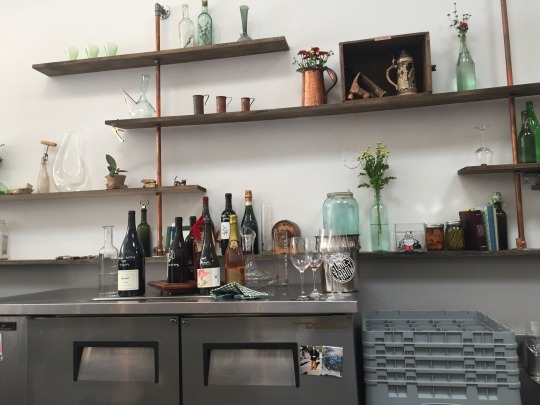
So where did that photo at the top of this post come from? And where can you find a magnum of Hérve Souhaut and a bottle of Michael Cruse wine sitting on the counter opposite a tasting bar?

image

Welcome to Bay Grape! This wine shop lets you purchase a bottle and if you pay a $5 corkage, they will open it, and you can enjoy it there and even take home the leftovers (I know, I know – who has leftover wine? But when you’re responsible for driving yourself to your next destination, then limiting yourself to a single glass becomes the wise choice).

This is not just any wine shop. It’s a well curated boutique focused on many of the natural producers I’ve been following. In the dearth of Monday wine offerings, this not only became an oasis, it was probably the location that should have been on the top of my my list. 

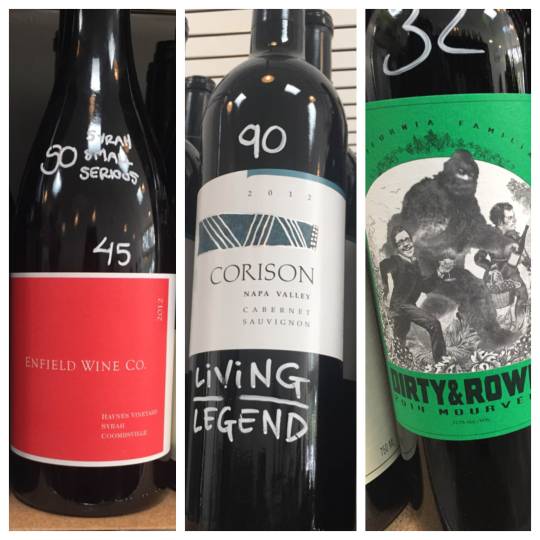
It was clear right away that the owners – a husband and wife team who are serious about wine – are here to share their knowledge and favorite wines (there’s beer there, too), rather than just be a commercial retailer. Within minutes of looking through their shelves, I was finding many of my own favorite winemakers – three of whom I met on this trip: John Lockwood of Enfield Wine Co., “living legend” Cathy Corison and Hardy Wallace of Dirty & Rowdy. (This pic are bottles I snapped at the store.)  

image

Their bottle notes are to the point and offer easy guidance. And while there were many wines I recognized or have tasted before – there were just as many that were foreign to me. If only they could transplant the entire store to Washington, D.C., so I could sip my way through all their offerings.

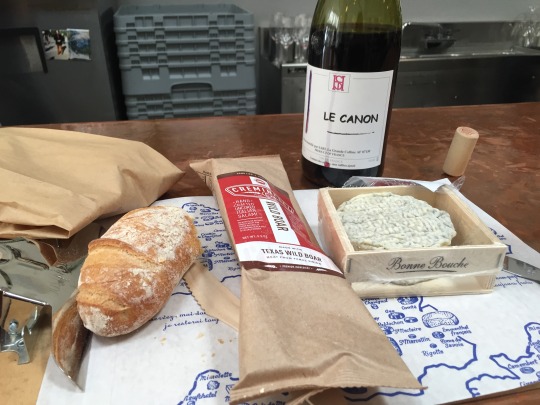
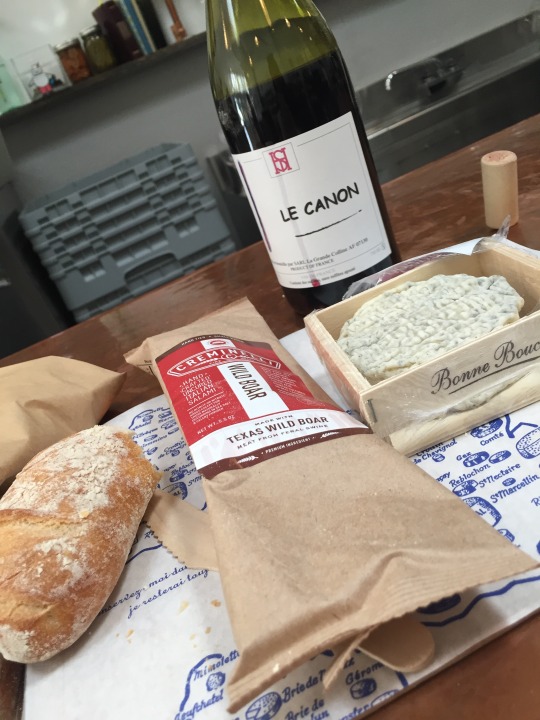
But Bay Grape is not just wine! There’s a small refrigerated case featuring cheese (!!), charcuterie (!!) and a baguette that they will toast for you (!!). Toasted warm crunchy bread and creamy gooey cheese, with a flavorful salami – is there a more perfect lunch? I made myself a little picnic right on their tasting bar and it was heaven. One of the owners recommended a Domaine de La Grande Colline Le Canon Syrah, based on some simple parameters I gave him. It paired deliciously with the ash-ripened goat cheese, a wild boar salami and the baguette. As I commented on Delectable: “There’s a streak of something lively running up the front of the fruity palate. Candied strawberries mixed with pepper, too.” Have I mentioned yet that it was the perfect lunch?

image

The best part about noshing on all this – there were plenty of leftovers to share as a pre-dinner snack later that evening.  

Little did I know when I set out on my day that all those Monday closures would lead to the perfect Bay Grape adventure. And while I can’t wait to go back to the Berkeley/Oakland area on another day of the week to explore all the other options, I can guarantee this shop will still be at the top of my to-do list. 

Drought Brings Soul Searching to California Winemaking

While it’s fun to watch what winemakers are saying on social media about the state of this year’s harvest, I was happy to stumble on this well-reported story by Eric Asimov of The New York Times. If you’ve become almost as obsessive on this topic as I have, it’s a must read:

The drought may have turned all of California into a pitiless desert in the popular imagination, but a week in July spent visiting fine-wine regions all around the state painted a more nuanced picture.

From the Santa Ynez Valley in Santa Barbara County, to El Dorado in the Sierra Foothills, to Napa Valley and the Sonoma Coast, the drought, now in its fourth year, has affected every area differently. Some regions have been hard hit, like eastern Paso Robles on the Central Coast and the Central Valley, source of much of the grapes that go into cheap bulk wines. But other regions, like the North Coast, are bearing up well.

While individual estates may feel the pain of the drought keenly, the California wine industry has continued to prosper through it.

Keep reading here

Drought Brings Soul Searching to California Winemaking

Lessons of #Harvest2015 Told In Three Bunches

If you don’t follow Jasmine Hirsch on social media, then you missed a pretty spectacular Instagram post. I’ll let the caption and photos speak for themselves, but if you’re just as fascinated by the winemaking process as I am, this will be quite a treat: