Where Are the Women Winemakers?

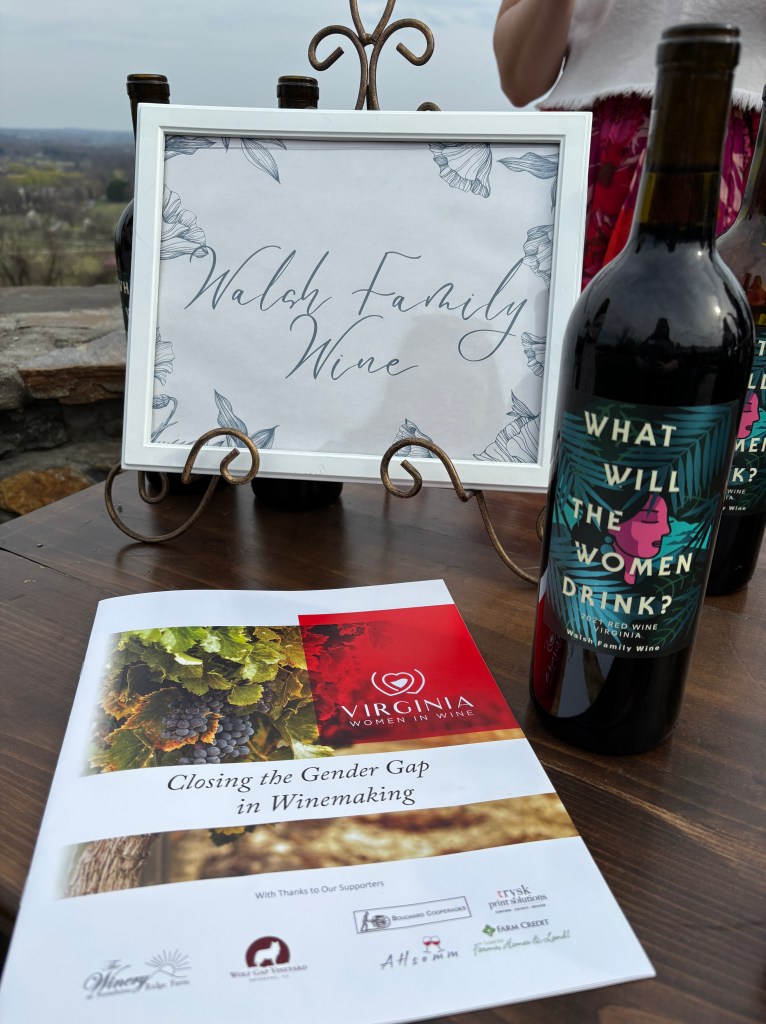
The “Closing the Gender Gap in Winemaking” paper was launched at a March 29 event at Bluemont Vineyard. Among the featured wineries was Northern Virginia’s Walsh Family Wines, whose cheeky wine ” What Will the Women Drink” is a spicy blend of Cabernet, Petit Verdot and Tannat. (Photo by itswinebyme).

In my decade-ish long wine journey, I never worried too much about the number of women producing delicious wines and driving the industry forward, especially as so many of my favorite female winemakers are producing standout bottles. My collection has always included bottles from the legendary Cathy Corison, volcanic Sicilian wines from Arianna Occhipinti, and the graceful Fleurie of Beaujolais’ Anne Sophie Dubois. Even among the new guard of U.S. west-coast winemakers, Martha Stoumen, Megan Bell, Brianne Day and Kelley Fox are among my favorites. As a wine geek located in D.C., my favorite day trip recommendation is Early Mountain, where Maya Hood White has transformed the vineyards and produces some stunning examples. And my summer go-to quencher is currently a bright Albariño from Blenheim Vineyard’s Kirsty Harmon from the Monticello Wine Trail.

So when I was asked to write a white paper about closing the gender gap in winemaking for the Virginia wine industry, I was surprised to learn that only about 17% of winemakers in the U.S. are women. In Virginia, the statistics for female winemakers are nearly the same, although if you dig deeper to understand hiring, the chances for a woman to become a Virginia winemaker are far more likely if she has the resources to start her own winery. In the last five years, according to data tracked by Matthew Fitzsimmons, only two women were hired by wineries they had no relation to.

Barriers Facing Female Winemakers

Finding out the answers why, and identifying solutions to achieve gender parity, is not easy. One woman who confided in me, shared her career trajectory was a mix of impressive support from some of her bosses, yet a number of different kinds of challenges ultimately led to her decision to step away from winemaking.

For example, early in her career, she was often singled out to do gender-biased tasks like cleaning up “after the boys.” As her career progressed, she said men with less experience would surpass her for winemaking roles, and once finally becoming a winemaker, she still faced questions of whether she could do the job. Combine all this with a lack of health benefits (leading to her questioning whether she wanted a family), and a role requiring long hours, with little to no overtime pay, it’s easy to see why she decided to move her career in a different direction.

These are hard decisions. Winemaking is a passion industry and often a form of personal artistry, where the drive to succeed can be far more personal than those entering more traditional corporate career paths.

What’s curious is that women often make up more than 50% of enology degree programs, yet far fewer become winemakers. When I reached out to some administrators at U.C. Davis’s enology program, they pointed to what could be one of the biggest challenges to closing the gender gap: Anecdotal evidence suggests women leave winemaking within 5 to 10 years of graduating at a higher frequency than men.

Challenges for female winemakers often came down to sexist attitudes that women can’t physically do the job (which to put it bluntly by many of the women I interviewed, is “bull sh*t.” ), the lack of benefits and job security, not getting paid the same as their male counterparts (although national salary data — which include the E&J Gallos of the world alongside the smaller wineries — shows salaries between the genders are not too far off), and women having to work harder to constantly “prove themselves,” often with little recognition for it.

Strengths Women Bring to the Cellar

What makes these conditions even more frustrating is when you understand the many strengths women bring to winemaking: They have more innovative ideas (perhaps because of the legacy of having to prove their worth), they have strong collaborative skills (and as one male winemaker noted, “less drama” in the cellar), and they possess innate skills lending to better quality wines (studies show women can be better tasters; and a few winemakers I’ve spoken to over the years point to women being much better nurturers, aiding in the patience that’s needed in both the vineyard and the cellar to make quality wine).

The good news is that success can be found, often by finding the right mentors. Most of the female winemakers I spoke to were able to successfully navigate the industry by having mentors who provided everything from practical winemaking advice, to leadership skills, to how best to handle working relationships in the industry.

In the paper, I briefly highlight a few mentoring and training examples, including that of one woman who started her career washing dishes in the winery, moved to the vineyard and is now training to become a winemaker alongside the winery’s head winemaker who said she was now his “right-hand person,” contributing to the quality of the wine.

Visibility and Lasting Change

In their book “Women Winemakers: Personal Odysseys,” Santa Clara University professors Lucia Albino Gilbert and John Gilbert came to the conclusion that a key solution to bringing more female winemakers in the field is more visibility. Whether that encourages more women to enter the field or those in the industry to be more accepting, I tend to agree. But it’s also the easy answer. The challenges women face in the U.S. (and in Virginia) are complicated and ones that a one-size-fits all solution can’t address. But if we can get the conversation started, and showcase the immense talents that women bring to the industry, perhaps in a few years, the data will say something different.

Read the Full Report

For the paper Virginia Women in Wine commissioned, we let the voices of Virginia’s wine industry shine through and hope it serves as a launching point for hiring managers and other industry leaders to create a more inclusive and diverse industry for women and future winemakers. Download the “Closing the Gap in Winemaking” PDF here.
As 2016 Harvest Commences, RdV Vineyards Matures

The Virginia wine experience is most often filled with fun and frolic — as it should be. It’s a chance to flee the city into the rolling green hills that many Washingtonians easily forget exists (I know I nearly did). You can taste, enjoy beautiful views, have a picnic, share a bottle (or two, or three) and often listen to a live music performance. It’s escapism at its finest (especially during an election year).

But nestled about an hour west of D.C., straight out I-66, is one winery that’s operating a little differently. It’s not here to attract the throngs of day-trippers. Instead, it’s courting the serious wine drinker and producing wines to play on the national and international stage.

RdV Vineyards
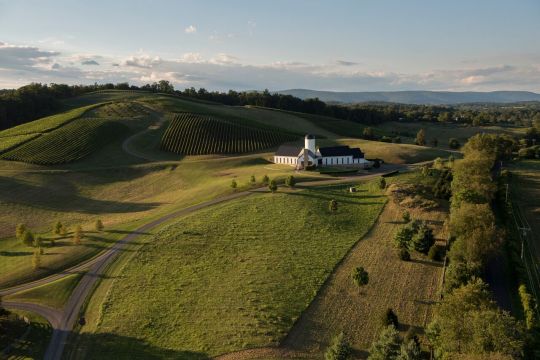
RdV Vineyards in Delaplane, Va.| Photo by Jeff Mauritzen / Courtesy of RdV Vineyards

RdV Vineyards is as much a part of Virginia wine as it’s not. With 16 acres of vines sitting
above the frost line on a hill in Delaplane, Va., overlooking 100-acres of
farmland, the winery takes a mostly hands-off approach to winemaking, letting
the land speak for itself. Their finished bottles have been well integrated
into the Washington region’s dining scene. And just this past year, the
White House served RdV’s 2010 Rendezvous during the Nordic state dinner
.

image
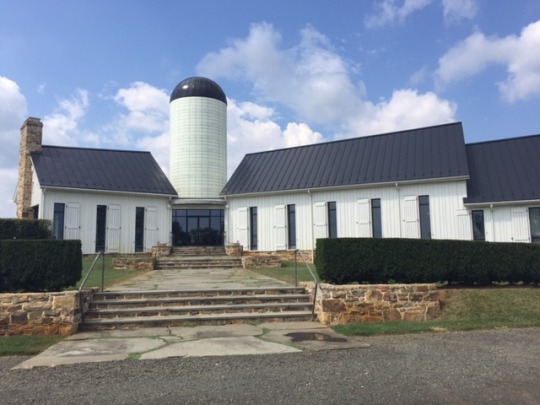
RdV’s hospitality center only looks rustic from the outside. | Photo by itswinebyme.

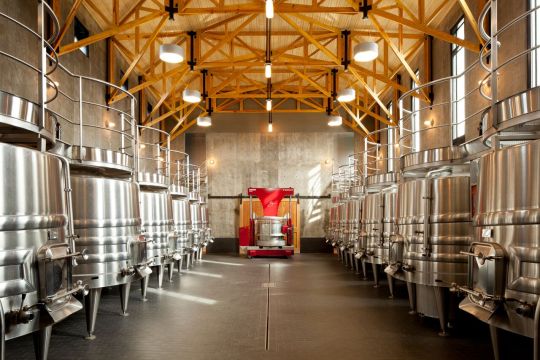
But once you step inside RdV’s white barn-like structure with towering silo, the interior suggests something more likely found in Napa or Europe. Its sleek minimal design elements, including Herman Miller Eames-style wooden chairs and leather couches adorning its tasting room, is almost reminiscent of a contemporary art gallery, leaving visitors with a sense of peace and calm. In the center of the building is a staircase leading down to the wine cellar, the caves, a large fermentation room filled with steel tanks, a glass-enclosed bottling room and a small
laboratory used to determine the blends for each vintage.

RdV Vineyards
Fermenting tanks inside RdV Vineyards. | Photo by Gordon Beall/ Courtesy of RdV Vineyards

When I visited the winery on a warm Wednesday morning in early September, all was quiet. The temperature was a few degrees cooler than when I left Washington, and blue skies intermingled with some clouds and a few droplets of rain. Just a few of the vineyard workers were tending to the vines – all lined in perfect rows covering the green hillside – patiently waiting for
harvest, which RdV begins today (Sept. 15, 2016). They’ll begin picking Merlot, followed by several other Bordeaux varieties, and will end the harvest season with Cabernet.

For several years, RdV has been written up by local, national and international media. The initial excitement about the amount of effort and resources Rutger de Vink was pouring into his winery was something the Virginia wine industry needed to help bring more attention to the emerging region.

After the release of RdV’s first vintage, London-based wine writer Jancis Robinson came to visit and praised the winery: “I sincerely believe [Rutger de Vink’s] considerable efforts stand a good chance of putting the state definitively on the world wine map,” she wrote.

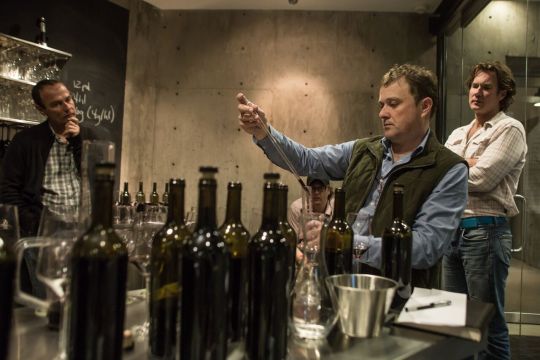
A bottle of the wine reached Eric Boissenot, the famed enologist and winemaker who has worked with many of Bordeaux’s most respected wineries. After tasting it, he reached out to Rutger to volunteer his services for free. So once a year, in exchange for a plane ticket and a place to stay, he joins Rutger, Jarad Slipp, RdV’s estate director,Josh Grainer, RdV’s winemaker, and Jean Philippe Roby, a consulting viticulturist also from Bordeaux, for several days of blending sessions to create the final wines. (Read more about the entire RdV team here.)

RdV Vinyeards
Eric Boissenot during a blending session in 2014, while Jean-Philippe Roby, left, Rutger de Vink, right, and Jarad, seated in the back, look on. | Photo by Logan Mock / Courtesy of RdV Vineyards

Now, about a handful of vintages later, the RdV story remains much the same, but the winery is beginning to show positive signs of maturity.  Rutger and Jarad are excited about the upcoming release of their 2013 vintage. They say there’s a much better understanding of the fruit each block of vines is producing. This will also be the first year they expand their offers to purchase beyond the winery’s “Ambassador” program to their mailing list subscribers.

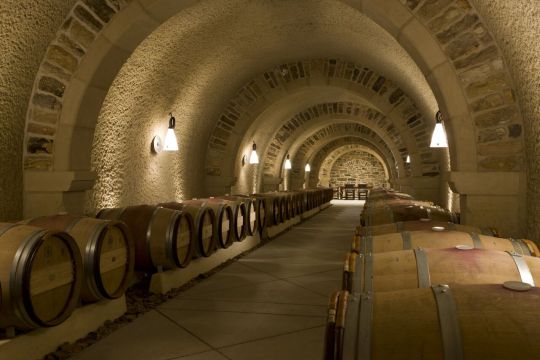
The winery’s caves are lined with filled French oak barrels, and racks of sleeping unlabeled bottles are stacked in cages at least six-feet high. A piece of land behind the vineyards where
Rutger once lived in an Airstream is now the site of a still-under construction contemporary-style home he’s building for his family.

RdV Vineyards
Caves at RdV Vineyards. Photo by Gordon Beall / Courtesy of RdV Vineyards

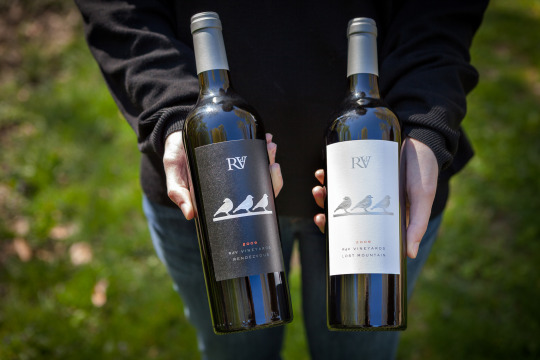
 RdV’s wines include Lost Mountain, a Cabernet-dominated Bordeaux blend, and the Rendezvous, a Bordeaux blend that’s dominated by Merlot. There is no recipe for how the wine is blended each year and what percentage of each grape are bottled. It’s all decided by the artistry of tasting and influenced by the subtleties of the vintage. The Rendezvous is created as a lively and energetic fruit-forward wine that’s meant to be drunk young, while the Lost Mountain is a bit more refined and structured with finesse that hints at its aging potential.

RdV Vineyards
RdV Vineyards wines include Rendezvous, left, and Lost Mountain, right. | Photo by Matthew Girard/Courtesy of RdV Vineyards

RdV creates its wine by fermenting each vineyard block in its own tank. After the blends are decided, they are put together and poured into French oak barrels to rest for two years before being bottled where they are stored an additional year before release.

Deciding when to pick the grapes simply comes down to the taste of the grapes. On my tour of the vineyards, Jarad, who’s also a Master Sommelier, told me there’s no measuring of brix or abiding by a particular formula. Standing about a third of the way up the hill that’s packed with sandy loam layered on top of granite, we sampled Cabernet and Merlot berries that we picked off the vines. He talked me through the state of the grapes by looking at the color of the seeds and accounting for the leathery feel of the skins. While the juices were sweet (the Merlot slightly sweeter with plumper berries than the Cabernet), the berries at
that point were not quite ready.

RdV Vineyards
Cabernet grapes hang on the vines at RdV Vineyards on Sept. 7, 2016. | Photo by itswinebyme

When Jarad and I returned from the tour of the property and winemaking facility, there were
four bottles in paper bags lined up against the wall in the tasting room. Among the wines were the 2012 vintage of RdV’s Lost Mountain and Rendezvous, a 2012 Plumpjack from Napa Valley and a 2012 Chateau Figeac from Bordeaux. We tasted blind, which served as an interesting exercise in understanding the winery’s motto – “Neither Bordeaux or Napa, but uniquely our own.” The quality across all four wines were about even and proof that RdV’s vision for their well-balanced wines to be on par with the world’s best is coming to fruition.

Rutger could have opened a winery and produced the same high quality wine he makes here in Virginia, in California, or France, or in any other established wine regions where growing conditions are easier. But instead, he’s happy being able to bring something different to the table. Toward the end of my visit, Rutger, Jarad, Josh and I were discussing the wines. I casually asked if being an “outlier” in the wine world is where they like to be. Jarad and Rutger
smiled: Outlier is the name they had chosen for a winery publication they’re putting together.

More about RdV Vineyards: The winery produces 2,000 cases a year mostly sold through its Ambasador program, to winery visitors and to D.C-area restaurants. The 2013 Lost Mountain will sell for $125 and the 2013 Rendezvous for $75. Tours are by appointment only Thursday
through Sunday and cost $50 per person.

Springtime Sippers Via Virginia’s Early Mountain

image

One more post about Virginia wine, and then maybe I’ll diversify this blog again. But after a Spring release party, it’s worth jotting down a couple of paragraphs about Early Mountain wines.

A few weeks ago, I mentioned the winery in my roundup of Virginia wines to know – mostly because visiting their winery is a wonderful chance to not only try their wines, but taste about a dozen others from Virginia wineries. But since it’s been at least two summers since I visited Early Mountain or tasted their wines, I wasn’t able to say too much about their specific offerings.

Now I can. The winery hosted a tasting at Iron Gate restaurant, in Washington, D.C. The restaurant has a beautiful outdoor patio and is a perfect location for a Spring or Summer evening. Unless it rains. Which it did. But the damp and gloomy weather was hardly noticeable when you combined a large white tent with Early Mountain’s fresh whites and rosé. The wines all had a beautiful acidity running through them with very little or no oak. Perfect garden party vino.

The event was also a great opportunity to meet Ben Jordan, Early Mountain’s winemaker and Maya Hood White, their vineyard manager. Both are relatively new to Early Mountain (in the past few years) and their youthful spirit comes through in the wines.

While I try not to formally review wine, I did make some notes in my Delectable account (feel free to follow me there), so here are those thoughts with some slight edits for accuracy, spelling, style and grammar (note: all wines, including the Chardonnay are from the 2015 vintage):

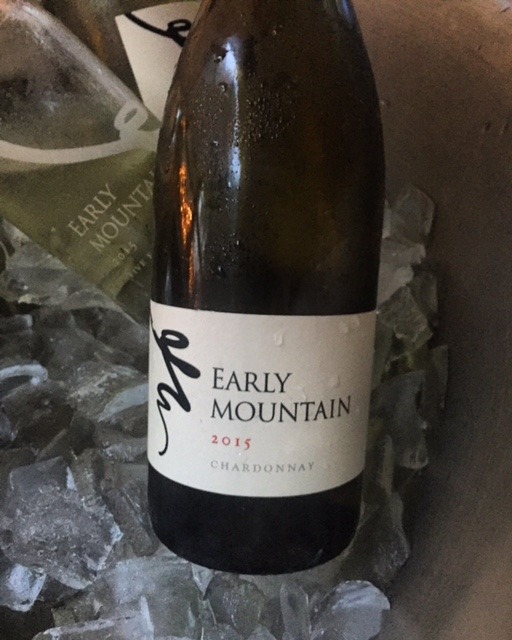
Early Mountain Rosé: The pretty salmon-colored wine gets most of its color from Syrah, but the wine is mostly Merlot, with a bit of Cab Franc as well. For a wine that was so light on its feet, there was a nice bit of depth and structure. 

Early Mountain Pinot Gris: I braced myself for something on the sweeter side, but instead got a really nice crisp, dry wine. I enjoyed the acidity and noted it will be great on a hot, summer day.

Early Mountain Chardonnay: There’s only a touch of natural oak on this wine. Combined with a well-rounded finish, it’s an easy-drinking white that can please many palates. A great table wine, if you will.   

Early Mountain Five Forks White Blend: The most structured and aromatic wine of the bunch, this white combines Viognier, Pinot Gris, Petit Menseng, Sauvignon Blanc and Muscat. Lots of aromatics wafting from the glass, with a pinch of sweetness. But the palate is completely dry and the Petit Menseng lends a nice spice to the finish. 

The State of Virginia Wine | Napa Valley Wine Academy

Photo courtesy of the U.S. Department of Agriculture.

Here’s a little more on Virginia wine. (In case you missed my thoughts from the Virgnia Wine Summit I posted yesterday, it’s right here).

One of the amazing outcomes of the Wine Writers Symposium I attended in February was getting to know fellow talented editors and writers. Among them was Jonathan Cristaldi, the editor in chief of the Napa Valley Wine Academy. He wanted more content for the Academy’s Pouring Points blog and asked me to write a few posts, including this one about Virginia wine in honor of Thomas Jefferson’s birthday.

So go ahead and read the piece here: The State of Virginia Wine | Napa Valley Wine Academy.

Happy Birthday to Thomas Jefferson, who is not only our nation’s third president, but a fellow wine-o who spent 30 years trying to bottle a Virginia-made wine. Cheers!

Wines of the Commonwealth

image

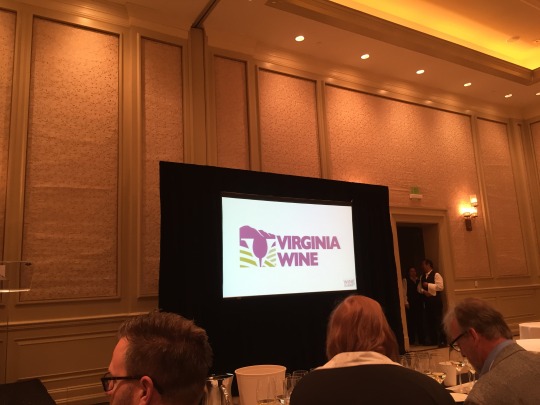
At last week’s Virginia Wine Summit, a well-rounded mix of sessions and people proved to be a wonderful introduction into this 40-year-old industry, that’s really only gained momentum in the past decade. It wasn’t just about the winemaker or the vineyards, the front of the house part of the industry was there, too. As I learned – great wine can only be good if there are wine drinkers willing to take a chance on a burgeoning region.

Highlights of the day-long conference at the Salamander Resort and Spa – an easy hour’s drive from my Arlington, Va., home – included:

  • A blind tasting comparing Virginia whites against their world counterparts.
  • A keynote by wine writer Jon Bonné focused on Virginia’s place in the national wine stage.
  • A tasting of six uncommon grapes produced in the Commonwealth, led by a panel of smart sommeliers.
  • And the attendance of both the governor of Virginia and the state’s secretary of agriculture, who showed genuine support and commitment to the industry (a surprise to this cynical journalist!).

Virginia Wine Summit
The blind white wine tasting paired Virginia against other regions’ Vermentino, Sauvignon Blanc, Chardonnay, Viogner and Petit Manseng.

Packing the morning panel with two somms, two wine writers and moderated by a respected wine educator, was a smart way to discuss the blind pairings. When you take away their daily tasks and titles, they all share the same quest to effectively communicate. It makes listening to how they describe what they’re tasting engaging.

Here’s the thing about Virginia wine: I’ve done a tasting like this before with a group of friends, and pulling out the Virginia wine isn’t too difficult. My relatively-novice palate was able to do it again this time. It’s not that wines from around the world are better or more interesting than what Virginia can produce. Virginia produces wines unlike many traditional regions. But as Bonné rightly talked about later that day in his keynote, a lot of cellar work is still happening. So the Virginia wines can come across richer, or with riper fruit or with more oak influence. The counterparts – when tasted side-by-side – come across a bit more refined.

As proof, look what happened with the Chardonnay comparison: Wine A screamed “I am that Chardonnay from the 1980s,” as Andy Myers, a master somm and wine director for José Andrés’ Thnk-Food Group, put it.  In my notebook there’s also the notation: #alltheoak attributed to Bonné. Wine B had an elegance and was flush with acidity. When the wines were revealed the room was shocked to see Wine A belonged to Virginia’s Fox Meadow, while Wine B was California’s Chateau Montelena. I’m sure organizers paired these wines to trick us and have a little fun, and it spoke volumes.

Since many of the winemakers were sitting in the audience, after each of the Virginia wines were revealed, they stood and up and answered a few questions by the panel. For a wine geek, it was fascinating!

Virginia Wine Summit
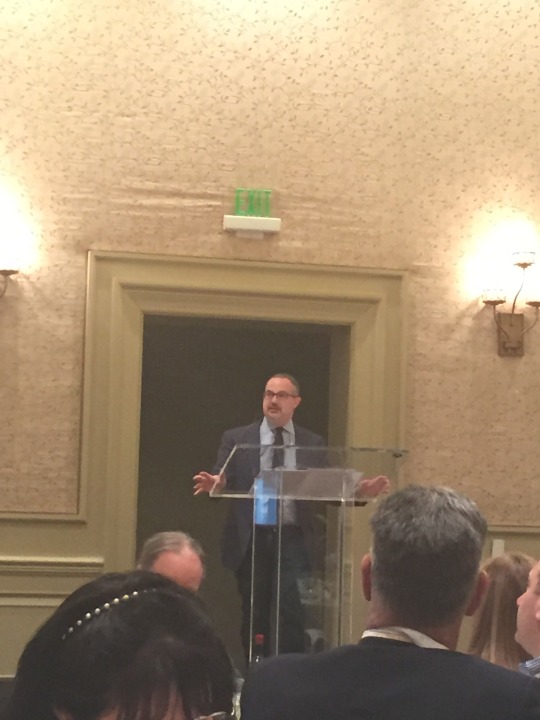
Jon Bonné addresses Virginia Wine Summit participants.

Understanding how Virginia compares with the rest of the nation was an important part of Bonné’s keynote.

Bonné wouldn’t be doing his job if he wasn’t a bit critical of Virginia and seeking out what Virginia can do to excel, but he did so in a good way. He praised Virginia for not trying to be California or Bordeaux and assured the industry that the world is taking notice. But he then took lessons from California’s changing landscape to prescribe a path for Virginia through a lens of how Oregon and Washington state have grown its industries in pursuing commercial vs. cultural success. His prescriptions included being humble and not being afraid to create a “Tuesday night wine.”

True to his writings on the “new” California, he also stressed that more vineyard management and less cellar work is needed.Virginia, he said, should learn to better understand its terroir rather than rely on the winemaking process to cover up mistakes that might have resulted from challenging weather, pests and disease.

The breakout sessions I attended on wine pairings and uncommon grapes were a chance to taste more Virginia wines, but also hear from talented sommeliers and how they see the industry. Without a strong signature grape (although Viognier has been adopted as the “state grape”), the somms discussed the challenges of bringing new wines to their patrons and whether they could include these wines on their lists.

Bonné ended his keynote with a similar thought:

“What I hope is that 10 years from now to walk into a restaurant in New York or L.A. or wherever, in this glorious new American wine era, and see a Virginia wine on the list, and it’ll feel like the most normal thing ever.”