International Designation Is Sweet Victory for Burgundy

Dream assignment: Go to Burgundy and write about Aubert de Villaine’s decade-long effort to get his region designated as a World Heritage site by the cultural arm of the United Nations. Oh, and while you’re at it, sip from the barrel that’s storing Romanée-Conti from the 2014 harvest. It would be rude not to accept a taste, right?!

To say I’m swooning may be an understatement, as I’m now very jealous of the reporter. But beyond that, it’s a fun read and a greater understanding of why the designation is important to the to winemakers of Burgundy.

For anyone with even a basic knowledge of wine, it may seem unthinkable that the revered wine sites of Burgundy need more recognition than they already have. But the Unesco designation gives a global imprimatur to the French view that great wine can be produced only through a magical combination of climate, geology and history — that ineffable quality often called “terroir.”

And it is sweet vindication for Mr. de Villaine’s long effort to rouse his fellow Burgundy producers to the threat posed by a global wine industry and, in his view, their failure to keep up with rising standards.

“The climats define the unique character of Burgundy’s wine region,” Mr. de Villaine said. “They are an exceptional representation of human ingenuity that must be preserved. What is most important for me is that the people of Burgundy, especially the vignerons, be inspired by the ancient, precious, unique treasure they hold in their hands.”

Read more here: International Designation Is Sweet Victory for Burgundy

‘The Last True Thing’

I think of wine as sort of the last true thing. It’s so utterly simple, and anyone who loves wine knows how transformative it is. I’ve always been attracted by that almost archetypal pull of wine. I like that idea philosophically and emotionally, and I like the mystery of it.

 – Karen MacNeil, author of The Wine Bible

Forbes contributor Cathy Huyghe interviewed MacNeil about how she wrote and now revised her 14-year-old book, which is an impressive encyclopedia of the wine world. It’s an interesting look into

MacNeil’s process, and I was pleasantly surprised to see her dedication to words was just as emphatic as she was to the wine. Read the full story here: How To Write The Bible Of Wine: Karen MacNeil On The Craft Of Writing .

Blind Tasting Leftovers

The leftovers of a blind wine tasting pitting Virginia against the world (consisting mostly of France and the west coast of the U.S.). So many things wrong with this effort, but way too much fun not to have tried. If you’re curious who won, so am I! Somehow the night dissolved into a table full of aged Burgundy and spilled Riesling (not pictured).

Pretty — Not Kitschy — Wine Things

When you’re passionate about a topic, but also want to maintain your seriousness, it’s a bit hard to sometimes buy things that are related to the subject. You don’t want to come off too much like an equivalent of a crazy cat lady. In the wine world anything outside of a bottle of wine or its necessary accessories (and sometimes an insider-y t-shirt) can sometimes fall into that borderline kitschy, if not all the way kitschy, category.  But every now and then, something comes along and perks me up. Today was one of those days, thanks to grapefriend​.

Posts on tumblr, instagram and twitter directed me to their Olive & Poppy obsession.  And now, I think I’m obsessed, too.

For example, this tote-bag, includes an interior pocket to hold your wine upright and a key chain which Olive & Poppy suggests using as a “corkscrew keeper.” The site claims it’s “the perfect size to take to the farmer’s market or to stuff with cheese, bread and a blanket.” Yes, please.

But what I’ve really fallen in love with, are these terroir necklaces that include little oval plates with maps of some popular California terroirs. My favorite is the Sonoma/Carneros map, since Carneros was the first AVA my budding palate was able to quickly identify. And well, who doesn’t love Sonoma?

To see more from Olive and Poppy, whose entire line of products focuses on California wine country, check out their website. They even sell gift certificates, in case you know someone who might like to purchase something (hint, hint).

The Rise of Female Sommeliers

Thanks to winewithkristen for posting this story and bringing it to my attention!  

Here’s my favorite paragraph of this story

Given the general public’s recent infatuation with the profession, it’s safe to say we’ve officially transitioned from the age of the stuffy sommelier to that of the casually hip “somm.” An exchange that once involved a highly formalized set of rituals (pour for the man to taste first, never leave the bottle on the table) now takes place amid the blare of rock music in wine-centric restaurants like Manhattan’s Pearl & Ash or Racines NY, where rather than wax poetic about Latour or Lafite, your somm will likely evangelize about the sherry renaissance or recommend some offbeat natural wine from the Loire.

It’s a great summary of the renaissance happening in the wine world. And it’s certainly the energy I’ve been feeding off of in my own discoveries these past few years. But I have to wonder if Zachary Sussman is suggesting that the less “stuffy” and more “casually hip” state of the industry is a reason for the rise in more women entering the field? It’s probably made it easier. But even if being a sommelier was still quite a formal profession – in today’s modern environment – would a lot of woman still be shut out?

I don’t have an answer. Just something to think about. 

The Rise of Female Sommeliers

Chenin Blanc Makes an Audacious U.S. Return

If I don’t have rosé in my glass this summer, and you spy me sipping something white, it’s probably the Sandlands Chenin Blanc. That’s why I was thrilled to see Eric Asimov’s column today and the nice mention and quote from Sandlands owner/winemaker Tegan Passalacqua.

I’m still getting to know the grape and reading Asimov’s story gave me a great introduction while also talking about its resurgence here in the U.S. 

Chenin blanc, the white grape of the central Loire Valley, is one of those grapes achieving new life in the United States. Once widely planted in California, it had largely disappeared from fine wine regions by 2000. In the last few years, though, at least a dozen California producers have started making chenin blancs, joining a handful who never stopped, along with producers in Oregon and New York.

Because of its great acidity, chenin blanc is a grape able to make wines bone dry or unctuously sweet yet fresh, with an entire spectrum in between. It has the ability to transparently display its place of origin, to age for decades and to tantalize not just with complex aromas and flavors but with a seemingly paradoxical texture that can be thick yet delicate, rich yet light.

Most of what I’ve learned in the past year has come from the advocacy of Pascaline Lepeltier, the wine director at Rouge Tomate in New York, who gets a nice shout-out at the end of the column. It’s exciting to see that she’s working on her own project:

She has her own chenin blanc project: a plan to plant a few vines in the Finger Lakes of New York in partnership with Bloomer Creek Vineyard.

Chenin Blanc Makes an Audacious U.S. Return

The Cult of Rosé

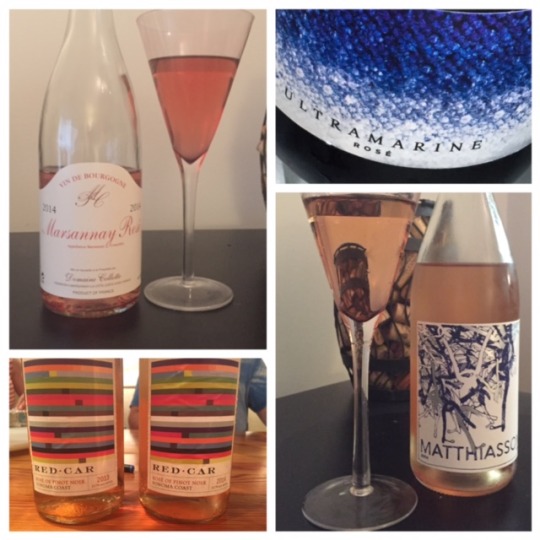
We’re so far into summer right now that people are already talking about how it’s almost over (la la la I can’t hear them la la la). So I don’t have to tell anybody paying attention to wine that the past few months have been all about drinking pink. The public’s thirst for delicious dry rosé has increased immensely over the past few years. And that’s a good thing!

image

(Some of my favorite rosé wines/ Photo by me)

On a hot summer day by the pool, or at a warm evening BBQ, the mix of fruit and crispness found inside a glass of rosé is the kind of quencher that people of all palates can easily agree upon. Stir that with social media and you now have hashtags like #yeswayrosé, #roséalldamnday and for the millenial men too cool to admit their preference, there’s even #brose.

But have we gone too far? Just as the stigma for drinking pink wines is finally wearing off, is a new one forming that could scare away the serious wine drinker? I don’t think so – but here are a few examples of the budding culture (cult, perhaps?) pushing its way through the summer season:

Two girls from Brooklyn have turned #yeswayrosé into a lifestyle brand – touting t-shirts, nail polish and keychains.

It’s extended to their own Summer Water juice. Even Vogue  took notice. (And yes, I’ve certainly contributed to the cause. Who wouldn’t want to subscribe to feeling like you’re floating in a pool all day?)

But they’re not the only social media stars to branch into winemaking for the benefit of fueling the rosé trend. Bloomberg interviewed two guys who are capitalizing on the trend, too: Meet ‘White Girl Rosé,’ the Wine-on-Demand From ‘The Fat Jew’ and ‘White Girl Problems’

And lest you think only women are the target of such trends, 2015 has brought us the summer of brosé. Details Magazine helped spell things out in June with this profile.

Like his counterpart, the much-discussed female whiskey drinker, the rosé bro is inaugurating a freer, more egalitarian world of gender-fluid beverage consumption.

Soon after, writer Felix Salmon (who I always associated with his smart financial tweets) continued the call for men to drink pnk:

Rosé is the ultimate guy drink. It’s dry, it’s unpretentious, it goes with everything: it’s like beer without the constant trips to the bathroom. It’s the perfect drink for any laid-back dude. Next time you see a group of bros dispensing with the Bud Lights and opting instead for a bottle of something pink and Provençal, your only job is to go find yourself a glass. They know exactly what they’re doing.

As I asked earlier, what does this mean for the serious wine drinker? In my opinion, it’s a good thing. It’s a chance to convince my non-wine-drinking friends to imbibe, and a perfect reminder that wine has a light-hearted fun side that’s absolutely perfect for summer.

My Sipping Vessels

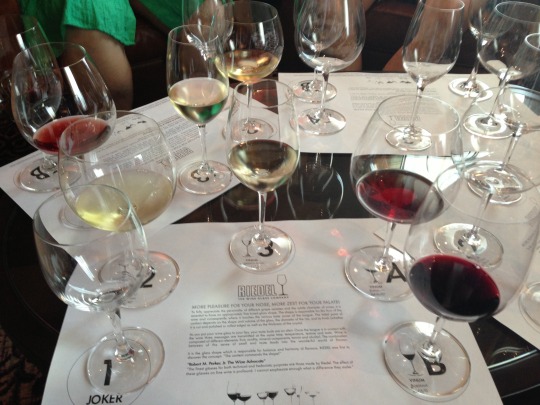
I once took an hour-long Riedel wine tasting class, which gave us an opportunity to taste the same wine in different-shaped glasses.

image
Comparative wine tasting class sponsored by Riedel, March 2013. Note the empty “joker” glass which allowed us to hold wine in there while transferring some of the wines to other glasses. / Photo by itswinebyme


From that moment on, I was convinced that proper stemware was crucial to getting the most out of a wine. I filled my own cabinet with Riedel glasses in four different shapes and  Crate and Barrel knock-offs of Zalto glasses. (In a perfect world, I’d just have Zaltos. The delicate but sturdy stems are enough to make me swoon.)

But every now and then I’ll stray. I have some vintage rose-color upside-down cone shape champagne glasses, which I discovered shows off the crispness and acidity of dry rosé beautifully. Yet it’s probably not the perfect glass since its shape lets the aromas escape. For me, the fun in drinking from them over takes that: If looking through rose-color glasses provides a wonderful view of the world, shouldn’t drinking from them let you get a wonderful taste of the world, too?

image
Tasting rosé through vintage rose-color glasses I found at Rachel Ashwell’s Shabby Chic store in SoHo | Photo by itswinebyme

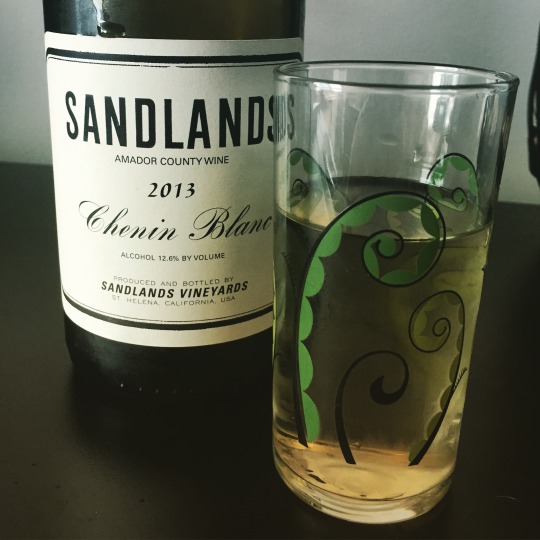
Today, I’ve discovered a different kind of glass in my cabinet and it’s making for a lovely sipping vessel on a lazy Sunday afternoon. Drinking from small juice glasses may be traditional in Italy, but something never felt right about doing that here. I tried once and the thickness of the lip made for an awful experience. But as I was putting away some glasses and reaching for a white wine glass to drink some leftover Chenin Blanc, I came upon these pretty little juice glasses a friend brought back from her trip to the Corning Museum in New York. The design is reminiscent of fiddleheads or perhaps some green peas or grass.

image
The Sandlands Chenin Blanc, which on some level tastes like tart apple juice, held its own inside this Corning “fiddlehead” juice glass. |Photo by itswinebyme

As I poured the wine, something just felt right. Besides helping with portion control – which is smart for a Sunday afternoon when there are still chores to be done – I found myself sipping a little slower out of it.  The tart fruit and acid of the wine held up just as well as when I tasted it the day before in a traditional wine glass. And just like using the vintage champagne glasses for rosé, it brought me pure joy.

#NPRReads: Considering The Language Of Wine And What’s In A Toddler’s Mouth

A little bit of self-promotion. I recently sent out this tweet from my verified work account:

…and the NPR Two Way blog editors liked it so much, they included it in the weekly round-up of what NPR staffers are reading.

When I took WSET claseses late last year, one of my goals was to finally learn how to communicate more effectively about wine. And while I certainly advanced my knowledge, I realized I still had a long way to go. So, it’s a nice validation to see The New Yorker tackle this topic.

Click on the link at the top of this post (or just click here) to read what I wrote to our NPR readers about the piece.

I really enjoy introducing more people to wine-related ideas and information, so I’m a wee-bit giddy I expanded my reach this afternoon.

Read it here:  #NPRReads: Considering The Language Of Wine And What’s In A Toddler’s Mouth