Crushing the Kronos Reveals Beauty of Consistency

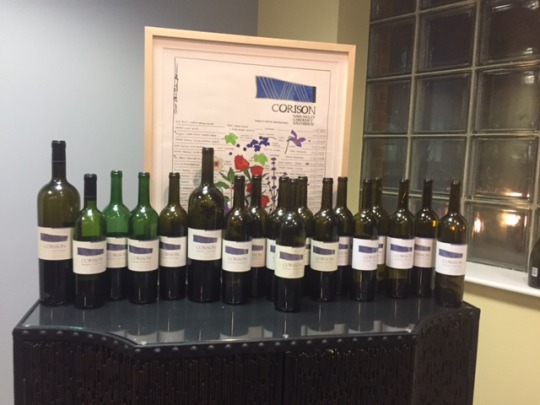
Corison wine bottles
All 16 vintages of Corison Kronos Cabernet Sauvignon, with a few extra bottles thrown inf or good measure.

Right around the time my friends and I were sobering up from our 16-year verticle tasting of wines from Cathy Corison’s Kronos Vineyard, Dave McIntyre of The Washington Post, wrote in his weekly column, he, too, had recently tasted through 16 vintages of a particular wine. He said the wines in the tasting were “postcards from time,” and as one of his fellow diners told him: “I enjoy each wine less this way, but I learn more.”

Those are easy assertions to agree with and capitalizing on the learning and the understanding of time, is exactly why a year after my tasting group wrangled 21 vintages of Corison Napa Valley Cabernet, we challenged ourselves to do it again, this time focusing on the Cabernet Sauvignon she made from her Kronos vineyard. (Ok, we may have did it for some bragging rights, too!)  
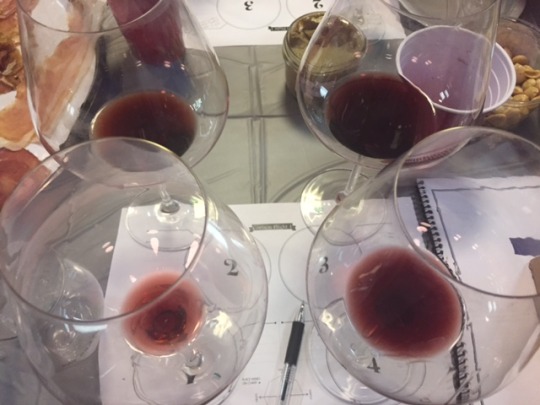
Corison Kronos tasting
A semi-demolished flight of Corison Kronos wines.

The Kronos Cabernet comes from 45-year-old vines that are grown on Cathy’s St. Helena property. She and her husband farm the land, and since 1996 they have produced the single vineyard bottling of Corison Kronos Cabernet. The wines are more powerful than the Napa Valley Cabernet she blends from other nearby by vineyards. But true to her style, Kronos maintains her delicate signature style of winemaking, keeping the wines elegant and at a low alcohol level (about 13%). If you visit the winery for a tour and library tasting (which I strongly recommend), you’ll exit the back barn-like doors and step immediately into the Kronos vineyard, located on the Napa Valley floor, stretching about 8 acres back to the Mayacamas Mountains. Unlike many of Napa’s vines, this vineyard survived the 1990s phylloxera epidemic because the vines are on St. George rootstock, which is resistant to the tiny bugs. (For more on the vineyard, take a look at this profile Kelli White wrote in 2011.)
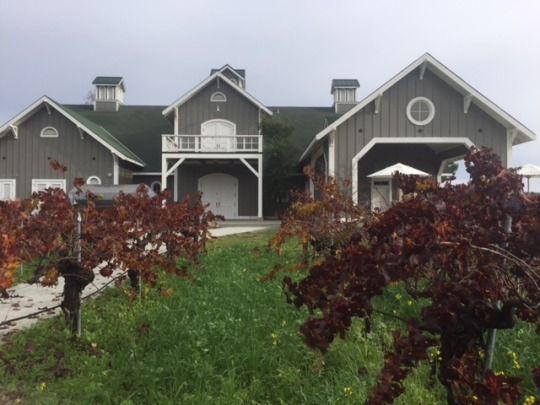
Corison's Kronos Vineyard
The Kronos Vineyard is literally in Cathy Corison’s backyard. This is the back of the winery.

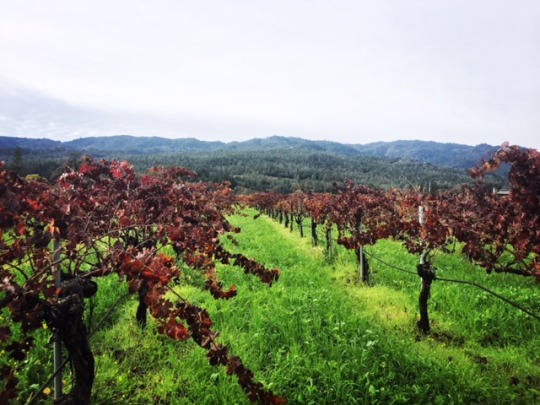
Corison's Kronos Vineyard
Standing in the Kronos Vineyard looking out to the Mayacamas Mountains on a misty day in December, 2016.

We modeled this year’s tasting after last year’s. There were a handful of flights with all 16 vintages of the Kronos Vineyard from 1996 to 2012. Each wine was poured blind, but each flight was loosely in chronological order from oldest to youngest. A few ringers were included in the mix including two pours from the same vintage – one from the top half and other from the bottom half of a magnum, and a few of the Napa Valley Cabernets were compared against the Kronos. We had two separate bottles of 2004, so those were poured in separate glasses, as well, making for an interesting lesson in bottle variation.

Just like last year, there were no clear favorites, but together, the 16 vintages told a bigger story – a consistent beauty was strung from bottle to bottle. It’s impossible to escape the violets, dust and undertones of herbal mints that at times mixed with some chocolate (Junior Mints, anyone?).

I hit palate fatigue before the final flight. Despite my best efforts to spit and snack on the cheeses and charcuterie we prepared, by the last flight, there was nothing but the violets, dust and herbal mints coating my throat (which is certainly not a bad thing!). But there was something magical going on in the early parts of the aughts. We were told that Cathy’s favorite Kronos vintage was 2001, but 2002 and 2003 were slightly lifted from the pack for me. Whether that’s because those bottles had the right amount of age on it for my personal liking, or it was something within the vintages themselves, it’s hard to say.

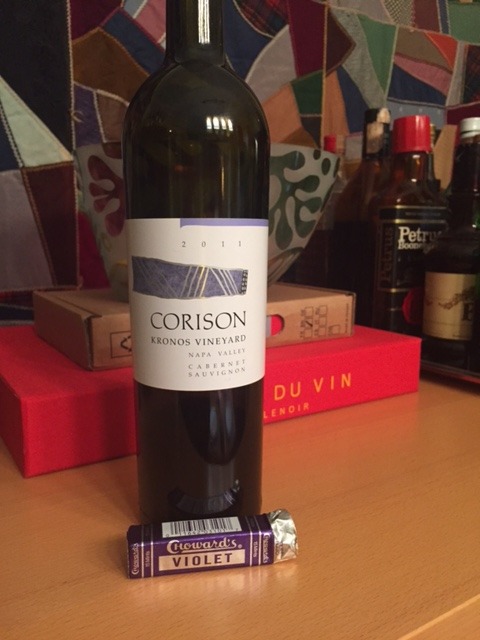
It’s worth noting, however, that thanks to a very cool and rainy year – and what Cathy has called a challenging year in the vineyard – the 2011 bottle was the very definition of letting a wine speak for its vintage. It tasted significantly older – maybe by a decade – than its actual year. A bit darker and more savory than the others, but still elegant and restrained. Emanating from some of the darker more savory notes were dusty violets, which reminded one of my friends of Choward’s Violet Mints.
image

Having the opportunity to taste through almost all of the Corison wines – both the Napa Valley and Kronos bottles – is truly an honor. While it’s obvious that aging these wines only brings out more complexity, more structure and more textured flavors, the trouble will always be not popping the cork too early, as they are certainly just as enjoyable now as they will be in years to come.
Discovering Maryland Natural Wine

Earlier this week, Pineapple D.C. – a networking group for women in the food community who want to connect with the “good food” movement – hosted an interesting talk on natural wine with Lisa Hinton, the winemaker for Old Westminster Winery in Maryland.

That’s right. I said Maryland. And I said natural wine.

I must admit, despite knowing that wineries exist in Maryland, it’s not something that I’ve actively explored. Not to mention, I’m a bit skeptical when someone mentions natural wine in a region not heavily experienced with vineyards and wine. Good natural wines rely so heavily on its terroir.

(While there are a million definitions of natural, and much controversy within the industry, we can probably all agree that with “minimal intervention” – no matter what the definition of minimal may be – the wine must rely heavily on the quality of the grapes, which comes from the right kind of land and climate, right?)

Does that really exist in Maryland?

At the end this two-hour discussion and tasting, Old Westminster Winery convinced me the answer is Yes.

Old Westminster Winery is a bit different than other small wineries I’ve been introduced to so far. It wasn’t so much a love of wine that sparked the three twenty-something siblings to start making wine, but a love and loyalty for family. When their parents threatened to sell the farm they grew up in, the trio searched for a solution to hold on to the property in Westminster, Md., (about an hour northwest of Baltimore) and grow it into a viable business.

Lisa graduated college with a chemistry degree, while her siblings focused on business and marketing.  After a bit of research, winemaking seemed like a  logical use of their combined talents.

While they’ve planted and harvested grapes on their own property since 2011, Lisa said about 60 percent of their fruit comes from other Maryland vineyards. In the future, that may change a bit thanks to the purchase of the Burnt Hill property in Clarksburg, Md. The land was sought out for its particular slope and soil composition.

Lisa said they’re planning on farming the land using biodynamic methods, in part because they believe in giving as much to the land before starting to take from it.

The winery has focused on making natural wines since its inception. Lisa said she defines that as low intervention wines that express both the place and time that they came from. She believes both natural and added sulfur are necessary in making wine to ensure it doesn’t turn to vinegar, and acknowledges other winemaking techniques are needed from time to time to combat mildew, mold or other issues that can vary vintage to vintage.

Wineries in Maryland have existed for decades (I even once wrote about one for The Washington Post almost 14 years ago), but it’s really been this century, when the numbers have increased significantly (take a look at the  Maryland Wine Association website, which counts about 70 established wineries between 1945 and 2014. You can see in this historical timeline, how the numbers of wineries have grown).

Perhaps the growth is hinged on the increasing success of Virginia wines? Lisa noted that the mid-Atlantic has similar climate conditions as Bordeaux, which makes growing varieties like Cabernet Franc, Cabernet Sauvignon viable. Old Westminster Winery has also had luck Alberiño (a white Spanish grape) and even bringing Barbera (an Italian variety) into their red blends. The Maryland Wine Association also noted Maryland can be compared to the climates of Portugal, Spain, Southern Italy and Greece (that would make sense why the Alberiño and Barbera do well!).

In Old Westminster’s quest to make natural wines, its break-out stars are the pet nats. Wine writer Jon Bonné recently called their Albariño version an outlier among America’s great pet nats.

During the talk, we tasted one made from Syrah grapes. The cloudy peachy pink juice’s fruit rose above its effervescence backbone, making it a little too easy to drink. The other two wines poured that evening were the 2014 Anthem red blend, with a mix of Cabernet Franc, Cabernet Sauvignon and Syrah and the 2014 Channery Hill, which blends the same three grapes, with some Barbera. Both wines had a nice amount of dark fruit, a bit of anise and some slight minerality if you paid really close attention to what you were sipping. Channery Hill was slightly lighter with a bit more acid (I’m guessing we can thank the Barbera for that).

Old Westminster’s production numbers per variety are low: No more than 100 cases of each wine are made. And most are sold through their wine club or people or visit their tasting room. Experimentation remains a top value for the young winery. For example, this coming vintage, they plan to leave their wines unfiltered. If it doesn’t work the way they like, Lisa said, they’ll go back to using filters next year. Their mission is to learn how to best express the Maryland terroir.

I asked Lisa if there are any winemakers or wineries that inspire their work, but she wouldn’t answer with any specifics. She said while there are many wines she enjoys drinking, she knows attempting to mimic any of those traits would be futile to creating wines distinctive of time and place.

Hi! There Will Be More To Come!

I’ve fallen into the hole that no writer wants to fall into: plans to write a million posts, without actually writing a million posts. So this is just a note to say, I haven’t forgotten the blog: I still have plans to talk about my Napa trip last December, as well as veer off wine for a split second to talk about some delicious wine country restaurant finds. There’s also the follow-up tasting to last year’s 21-vintage salute to Cathy Corison wines (this year, we tasted through her Kronos wines). Plus a handful of other ideas swirling in my head! But before all of these, I want to tell you about an interesting winery I heard about last night, as well as the group of women who planned the event. So as they say, please stay tuned…

p.s. don’t forget my Instagram and Delectable accounts are always a good place to keep tabs on what I’m up to or drinking! 

Tracking D.C.’s New Wine Bars

image

Wine in Washington, D.C., may be on the verge of getting an interesting moment. It makes sense. As the city’s dining options have drastically evolved and gained national attention, the appetite for more diversity in wine is a logical next step.

The city has always had restaurants with reliable high-end lists, shops to find good wine and places to go have a glass with friends.

Restaurants like The Red Hen, Ripple, Proof, The Partisan, Le Diplomate and Tail Up Goat are great options. While wine bars like Cork, Vinoteca and Eno have served the city’s millennial population well.

But seeking out geekier labels or getting exposure to something less mainstream can sometimes be a challenge if you don’t regularly travel to New York City or actively follow the wine scene on social media.

There’s some renewed hope, however, that may change now that several new
projects have recently been announced.

In journalism, we say that it takes three examples before you can start investigating something as a trend – so now that there are three, it’s time to start keeping track of what’s to come.

  • Sebastian Zutant (of Red Hen and their sister restaurant All Purpose) plans to open a
    wine bar focusing on natural wine. He already does a lot of that at both restaurants, and has been a strong proponent of orange wines here in D.C. I haven’t seen word yet on
    an opening date or location.
  • Brent Kroll, who ran the wine program for Neighborhood Restaurant Group (which
    includes The Partisan), recently moved over to be General Manager at Proof. But
    soon after he started, he announced he’s also planning to open his own wine bar.  Springtime in Shaw is what’s been reported so far.
  • Just this week, news that Dio Wine Bar, will be coming to H Street NE. Stacey Khoury-Diaz  also plans to focus on natural wine, taking inspiration from great New York places for natural wine, such as Ten Bells and Rouge Tomate.
  • There are also plans from The Dabney to open a wine bar in its basement.

It’s going to be interesting to see if D.C. can handle this much wine, and whether these establishments will appeal to those of us hoping to tip the city’s wine scene a bit in the geekier direction.