Why I’m Obsessed, Part 2 (Part 1)

If I had started this site a year ago, this post may have introduced you to something new, but chances are if you follow wine, you’re well aware of Somm, a documentary highlighting a group of students as they prepare for the master sommelier exam. I could spend plenty of time telling you why you should watch this film, but I won’t. Instead I just want to drop off a few items that resonated with my passion for wine while I re-watched the film this weekend (thanks,Netflix!).

  • Ian Cauble, one of the students preparing for the exam, says wine is living life through your senses. It’s true. When you’re enjoying a glass of wine, you’re taking notice of its color, of its aromas and of its taste. You’re also feeling sensations as of you drink – whether it be smooth or the tannins dancing on your tongue. There’s talk of mouth-feel. Sipping wine, is more about experiencing it than just taking a sip and swallowing.
  • Bo Barrett, of Chateau Montelena fame, talks about how buying a bottle of wine is always a wager… whether it’s $10, $100 or more, you never know exactly what you’re gong to get until you open the bottle and take your first sips. I must admit, I do enjoy a gamble, and I love the excitement as you begin to take that first sip hoping for an amazing new discovery.
  • Dustin Wilson, who is also preparing for the exam, points out that while drinking wine, you’re learning about the culture and people of where it’s from… it’s a way of traveling the world. I alluded to this in my first “Why I’m Obsessed” post. There is always something new to learn about wine, and if you learn about the bottle you’re drinking, you get an amazing lesson in geography and culture of the region its from. It’s the closest to satisfying any wanderlust without physically traveling to the location.

Wine + Tech: Three Right Ways That Wine Brands Engage Online

Another interesting tidbit:

The top 20 wine bloggers have a combined audience that is larger than Wine Spectator online.

I love that wine is intersecting more with social and digital media, and it’s not just because I’m here experimenting with my own online writing. In my day job, I’m a digital editor at a news organization, so it feels like –  for the first time – wine is starting to enter my world a bit (whereas mostly, I’ve been dipping my toes into its world).  As technology constantly evolves, this will be a fun space to watch.

Seeing these discussions at events like the recent Wine Industry Technology Symposium and the upcoming Digital Wine Communications Conference really excites me. And I’m impressed to see – as noted in this Forbes pieces – how much mobile is part of the conversation. The best skill anyone can have in navigating the digital world is understanding how to take control and find the best ways to leverage each specific platform.

A Post Script… 

Also worth noting along side this story is  this speech by Vintank’s Paul Mabray. David White, over at Terroirist, shared it earlier this week. While not a short speech (it’s 74 pages), it was a great read – giving smart and easy-to-understand insight into how the wine industry should be using social and digital platforms.

Wine + Tech: Three Right Ways That Wine Brands Engage Online

Understanding France

I’m sure I don’t have to sing the praises too loudly for Wine Folly. Madeline’s brand of easy explanations combined with beautiful designs create stunning results. So I was delighted to quickly find this map she calls “French Wine Simplified” when searching for a quick way to reorient myself with the country’s geography.

As a California girl (both having grown up there and a preference in its wine), France has always baffled me. I studied Spanish in school, so trying to pronounce a French name while ordering has always turned into the dreaded pointing a finger at the menu. But despite my frustration, I have yet to be disappointed when sipping a French wine.

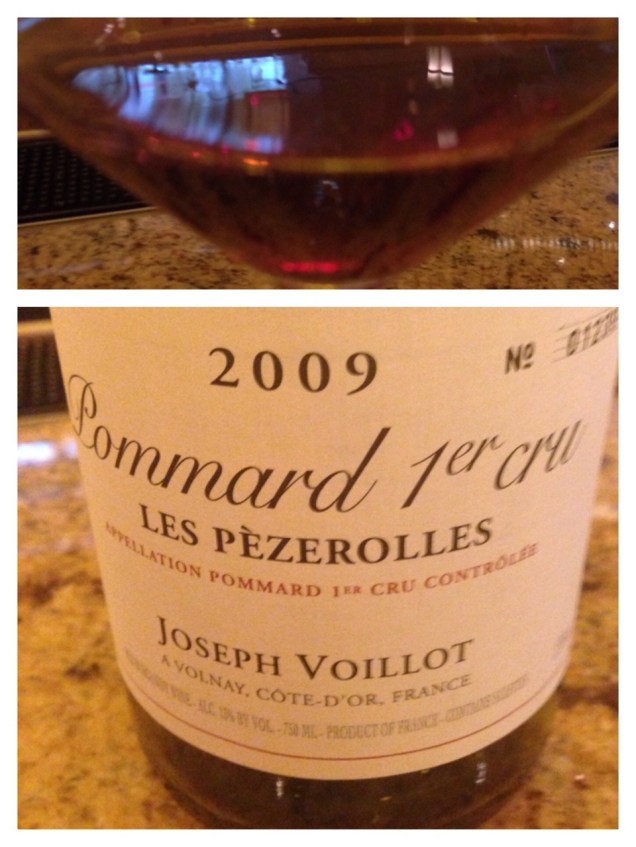
Very recently, I had the pleasure of tasting two new (to me) wines: Last night, a Pommard premier cru (pinot noir), and about a week ago a Brouilly Beaujolais (gamay). I’m glad that I already have an understanding that the prominent name on the label is the region and not the grape, while each region specializes in particular grapes. Understanding how different wine regions around the world create their labels is half the battle.

But the subregions are still tripping me up. Last night after tasting the Pommard, the sommelier asked for my thoughts. I didn’t know what Pommard was when I ordered it. The bartender explained it was another region in France and was a bit on the heavy/meatier side (I can’t remember the exact wording she used, but that’s how it translated in my head). So later in my discussion with the sommelier I felt very confident to let him know that I was picking up a lot of Burgundy in this wine. To which he replied, “It is Burgundy. Pommard is in Burgundy.” Le sigh.

(Wine Folly also has this excellent map of Burgundy, which I’ll be studying closely today.)

Santé!

Wine In The News

Here are a few items that caught my eye this morning: 

* Wine investments are not necessarily something I have the luxury of doing, but it is still interesting to see how it plays out in the world market. CNBC is reporting that the Liv-ex Fine Wine 100 is down a full 33 percent from its peak. While Bordeaux may be losing value, Burgundy is holding on strong.

* About a year ago, when I first started paying attention to wine, everyone was talking about the influx of Chinese money in Bordeaux and the booming wine market in China. (Go see the Red Obession if you haven’t done so already). Bloomberg reports today that it’s no longer just France: Billionaire South African Family Sells Wine To China Rich.

* Virginia’s RdV Vineyards is now open for public tours, reports Eater DC. I’ve been eager to go down for a visit and try the wines, however getting someone to join me may be tough. At $50 per tour, I quipped over on twitter that Virginia may be thinking of itself as Napa. IMHO, it’s a little too soon, but the optimist in me is hoping the tour will be worth the price.

Why I’m Obsessed, Part 1

image

(A 1996 Nebbiolo / Barbaresco from Piemonte served at The Partisan in Washington, D.C. As the wine opened up, its aromas and flavors changed so each sip was like a new adventure – one of the many reasons why I love wine.)

Thanks to Facebook, Instagram and Twitter, all of my friends and colleagues have been following my foray into wine – whether they wanted to or not. So often, when I meet up with someone after it’s been a while, I’m usually asked  if I have any recommendations or favorites. That’s not always an easy question to answer, but the questions that follow are much tougher: How did you get into wine? And why do you enjoy it so much?

This came up again this past weekend at lunch with a former boss. It’s not a short answer – but the more I start to talk about it, the more my passion ignites – as if I’m a kid describing my first trip to Disneyland.

The actual “how” part is a bit straightforward: I liked the way wine tasted when I was out with friends and I wanted to learn which wines I enjoyed the most so I knew how to order. That then took me spiraling down this rabbit hole, which I’m happy to stay in for a very long time (Maybe I should rewrite Alice in Wonderland to be Alicia in Wineland).

The enjoyment part is a little more detailed. So here, for the world to see, are my reasons for loving wine. If you’re a wine nerd like me, I’m sure you will relate.

Sharing. There’s an innate connection with someone when you’re drinking from the same bottle. Whether it be the often-relaxed conversation that flows (or jovial debate), or if you’re comparing every little nuance of the wine. There’s a sense that you’re both experiencing something new together for the very first time. Even if you’ve known that person for years. It doesn’t have to be romantic (although that’s a discussion for another time). That innate bond – however fleeting –  still develops among platonic friends, colleagues, someone you sat next to at a wine bar, or that much hated frenemy. And while it may only be temporary, it can linger as a calming memory to return to.

Education. It is nearly impossible to stop learning about wine. Whether it be the kinds of grapes, the way the land is harvested, the wine-making process, the science behind the wine or how science can manipulate it. Then there’s the entire geography lesson wine provides: the kinds of soils, how the weather and oceans impact the grapes, and more importantly all the beautiful land and cultures that make up such famed wine regions as Bordeaux, Burgundy, Piemonte, Rioja, Mendoza, Sonoma and many, many more. There’s always something new happening, including the uncertainty of what each year will bring (for example, just today, there are reports of hail in Burgundy killing this year’s harvest)… how they will handle that, and what the outcome of this vintage will be, will be fun to study in real time. 

The Passion Of Others. I prefer to learn about the smaller wineries. The reason for this is simple: When you talk to the winemakers or learn about their stories, you realize that these are passion projects by hard working people who care about what they’re doing. It also includes dashes of artistry and philosophy – letting business, creativity and science combine. And there’s a certain strength of humanity. Many of these people are taking huge risks to do something they love. The documentary I posted about last week captures this (I can’t speak for more than the preview, yet). Nearly 10 years ago, long before I had any real interest in wine, I read a story in People Magazine while in a doctor’s waiting room. Not many People Magazine stories stick with me, but this one did – and it’s an example of what makes small-family wineries interesting to me – or rather inspirational:

To understand the complex relationship between poverty, immigration, entrepreneurship and the American dream, you could read a few hundred books. Or, for the short course, you could ask Reynaldo Robledo. “I didn’t want my children to suffer as I did,” says Robledo, 54, who came to Northern California from Mexico at 16 to pick grapes. “And I wanted them to have what I couldn’t." 

They do. After years of working 14-hour days, Robledo became the first Mexican migrant worker to own a winery. The Robledo Family Winery sprawls over 200 scenic acres in Napa and Sonoma counties and turns out 5,500 cases each year. 

Then there’s the story of Ray Walker, who chased his dreams all the way to Burgundy. The New York Times did a nice write-up, but to really understand his passion and success, read the book.

In the interest of knowing when a post may be getting too long, I’ll stop here for now. I’ll continue to sprinkle this Tumblr with more reasons as we go along. To Be Continued… 
A Note About Tasting Notes

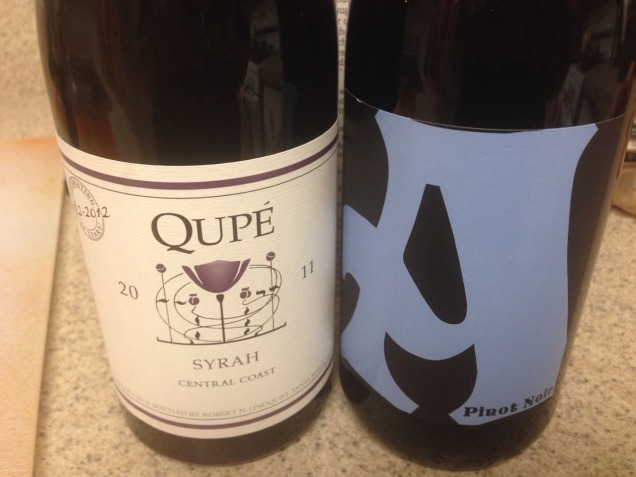
As much as I’d love to eloquently describe every note, aroma, flavor and intricacy while tasting wine, I’m just not very good at it. Part of it may stem from growing up a picky eater so my frame of reference for certain flavors is limited. And I’m OK with that. I can still enjoy the wine and discover new flavors, even if I can’t identify every nuance.

But what I can do is talk about wine’s tannins, the body, its brightness or acidity. I can easily designate if something is fruit forward, jammy, earthy, dry or sweet.  I’ve done a pretty good job in the past at identifying wines my friends will enjoy. And while I have yet to dive into the world of food pairings, I can very easily pair a wine with the mood or occasion (and I’m not just talking bubbles for celebrations.) However, my confidence is still in its infancy. I still worry anytime I’m asked to choose a wine for the table, or I open one of my favorite bottles at home and pour a glass for a friend. Wine is such a personal taste, and can be influenced by so many different things happening in that moment.

In a few weeks, I’m taking a blind tasting class in hopes that it will help provide me with some greater definitions. I’m really excited, and hope by doing so, when I decide to drop off a wine note or two, I can better communicate why I’m so amazed, or disappointed with a particular wine. In turn, maybe it will help me understand my own tastes and preferences a little more.

Last night for example, it was wonderful to be able to not even look at the wine list, and tell the waitress exactly what I was craving (It was warm out, but I wanted a red – something light, but flavorful, something bone dry but with spice and structure and a finish that didn’t fall flat – not once did I suggest a particular fruit or flavor). The wine that arrived was perfect.

So if you’re looking forward to some detailed reviews on particular wines from me, chances are you’re not going to read the most brilliantly written note. But what i will do – as I posted last night – is attempt to tell you why I may have enjoyed that wine, what made it interesting, or how it may have enhanced the mood.

Cheers!