
A Casteuroig Rosat Cava overlooking Columbus Circle was a fabulous wrap to a weekend in New York! (at Bouchon Bakery Columbus Circle)
A Casteuroig Rosat Cava overlooking Columbus Circle was a fabulous wrap to a weekend in New York! (at Bouchon Bakery Columbus Circle)
I’m not sure what started the online blow up of natural wines that has all the heavy weights writing and tweeting this week. It seems like the topic is more divisive than it should be, and has that childish quality of "my toy is better than your toy.“
But because this crosses my own interests in biodynamic wines, the expression of terroir and curiosity of a hands-off approach to winemaking, I’m doing my best to wade through the debate.
The first piece I spotted was this Newsweek story by Bruce Palling: Why ‘Natural’ Wine Tastes Worse Than Putrid Cider. I’m slightly appalled that such an opinionated article is under the Newsweek banner without the word "opinion” or “column” or even an explanation of who the author is. The commenters have done a good job calling him out, though.
Next, British wine blogger Jamie Goode posted on his site: I love natural wine, but… He’s smart to talk about it from the perspective that it’s becoming too cult-like, rather than “inclusive and welcoming."
And now, The New York Times’ wine aficionado has this to say:
More peevishness abt natural wine, sigh. I stand by this 2012 column. http://t.co/MTI9mEmMvw @isabellelegeron @alicefeiring @Bruce_Palling
— Eric Asimov (@EricAsimov)
//platform.twitter.com/widgets.js
Even four years ago this was a heated argument. He writes in the column from 2012:
Almost two years ago, I likened the natural-wine discussion to a hornet’s nest, which had set off disagreements all over the world of wine. If anything, the fracas has worsened, except that now the loudest voices are those of condemnation. The criticism raises the question of what, exactly, people find so threatening about natural wines and the people who enjoy them.
Clearly, critics perceive the natural-wine partisans as self-righteous, scolding and sanctimonious fundamentalists, even if the evidence is supplied only by implication. That is, if you call your wine natural, what does that make mine? Unnatural? Manipulated?
I don’t have a firm stake in this debate, but it seems silly to go back and forth on what is the best winemaking method, when one of the amazing things (at least to me) about wine is how every drop that’s produced can be completely unique.
A typical bottle of Napa Cabernet owes more to lab-coat-wearing chemists than to barefoot grape stompers. Here’s a look at the secret ingredients and behind-the-scenes manipulation that go into crafting the perfect pour.
Wired has a good piece today on Paul Draper’s quest to pressure other winemakers to list all the ingredients on their labels. Among other reasons, doing so, the industry fears, will take the romantic luster out of their products. But that’s not the link I’m posting on top of this page.
As much as I’ve been reading (and trying the wines) of the In Pursuit of Balance group – who avoid many of the ingredients that would appear on the labels of mass-produced wines – I’ve never really taken the time to study the logistics of making wine at bigger operations.
But Wired was smart and keyed to this piece I missed back in April that I’m now sharing with you. It’s a good infochart that breaks down the increasing wine consumption numbers, along with the additives and other tricks that go into wine making.
But as noted in the Draper article:
“For thousands of years, wine has made itself with guidance by man, rather than being made by man,” says Draper. The greatness of a wine should be driven by the grapes and the earth they come from, not what a tinkerer can do with them in the lab.
History has his back. In Bordeaux, vigneron is the term for a grape cultivator, the man who works the fields and tends the vines. But, notes Draper, “In French, there is no word for winemaker.”
How to Make Mass-Produced Wine Taste Great | Magazine | WIRED
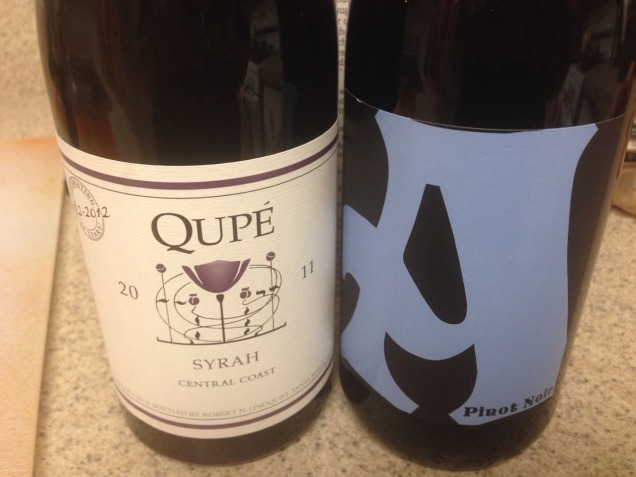
The trouble with discovering a new wine shop: No self control. Swirl & Sip at the Mosaic had a lovely selection of California wines (they sell other regions, too), including a tasting bar, which successfully contributed to the purchase of the Alfaro Pinot Noir.
Why I’m Obsessed, Part 2 (Part 1)
If I had started this site a year ago, this post may have introduced you to something new, but chances are if you follow wine, you’re well aware of Somm, a documentary highlighting a group of students as they prepare for the master sommelier exam. I could spend plenty of time telling you why you should watch this film, but I won’t. Instead I just want to drop off a few items that resonated with my passion for wine while I re-watched the film this weekend (thanks,Netflix!).

So that I remember for next time. 😉 Earthy, dry, smooth with a hint of tannic structure. (Barcelona, Washington, D.C.)
Over 80% of wine’s social media mentions go unanswered by wine brands. For most wine brands, that’s a massive fail. But those brands who do tap into the bandwidth of tech’s tools, data sets, and platforms are capitalizing on customer engagement, loyalty and, yes, sales.
Another interesting tidbit:
The top 20 wine bloggers have a combined audience that is larger than Wine Spectator online.
I love that wine is intersecting more with social and digital media, and it’s not just because I’m here experimenting with my own online writing. In my day job, I’m a digital editor at a news organization, so it feels like – for the first time – wine is starting to enter my world a bit (whereas mostly, I’ve been dipping my toes into its world). As technology constantly evolves, this will be a fun space to watch.
Seeing these discussions at events like the recent Wine Industry Technology Symposium and the upcoming Digital Wine Communications Conference really excites me. And I’m impressed to see – as noted in this Forbes pieces – how much mobile is part of the conversation. The best skill anyone can have in navigating the digital world is understanding how to take control and find the best ways to leverage each specific platform.
A Post Script…
Also worth noting along side this story is this speech by Vintank’s Paul Mabray. David White, over at Terroirist, shared it earlier this week. While not a short speech (it’s 74 pages), it was a great read – giving smart and easy-to-understand insight into how the wine industry should be using social and digital platforms.
Wine + Tech: Three Right Ways That Wine Brands Engage Online

I’m sure I don’t have to sing the praises too loudly for Wine Folly. Madeline’s brand of easy explanations combined with beautiful designs create stunning results. So I was delighted to quickly find this map she calls “French Wine Simplified” when searching for a quick way to reorient myself with the country’s geography.
As a California girl (both having grown up there and a preference in its wine), France has always baffled me. I studied Spanish in school, so trying to pronounce a French name while ordering has always turned into the dreaded pointing a finger at the menu. But despite my frustration, I have yet to be disappointed when sipping a French wine.
Very recently, I had the pleasure of tasting two new (to me) wines: Last night, a Pommard premier cru (pinot noir), and about a week ago a Brouilly Beaujolais (gamay). I’m glad that I already have an understanding that the prominent name on the label is the region and not the grape, while each region specializes in particular grapes. Understanding how different wine regions around the world create their labels is half the battle.
But the subregions are still tripping me up. Last night after tasting the Pommard, the sommelier asked for my thoughts. I didn’t know what Pommard was when I ordered it. The bartender explained it was another region in France and was a bit on the heavy/meatier side (I can’t remember the exact wording she used, but that’s how it translated in my head). So later in my discussion with the sommelier I felt very confident to let him know that I was picking up a lot of Burgundy in this wine. To which he replied, “It is Burgundy. Pommard is in Burgundy.” Le sigh.
(Wine Folly also has this excellent map of Burgundy, which I’ll be studying closely today.)
Santé!
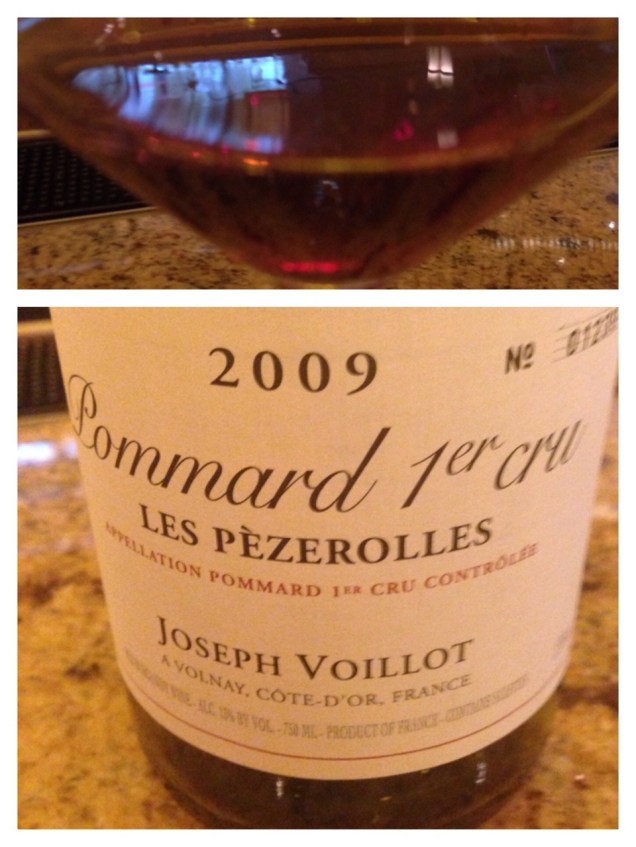
Alternating a lot of earth and some refined fruit with each sip. Served by the glass at Central as part of their Wednesday high-end wine special.

 It's Wine By Me!
